What We Teach
Institutions serve as the backgrounds of our lives, giving shape and form to who we are.
Thriving communities, to which all of our work points, need institutions because institutions allow practices to flourish. Our call is, therefore, not to malign institutions or allow them to languish; rather we are called to serve and improve them and start new ones so they can be bearers of tradition, laboratories for learning and incubators of leadership.
This page explores the idea of vibrant institutions, considering how they form us even as we form them and exploring stories that paint a picture of what such institutions look like. We recommend you explore the essays first, in order, and then consider the stories and recommended reading.
Exploring the idea
Vibrant institutions create spaces that shape and pattern human life »
L. Gregory Jones, theologian and dean of Duke Divinity School, writes that Christian wisdom is nurtured over the course of time in institutions that act as bearers of tradition, laboratories for learning and incubators of leadership.
How can we think institutionally and not bureaucratically? »
Jones, drawing on Hugh Heclo’s “On Thinking Institutionally,” writes that Christian wisdom illustrates our need for institutions to shape and form us. The reality and persistence of sin points us back to the significance of institutions, revealing our need for the church to teach and train us, through faithful practices and holy friendships, to unlearn sin and learn holiness.
God save us through your institutions »
Jason Byassee, theologian and pastor, writes that people in Western culture tend to grow up with a suspicion of institutions. We can reconcile the good they can do with the bad they are capable of through prayer.
A theology of institutions »
Byassee writes that Christian reflection on creation, reconciliation and redemption creates a picture of institutions as incubators of innovation.
Seeing the Idea in Practice

Planting a coffeehouse instead of a church
The pastor of a 5,000-member Texas church is piloting what he describes as a traditional church undergoing a transition. Alamo Heights United Methodist Church has been renewed and challenged by its leaders’ conviction that the future of Christianity lies in actions that advance God’s kingdom -- and their willingness to empower other pastors and lay leaders to experiment. Read more »

An innovative model of theological education
Rooted in the changing demographics of global Christianity, City Seminary is a school for a particular time and place. Its sole focus is leadership development for urban ministry in New York, primarily in the city’s ethnic and immigrant communities where Christianity is thriving. Read more »
Campuses of the kingdom
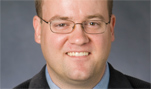
Thriving institutions that serve the reign of God can pop up in the most unexpected places, as Jason Byassee discovered when he looked at two schools, as different from one another as imaginable.
Read more »
Recommended resources to learn more
The Price of a Dream
David Bornstein tells the story of Muhammad Yunus’s creation of the Grameen Bank and its microloan strategy, providing a model for thinking about how to create and maintain accountability and initiative.
Learn more about this recommendation »
Purchase this book »

Going to Extremes: How Like Minds Unite and Divide
Harvard law professor Cass R. Sunstein explores the phenomenon of group polarization, or the tendency of people to move to extremes when they find themselves in groups of like-minded people.
Learn more about this recommendation »
Purchase this book »
On Thinking Institutionally
Political scientist Hugh Heclo looks at our need for institutions to shape and form us and calls us to think institutionally, which requires an interpretive standpoint of affirmation and trust rather than thinking “about” institutions as an observer or critic.
Learn more about this recommendation »
Purchase this book »

Outliers
Malcolm Gladwell seeks to answer why some succeed when most fail while recounting how communities form individuals.
Learn more about this recommendation »
Purchase this book »

