
Pastors have money issues, marriage issues and identity issues. They also experience joy, grace and mystery as they live out their call.
In “This Odd and Wondrous Calling: The Public and Private Lives of Two Ministers,” the Revs. Lillian Daniel and Martin B. Copenhaver explore all these aspects of the pastoral life in a series of essays that offer an honest look at their lives as working pastors.
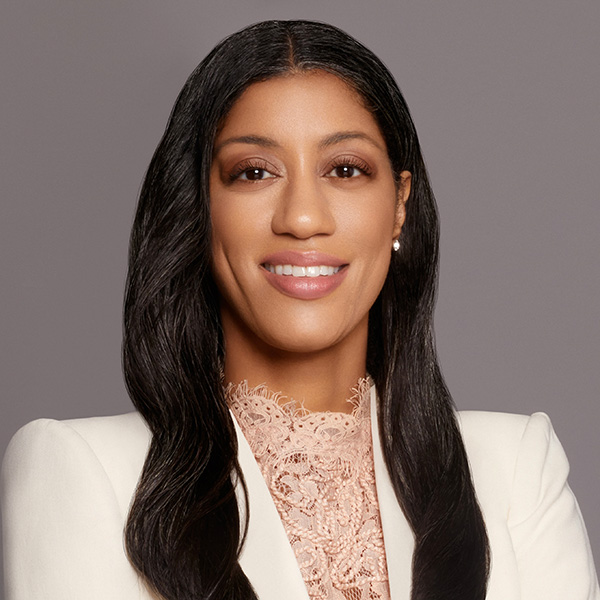
Daniel, a blogger for Faith & Leadership, has served since 2004 as senior minister of the First Congregational Church of Glen Ellyn, Ill., in suburban Chicago.
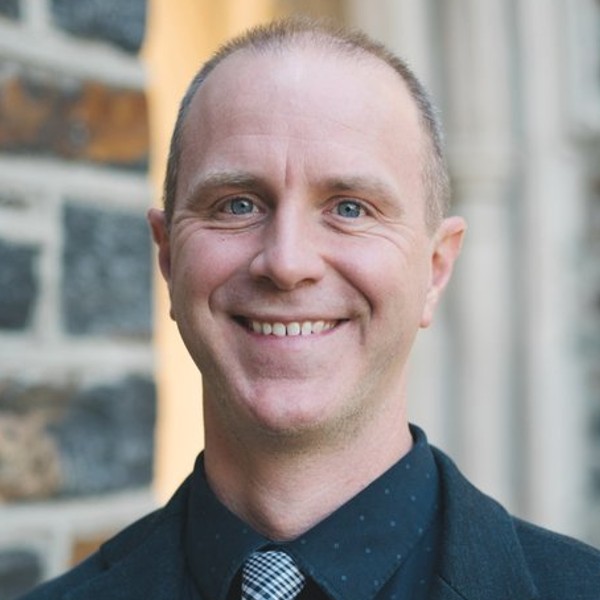
Copenhaver is senior pastor of Wellesley Congregational Church, United Church of Christ, in Wellesley, Mass.
In “What Shall I Call You?”, Copenhaver talks about the significance of the various forms of address for pastors.
The chapter “Money Off the Shelf,” by Lillian Daniel is available here.
What Shall I Call You?
By Martin B. Copenhaver
All the pastors/ministers/preachers I know have distinct preferences for how they are addressed and how their vocation is described. There are titles we embrace and others that make us cringe. We may be able to interpret our preferences by using the most sophisticated theological analysis, but for the most part our reactions are shaped by associations we have with various titles, so the preferences largely are impervious to the influence of reason.
For as long as I can remember, my father was known in his congregation and beyond as, “Dr. Copenhaver.” The association of that title with his name is so strong for me that, to this day, if someone mistakenly calls me, “Dr. Copenhaver” (I do not have a doctorate), I almost have to fight the impulse to turn around and see if my long-deceased father has entered the room. Even if I were to obtain a doctorate myself, I am quite sure that if people were to begin to address me in that way I would feel forever like a young boy in the attic trying on his father’s clothes.
I have never really settled on a title that works for me. “Reverend” -- a title that is available to me by virtue of my ordination -- can seem problematic for a number of reasons. For one, although “Reverend” is an adjective (meaning “revered”), some people are always trying to make it a noun. So if someone says, “Hello, Reverend,” that person actually is saying, “Hello, Revered.” It would be like saying to a judge, “Hello, Honorable.” Likewise, because “reverend” is an adjective, it is improper grammatically to call someone “a reverend.” To complicate matters further, because this adjective also is a title, it can be used properly only if it is accompanied by the article “the.”
Even if folks were able to negotiate the grammar, it sounds beyond egotistical to refer to oneself using that title, which is equivalent to saying, “Hello, I am Martin Copenhaver, the revered one.” Then there are those who, by virtue of their office, are given additional honorifics that, when strung together, begin to resemble those medals given for Sunday School attendance that would drip down the chests of those who never missed a class, titles like, “The Very Right Reverend Doctor Julius W. (‘Who Are You To Question My Authority?’) Johnson, III.”
Early in my ministry I got around this ambivalence about titles by asking that people simply call me Martin. After all, I reasoned, most of the folks in the congregation are considerably older than I was, so why should they address me in a way that sounds so deferential? This reasoning is an example of how our ambivalence about titles is a reflection of our mixed feelings about the sources and uses of authority.
Each title used for clergy refers to a different source of authority. Since the title “Doctor” is conferred in the academy, it points to academic status as the source of one’s authority. “The Reverend” situates the source of one’s authority in the esteem in which one is held. “Pastor” and “Minister” each refer in different ways to the authority that is vested in a particular office of the church. The title “Preacher” points to a particular, and in some ways defining, pastoral task. I just wanted to be called Martin.
Of course, being called by one’s first name is not the perfect solution, either. If everyone is invited to call you by your first name, even when they first meet you, it can sound overly familiar, like the way people might introduce themselves at a sales convention: “Hello, I’m Martin.” “Good to meet you, Martin.”
Some of us may try to avoid titles like “the Reverend” because they seem to stress too much the ways in which the pastor is set apart from others. Nevertheless, when we seek refuge in our first names it can be an attempt to deny that which is finally undeniable: there are ways in which the pastoral role actually does set us apart. When I ask to be called Martin, it is a way of saying, “Hey, I’m just one of the guys.” But there are ways in which, as a pastor, I am not just one of the guys. It is not that pastors are a different breed of person, of course, but the pastoral role is different from the role others play. Titles can be a way to honor the role, rather than the person who plays that role. But people are not always clear about such distinctions and I am quite sure that I could lose sight of such distinctions myself. So, through the years, when people have asked me what I would like to be called, I have said, with a bit of aw-shucks awkwardness, “Just call me Martin.” It is not the perfect solution, but at least I feel addressed when I hear my name. I know that the person is talking to me.
How one describes one’s vocation is no small matter. Early in my ministry I described myself as “a minister.” I was relatively comfortable with that designation, but then I began to see that description of my role as usurping a role that belongs to everyone. In the church I was serving at the time, my role officially was described as “the Minister.” But what does such a title say about the role of the other members of the congregation? It seemed to imply that ordained clergy are the only ones with a ministry. But as everyone has a ministry in the world by virtue of their baptism, so we are all ministers. To be sure, some are called to a particular ministry within the church, but there is a different and differentiating name for such ministers: we are “pastors.” To use this description of my role seemed like a way to honor the role of the laity by affirming the mutual ministry of all believers. Or so I became convinced. It all seemed reasonable, but because such matters are laden with association, they are never simple. (Case in point: As much as I was beginning to embrace the designation “Pastor,” I was determined not to be called “Pastor Martin.” To me, that made me sound like the host of a children’s television program, perhaps because it reminded me of Beachcomber Bill, the name of a popular local television program when I was a boy.)
When the proposed change in the description of my role was brought to the annual meeting of the congregation, it sparked considerable discussion. Someone said that the term “Pastor” sounded, “so Catholic.” Someone else countered that in his days in the Catholic church he had never heard a priest referred to as a pastor. Another person stood to say that he grew up as a Lutheran, so he was comfortable with the term. Still someone else muttered loudly, “I always thought it sounded Baptist.” (Pick an association, any association.)
As the discussion continued, it was clear that at least one person was quite concerned that this change in the description of my role might be a power-grab on my part, as if I were angling for a kind of promotion at the expense of the laity. So I stood to speak for the first time in the meeting. I spoke about my understanding of the terms “pastor” and “minister,” and how using the term “pastor” in reference to me actually was a way to honor and support the role of the laity as ministers in the world. Then, I said that I had rejected one of the titles that we were considering for my role, “The Most Holy Reverend Father.” Gratefully, people laughed, and we moved on.
At other times, however, we can be reminded that titles are serious business.
For women in the ministry, the complications that come with titles can be even harder to negotiate. Female clergy are accustomed to hearing questions like, “Well, what exactly should I call you?” The manner in which the question is asked makes it clear that it is properly translated, “Surely you don’t have the same title as a clergyman?” “Are you a reverend?” someone will ask as she exits the church after a funeral. “Can I say that?” Such questions seem to imply that a woman has to borrow a title that just does not fit properly.
Titles flow less freely for women in the ministry. With men, often the first response is formality, while with women, it can be assumed that the formal title does not apply. Most male Protestant senior ministers are not asked, “I know you’re not a priest, but what are you exactly?” while this happens to women all the time. And in many churches, the power differential between male and female clergy can be played out in the relative formality of the titles used, as in, “Meet our senior minister, Dr. Smith, and his associate, Julie.” When something like that happens, even those who claim not to care much about titles find out again that titles matter.
There are other cultural nuances in clergy titles. Our congregation has a very close partnership with the historic Charles Street African Methodist Episcopal (AME) congregation in Boston. Over a ten-year span I have worshiped there so often, and our congregations have taken part in so many shared ministries, that Charles Street Church feels like a second church home to me, and to many in our congregation. Early in our partnership I stumbled into the realization that different traditions have quite different approaches to titles. Since the members of my mostly Caucasian congregation were quite used to calling me Martin, they assumed that they could address Gregory Groover, the distinguished pastor of Charles Street Church, as Greg. At the time I was too ignorant to correct them, and Rev. Groover -- as he is known within his African American congregation -- was too gracious to do so. When I began to pick up on the different ways the two congregations used titles, I asked him about what is customary in his tradition. He explained that in the church he is addressed as Rev. Groover, except when he is among very close colleagues and friends. In such settings he is called Greg. He urged me to continue to call him Greg, and I do in private conversation, which now feels like a privilege.
Years later, before worship one Sunday when I was the scheduled preacher at Charles Street Church, as I walked through the fellowship hall with Rev. Groover to his office, I was warmly greeted by the members of the church, a number of whom said things like, “Welcome, Pastor” and, “So good to see you again, Pastor.” When we got to Rev. Groover’s office, he turned to me and said, “I don’t think you know what just happened there.” I had to confess that I was not sure what he was referring to. He went on to explain, “In the AME tradition, you can have many ordained ministers in the church --we have about twenty -- and they are all referred to as Reverend. But in an AME church there is only one Pastor. And yet those members of Charles Street just called you Pastor. I just don’t want you to miss what that means, because you might not know if I didn’t tell you.”
Of course, he was right. I did not know what it meant until Rev. Groover explained it to me. After all, titles mean such different things to different people in different settings. After he explained it, however, I realized that here, finally, is a title that means a great deal to me.
Lillian Daniel and Martin B. Copenhaver, “This Odd and Wondrous Calling: The Public and Private Lives of Two Ministers” © 2009 Wm. B. Eerdmans Publishing Company, Grand Rapids, Michigan. Reprinted by permission of the publisher, all rights reserved.