
Update: John M. Perkins died March 13, 2026.
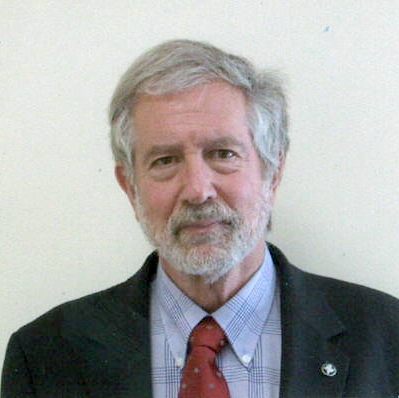
The future leaders of America’s poor communities are likely to be the people living in those communities right now, John M. Perkins says. Perkins’ vision for community development combines both his faith and his experience. The result is a vision for leadership that works hard to empower the people with the most at stake.
Perkins has been an advocate for civil rights, community development and racial reconciliation for five decades. Leaving his home state of Mississippi in 1947, Perkins vowed never to return to the segregated South. But his conversion to Christianity led him back in 1960. He and his wife, Vera Mae Perkins, founded several community development ministries, including the Christian Community Development Association and the John M. Perkins Foundation for Reconciliation and Development in Jackson, Miss.
Over the years, Perkins’ leadership expanded from the local to the national level. His writings on community development, social justice and racial reconciliation have catalyzed a generation of Christian leaders.
Perkins spoke with Faith & Leadership in June 2009 while teaching at the Duke Divinity School’s Summer Institute: “Shaping the Beloved Community.”
Q: One idea that comes up often in your work is “indigenous leadership.” Why is that important to your work?
I believe that indigenous leadership development is inherent in the gospel. God’s intention of the good news was for it to be good news to all the people of the earth. But in many of the places I have traveled in the world, I have observed that indigenous people don’t do well.
The colonizers, the people of power, do well, and indigenous people do worse in all the world. They need the good news given to them, and we need to raise up leaders from among them.
Q: What does this notion of indigenous leadership mean in West Jackson, Miss.?
Our idea is that neighborhoods ought to develop within themselves. We do things in our neighborhood in the sense that we work within the geographical 12 or 14 blocks of our community. So we’re concerned about all of Jackson, but we’re concerned that neighborhood people would be raised up and that we would share what we have learned with them.
We want to expand that concept throughout Mississippi. We take community very seriously. We take it to mean a parish. We take it to mean a geographical area. We take it to mean a whole, small town. But we don’t take it to mean a whole town if that town is 50,000 or more. The idea would be to strengthen the neighborhoods.
Q: So you have a vision for something that is both small scale and large scale?
Right. Large scale in the sense that we're doing a lot of training in Jackson at our retreat center. We invite organizations to come and spend about four days with us. We help them with their organization, their leadership concepts and with the philosophy of Christian community development. There is this great movement now of people wanting to take on their whole city by working together with churches.
There needs to be a group of people who are committed to one local neighborhood and to one local church. What I see are people being sent back to their communities and they are becoming the catalysts for that kind of strong leadership.
What has made the church strong has been the fact that there has always been a core of people totally committed to community. That’s what made the Catholic Church survive; that was a big thing in the early Episcopal Church. But now…even pastors don’t necessarily live within the core of the community. And so the communities are so broken down.
Q: How does your organization locate people with leadership potential and draw out their capabilities?
The biggest part of our leadership development is in working with young people. We figure that within eight or 10 years we will have had to develop leaders from our neighborhoods. So we have to be intentional in terms of development.
Mentoring has become a new art within our community. We started off with tutoring; now we’re beyond tutoring. We see that we need to put [young] people with a mentor, somebody who is trying to transfer values and biblical ideas. That is catching on in our community and that is beginning to work.
Q: What are some ways your organization is finding and developing these leaders?
No.1 is something we call the Zechariah 8 House. The Zechariah 8 House tries to get at major problems in our neighborhood.
Whenever I go to the prisons, I discover that…the boys that are in prison come from a home where there was no father. That’s the strongest factor in determining their path.
The second strongest is a boy whose father is already in prison. Prison represents absolutely everything about our society's failure. The institutions have failed those kids who are in prison.
So we bring single mothers into houses with the idea that their children will be a part of our program, and we do all that we can do, based on their own will and our love and nurture for them, to bring those mothers into an environment where we can help meet some of that nurturing need.
We have gone a little further than that in terms of young black men, because the highest cause of death in our community is one black young man killing another black young man.
We have developed a program called the Voorhees Ave. Leadership House. This is a joint program with Seattle Pacific University. At the house we are taking young black men and adding young white men, primarily from Seattle, who come down and go to school at Jackson State. Jackson State is an all-black school and so the white students become a minority.
What we have at the Voorhees Ave. House is a sort of a reconciling community. We are supporting those young blacks and also helping them to overcome their own inferiority, and of course we are helping the whites to overcome their superiority. That’s what that house is for. It is an experiment; it takes time.
Q: You run the spectrum from after-school programs to college-aged programs to family-support programs. What kind of results are you seeing?
Good results. When you surround kids with Christian values they end up as the most dedicated kids within their community. There is no doubt about that.
There are young folks who come to our center after 5 p.m. They might be connected to [our program], they might not. We don’t ever want to make it so organized that we would eliminate any of the children within the community.
We also want to have some healthy values in that community, and that’s one area where we’re winning. We've got signs posted that explain what is allowed in this community: we don’t have paper on the ground, for example. If the kids don’t pick up all the paper off the ground, other young people will pick it up, and they’ll pick it up in a way so that others will see it's their responsibility to join in.
Q: Could an organization that was not faith-based do this kind of community development? Could United Way do this?
We would be very happy if the United Way would work to serve children in Jackson in the black community -- the devastation is so great. We happen to be Christian. We think that we ought to offer ourselves and our lives to others. The Bible says that when you’ve done that -- when you’ve fed the hungry, taken care of the sick, clothed the naked, visited the prisoners -- you've done that unto me.
Q: How does an organization like yours, one that draws heavily on you as an individual and your vision and experience, hand off leadership to the next generation? Have you named a successor?
We have a group of people. In our mind we have one, but you never should put all your eggs in one basket -- we've done that before and the leaders have died. My oldest son [Spencer Perkins] died. And then we had named Lem Tucker to succeed me, and he died. That makes it hard. So you need a group of people.
Some organizations have the money to hire the best people for leaders, but in the non-profit community and in indigenous-leadership organizations you have to build that in. So there is a sort of an unspoken succession planned.