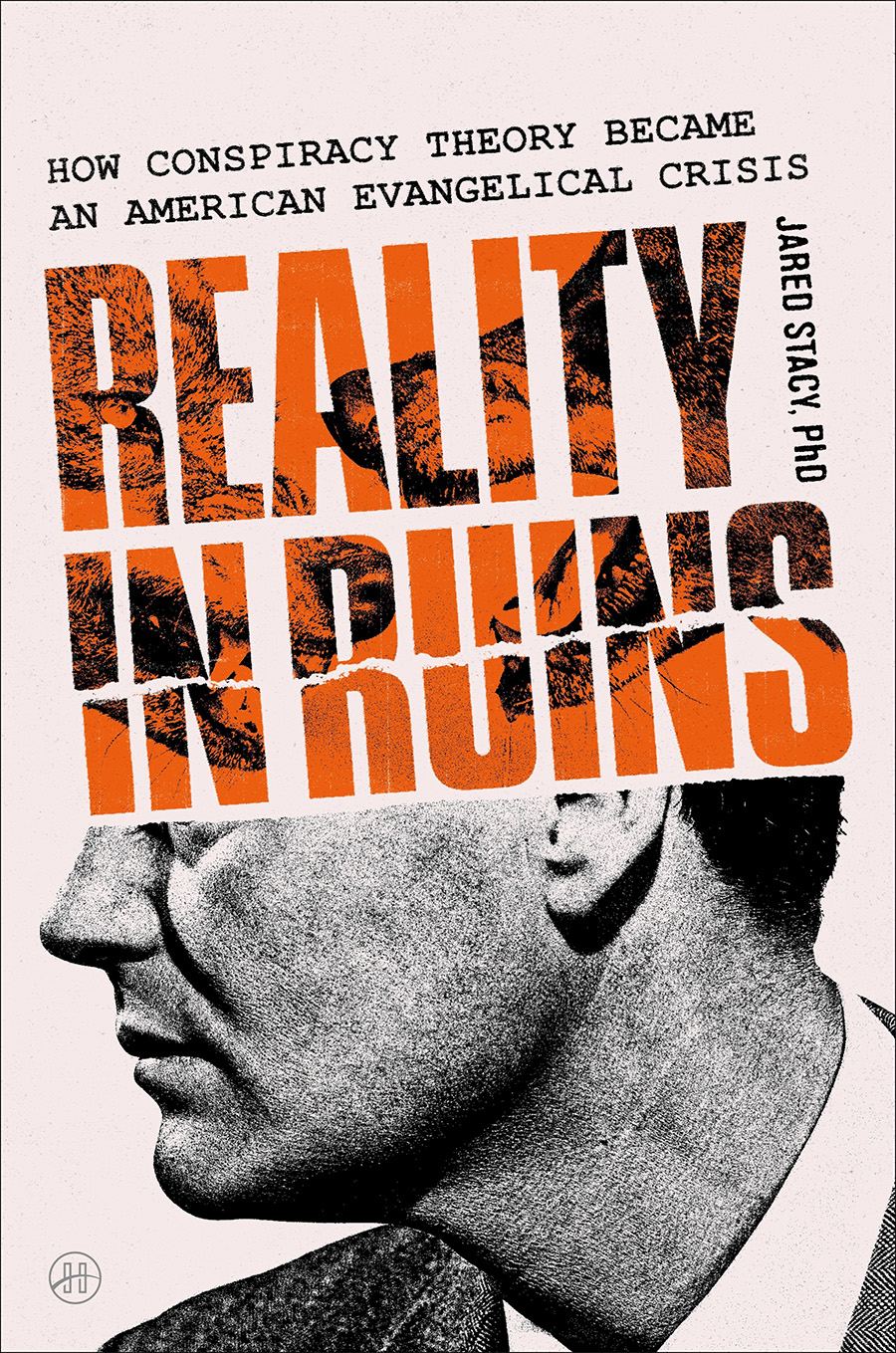
Fact-checking isn’t enough to combat conspiracy theories, especially in a religious context, says Jared Stacy.
Why? Because these stories get absorbed into a culture where they feel true.
“In some uncritical association, what people suspect about vaccines, what they suspect about nonwhite bodies, has something to do with the Jesus that they claim to follow,” Stacy said.
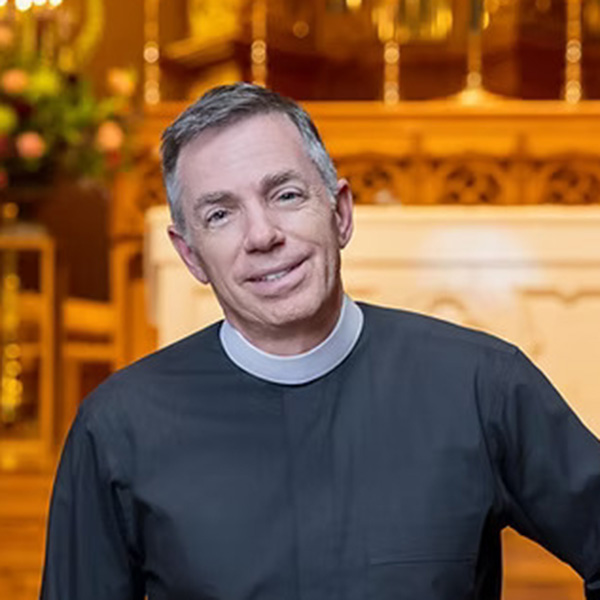
Stacy, a former Southern Baptist pastor, earned a Ph.D. from the University of Aberdeen in Scotland. His work focuses on ethics, conspiracy theory and American evangelicalism.
“When it comes to the ways that conspiracy theories are received inside religious communities, there’s a fact-checking force field. You are really dealing with an extension of a belief system,” he said. “So we’ve got to [address] it from the inside.”
He draws on personal experience and research to investigate American evangelical culture and conspiracism in his book, “Reality in Ruins: How Conspiracy Theory Became an American Evangelical Crisis.”
He spoke with Faith & Leadership’s Sally Hicks about what he sees as a crisis of storytelling — and why he wants to liberate pastors from the burden of fact-checking. The following is an edited transcript.
Faith & Leadership: Talk a little bit first about how your background went into the writing of the book.
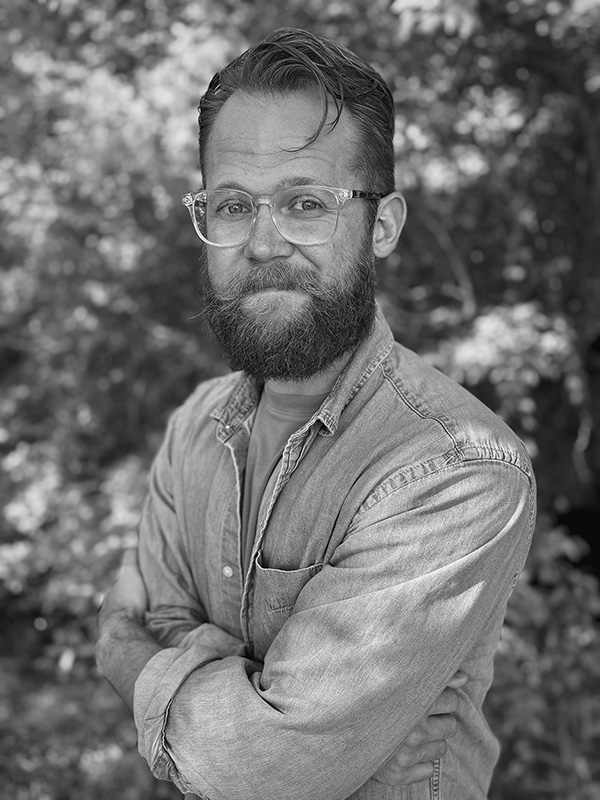
Jared Stacy: I would be the first to acknowledge that in our current climate, a childhood and an adulthood spent inside evangelicalism is a story that many people are familiar hearing.
Yet I hope in some ways that telling my story as a way of doing theology encourages others to consider how naming the troubled parts of our inheritance does not have to necessitate stories of fate or damnation or judgment. It can just be part of wrestling with what it means to talk about God.
I got choked up recording the audiobook when I started talking about [my children], because it hit me that what they will hold is a part of their dad — my story. Eventually, they’re going to tell their own stories about the God they inherited from me, for better and for worse.
F&L: You say conspiracy theory is a storytelling act and that evangelical conspiracism is a crisis of storytelling that needs a better story.
JS: My decision to define [conspiracy theory] as a storytelling act is pushing back against two currents of thinking.
One is understanding conspiracy theory merely as a problem of information, as merely a crisis of fact — as if just getting better quality information would fix this problem. And there are many disciplines that are devoting themselves to that. I don’t want to minimize those approaches.
But the other current that it’s pushing back against is pathologizing theology as a potential solution. Because oftentimes what I hear is just the very generic cultural claim that Christians believe fairy tales and fantasy.
Take the great replacement theory. That doesn’t originate from the church — it doesn’t originate from my people, evangelicals. But it does have a unique reception inside those communities, where suddenly the “invasion” or replacement of nonwhite people takes on a theological dimension when “those people” are coded as demonic or as practicing a faith that antagonizes Christians or threatens to persecute Christians. When [a theory] picks up that language, it’s performing some theological work.
When I’m talking about and defining something as a storytelling act, I’m trying to show the limits of activisms that say, “We can fix this if we just have better quality information.”
I’m really concerned with the varied ways that conspiracy theory hangs inside evangelical faith. You never really can quite pin it down. And that sounds very much like storytelling. It’s an ongoing process. Conspiracy theory has been described as a fluid epistemology.
When you try to fact-check something, there’s also a faith crisis that you risk triggering [in others.]
There’s something ironic or paradoxical where, in the fundamentalist spaces that I’m familiar with, theology is kind of treated as content under a lockbox, right? It’s a settled conversation. But when time comes to narrate what’s going on in the world, suddenly it’s very easy to move the goalposts and to invoke the name of Jesus Christ somewhere along the way.
By talking about storytelling, [my approach is] trying to capture something that’s ongoing and something that has many pathways into dealing with it, but it’s not meant to traffic in a totalizing judgment of Christian faith itself.
F&L: What’s the better story?
JS: The better story is the old story. I’m thinking of the hymn, “Tell me the story of Jesus, Write on my heart every word.” The better story doesn’t imply a myth that we construct on ourselves, or a someone who plays the roles we assign as a mascot. It’s a story of Christ crucified that we return to, that we actively rehearse in our churches.
What is new about it is the demands that it makes of us in the moment; that this story is not just simply static content or facts that we collect and content that we break apart into smaller pieces. The story of Jesus, and of God’s working with the world, is the better story, the true story, but that story is a living story.
What makes it “better” is not only the veracity of its claims, but the power of its ongoing enactment in our lives. In this sense, the story is shown to be the better story as we yield our willingness to the spirit of Jesus, inviting us to participate in God’s movement through history. That is very much a venture with God that requires something of us. In this way, it is better.
F&L: Why does American evangelicalism seem to be fertile ground for conspiracy theories?
JS: I make two points that I think we could speak about as being unique. One of those is the unique role that evangelical Christianity feels it must play to establish and maintain American democracy.
But then there’s also the evangelicalism that is less understood by [examining] institutions and more understood by [examining] what people consume: music, talk radio. [The latter has] a very loose association with the idea of God in America that, whether through silence or whether through spoken word, evangelical churches or institutions allow to persist.
So when evangelicalism is something people consume and when churches don’t acknowledge evangelicalism as part of that act of consumption, then conspiracism very easily gets baked into a “biblical” casserole that becomes really difficult to sort out.
When you define conspiracy theory as just a problem of fact, you don’t really even see the problem in the way that I’m articulating it. If you define evangelicalism by a set of beliefs, you won’t be able to articulate, or find any intelligibility in, what I’m describing.
But it makes sense to me and makes sense of my pastoral experience, where I kept running into the adjective “biblical” and a refusal to exhume the content that was bound up in that container.
Some people want to call that deconstruction, but I’ve since discovered that many people would just call that doing theology.
F&L: What’s an example of a time when evangelical culture absorbed and then amplified a conspiracy theory?
JS: The [2020] election fraud conspiracy that mobilized Jan. 6. Some notable evangelicals claimed, “Oh, there is a conspiracy to steal this election.” Others opted for maybe more plausible deniability and saying, “If there is election fraud, we should pray about it.” Those who attended Jan. 6 — many of them thought that they were attending a prayer rally.
So when it comes to that particular [conspiracy theory] and amplifying it, you can see that in big evangelical figureheads, many of whom are influenced by the Council for National Policy or Salem Media and its network of podcasts and radio stations, the consumption of that media is directly related to the amplification of that conspiracy theory.
I think the big lie of election fraud, which still has its adherents, is still politically viable as a way to organize a base. I think we’re about to see the return to the suspicion of election fraud in the midterms. And that consistent erosion has happened because of a particular story being told that has seized on suspicions within evangelicalism that take on a theological charge.
F&L: Is there anything you would want to say that I didn’t get to in my questions?
JS: I wrote the book because the topic was born of pastoral experience in ministry and the recognition that pastors in the United States are asked to be many things and wear many hats. But pastors are shepherds of the reality of Jesus Christ. They minister the reality of Jesus Christ to the people of God.
I wanted to provide to clergy the freedom to not feel like they have to be a fact-checker — the freedom, that is, not to say that facts don’t matter but to offer unique theological postures and positions to disrupt conspiracy theory in ways that don’t force them to also wear and develop the skills of an analytic fact-checker. I wanted to enable clergy to be who and what they’re called to be for the people of God.
The strengthening of democracy is not the primary aim of the church’s mission in the world, but it can be a consequence of the church understanding its unique presence in and for the world.
And one thing that goes along with that is for clergy to say, “You can stand in the pulpit, you can go in people’s living rooms, and do the subversive work of dealing with fear, dealing with anxiety, without saying, ‘Well, let me fact-check that claim real quick.’”