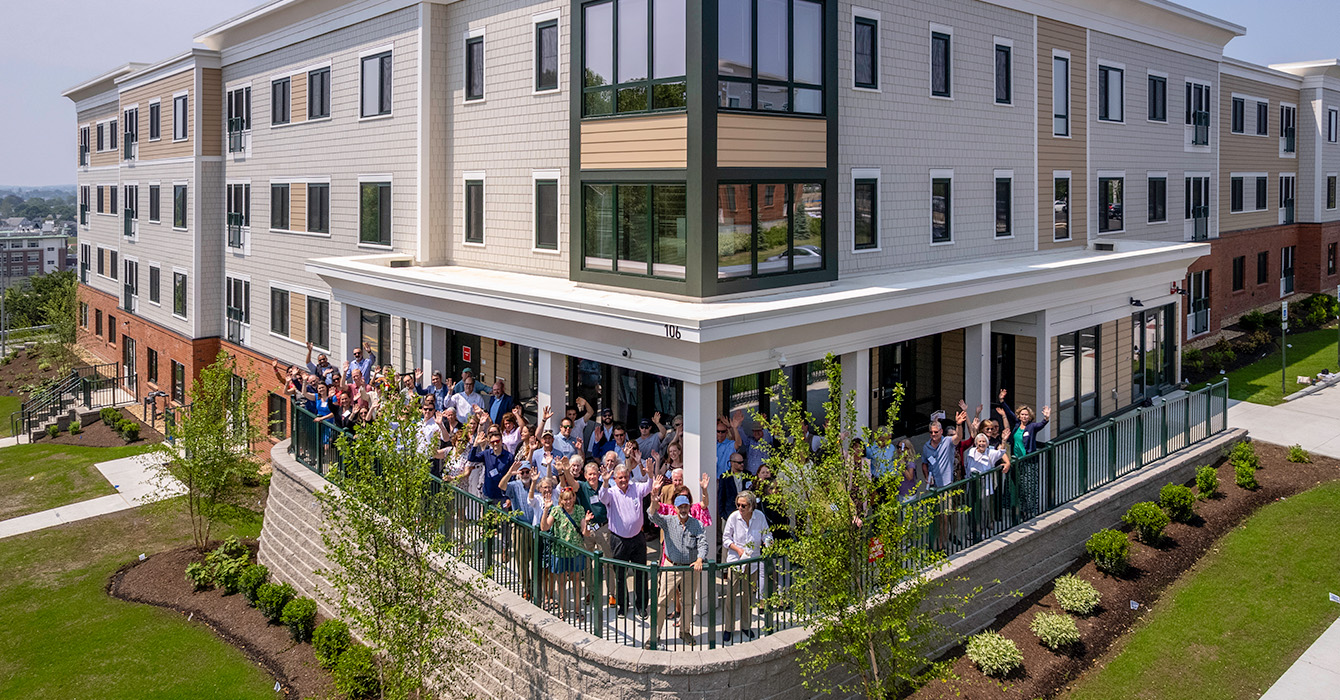


Penny Maxwell regularly drove by the sleepy corner of Aspen Drive and Tipple Parkway, where a three-story building was under construction. It was set to be the first apartment complex in Frederick, Colorado, about 30 miles north of Denver, and the rapidly growing commuter town’s first affordable housing project.
After her husband died, Maxwell moved to Frederick from a neighboring suburb, where she was getting priced out, to live with her daughter, son-in-law, three grandkids, two cats and a dog. She was ready for her own place but she couldn’t afford anything in the area. At 63, she was too young for senior housing, and availability was limited anyway. So, she kept driving by that corner, keeping an eye on the building’s progress.

Brigit’s Village opened in August 2025, the first affordable housing project in a quarter-century to be built in Carbon Valley, a tri-town area that encompasses Frederick, Firestone and Dacono. Its 40 apartments range from one to three bedrooms, with rent starting at $1,350 per month. Sixteen units are reserved for Section 8 housing vouchers. Maxwell, who has one of those vouchers, was one of the first residents.
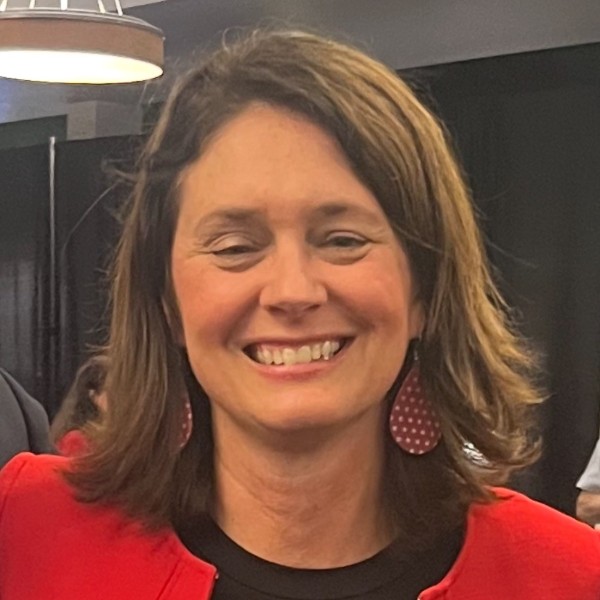
“I love the floor plan … This is nice and open. I love my view,” she said. “It really is great here.”
While she may have waited months for a space to call her own, it was nothing compared to the patience of the local churchgoers who conceived Brigit’s Village as a mission to help their neighbors. It took 16 years to come to fruition.

An affordability crisis
The parishioners of St. Brigit Episcopal Church were not ones to sit and wait. Soon after the church’s founding in 2009, they undertook a demographic study and needs assessment of the surrounding community.
Their first project was Brigit’s Bounty Community Resources, a community garden on the northwest corner of the church’s property. It was a manageable amenity that was relatively quick to build. But there was a more intractable issue that needed attention: housing.
“There were only 20 units of affordable housing in the entire Carbon Valley … and they were all for single women,” said Eileen Bisgard, former president of the board of Brigit’s Village and one of the project’s leaders.
How does your congregation assess its role in the community and in meeting what the community needs?
“What we were hearing was there was no way for parents to move to that area to live near their kids because of the lack of housing of any kind, especially affordable, and there really was no way for kids to leave their parents’ homes.”
Colorado is one of the least affordable states in the country, according to U.S. News & World Report. Fifty-one percent of renters are cost-burdened, meaning they spend more than 30% of their income on rent and utilities. Meanwhile, the state has a shortage of nearly 350,000 affordable rental units, per a June 2025 analysis of the housing affordability crisis by Mile High United Way.

Affordable housing developments are often centered around urban areas where populations are larger, density is expected and there is easier access to services and transportation. But as people have been priced out of cities like Denver and Boulder, affordability concerns have extended to surrounding towns.
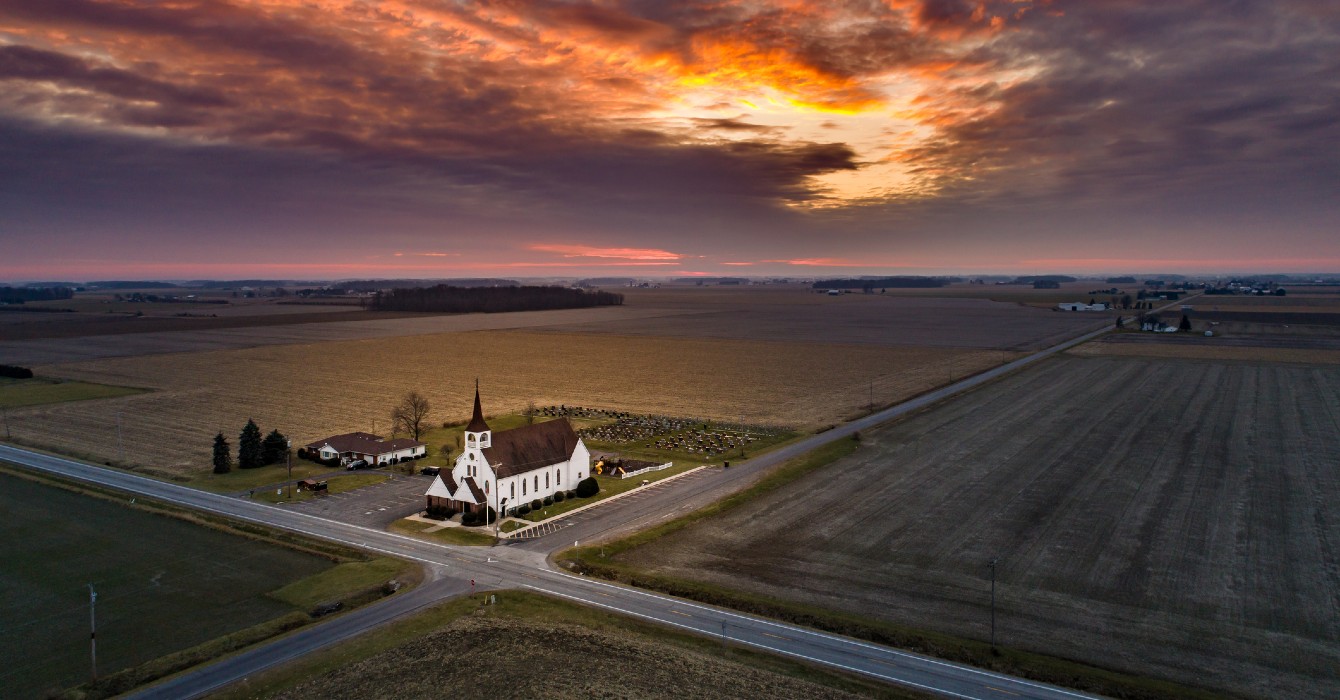
St. Brigit’s is a small but committed Episcopal parish, with an average of 60 or so people attending Sunday services. In 2014, some of those members began working on the affordable housing issue in earnest. The parish formed a nonprofit organization and named a board of directors to oversee what would be known as Brigit’s Village, making it possible to access state funds that aren’t available to for-profit businesses or religious organizations.
The namesake nonprofit purchased a plot of land from the church that is adjacent to the church building and the garden. The county retains a small ownership stake, allowing it to be property-tax exempt.

“The church itself recognized a need that they could fulfill with the assets they had,” said John Lovell, board treasurer and the former director of development for Habitat for Humanity of the St. Vrain Valley. “Serving the community is part of the role of the church, especially serving the poor and the needy in the community … What I would tell [other] churches is to look outside your walls and see what’s happening and where that need is.”
The board worked with AmeriCorps VISTA and hired an architect to develop an official plan. Bisgard, a retired attorney, took classes on how to access funding for affordable housing. The original vision for a senior housing development soon morphed into an intergenerational project. The shift made it more appealing to funders and meant that the project could serve a broader range of people, reflecting what the community needed.
“Traditionally, extended families all lived together, and you had the generations supporting each other,” Bisgard said. “I really think that the healthiest kind of life is having people of all ages living together.”
Things appeared to be moving forward, but identifying a need and solving it are two different things. Brigit’s Village was lucky to have steadfast support from the town, which provided fee waivers, and Weld County, which agreed to manage the property’s Section 8 vouchers. But even with a well-defined mission and one of the biggest hurdles cleared — the land was already zoned for commercial use — the St. Brigit’s team couldn’t make meaningful progress. The state wasn’t going to give money to a church with no prior development experience, especially for a $20.2 million project.
Then, in 2019, one of the consultants for Brigit’s Village met a developer at the opening of another affordable housing development in the region. That connection to Montana-based BlueLine, which became the property manager, and Jon Peterson, an experienced tax credit attorney who eventually became the developer for Brigit’s Village, lent the project the credibility it needed to access crucial funding, including a complicated web of federal and state tax credits, grants and loans that were required before shovels could break ground. After 15 years, Brigit’s Village can become full owners of the property.
Does your vision for ministry shift and adjust to meet real-world circumstances?
“Colorado Housing and Finance Authority (CHFA) is not going to fund anyone who doesn’t have a track record,” Bisgard said. “We needed to get an experienced developer. You just can’t do it on your own.”
Bisgard, who had grown up in Fort Collins, had experienced the impact of the rising cost of living personally. She lived in Frederick for 13 years after raising her family nearby, in Longmont. In 2022, she moved to Florida to be closer to her daughter. She was retired but couldn’t afford to live in town anymore without a regular paycheck.
Finding community support
Funding and land are critical, but the visionaries behind Brigit’s Village still had to win over the neighbors.
Prior to its construction, Bisgard and others on the board made a habit of speaking to area nonprofits, service clubs, town halls and other gatherings to get the word out and solicit community involvement.
How do you identify and work with secular partners?
Once the project was officially approved, a series of town hall meetings were organized. The Rev. Tim Backus, who started working at St. Brigit’s four years ago, was surprised at the pushback. People were worried about the multistory building blocking mountain views (it’s the tallest structure in town), about a potential increase in traffic and about who would be residing in the apartments. But as he and others shared more details and showed renderings, many of those reservations seemed to fade away.
“As Christians, we’re called to support people wherever they are,” Backus said. “Some people were concerned it was going to be filled with people who were really, really struggling, and they thought that might bring some difficulty to the area, which I don’t think is true at all. As time went on, the community realized that’s not really what was happening.”
In what ways do you share what your congregation is doing within the larger community?

Brigit’s Village was also designed to be part of the community: One of the main floor rooms, with an exterior door and bathrooms, is available for public use.
The parish is part of that, but indirectly. Church members have been assembling welcome bins for residents — laundry baskets filled with cleaning supplies, toiletries and snacks. Their goal is to help fill gaps in services and opportunities as needed, and not to proselytize. A support team is available for the building manager to contact, and a number of church members also sit on the Brigit’s Village board. The church itself was built almost entirely by volunteer labor, and community remains a core value for the parish.
Though the Colorado State Division of Housing (DOH) doesn’t track intergenerational or faith-based developments, both appear to be on the rise in the state, according to DOH director Tyler Jaeckel.
“Faith-based partnerships have become more common in the past few years as these organizations play a critical role in developing needed partnerships where other developers or housing organizations are not present,” Jaeckel said in an email.

Vincent Ornelas, executive director of the Greeley-Weld Housing Authority, takes it a step further. These kinds of partnerships are “the new frontier and the future of developing affordable housing,” he said. “Since there aren’t that many resources when it comes to grants and all of that, we have to loop in the private sector.”
Partnership is one of the three Ps that Lovell, the board treasurer and a member of Rocky Mountain Christian Church in Frederick, credits with the success of the yearslong effort. The other two: prayer and perseverance.
“The knowledge [partners] bring is so key to your success, and you shouldn’t be ashamed that you can’t figure it out all by yourself,” he said. “It’s complex. This is not something you can do as a volunteer.”
“At the end of the day, it’s been a long road, but a fruitful road.”
Doing great things
Brigit’s Village started as a volunteer labor of love. Bisgard, Lovell and many others donated their time and brain power to will the much-needed project into being. Backus calls it “using the gifts that were already present in the church family.”
But they needed professional relationships and real funding to turn the idea into a three-story reality.
“You can be a smaller church and have a big vision,” Backus said. “Really big things can happen by trying to remain faithful to the vision and to the mission. Small churches can do great, great things.”
Sometimes it’s the small things that mean the most, though. Over the holidays, Maxwell came downstairs to find members of the parish decorating the apartment building’s lobby and exterior with lights and a tree. She joined in to help make the building more festive.
Now that the property is about 80% full, property manager Dirk Nelson is looking to add more community activities, such as tutoring time for kids. A fitness room is forthcoming.
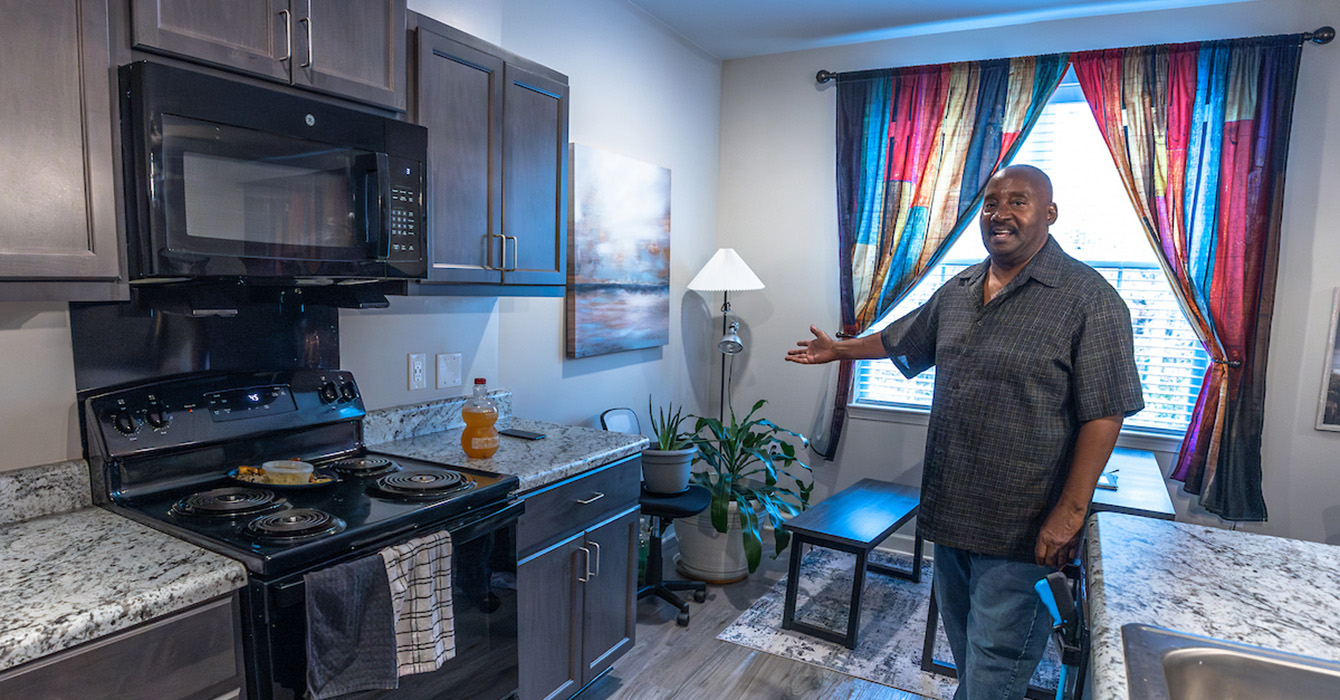
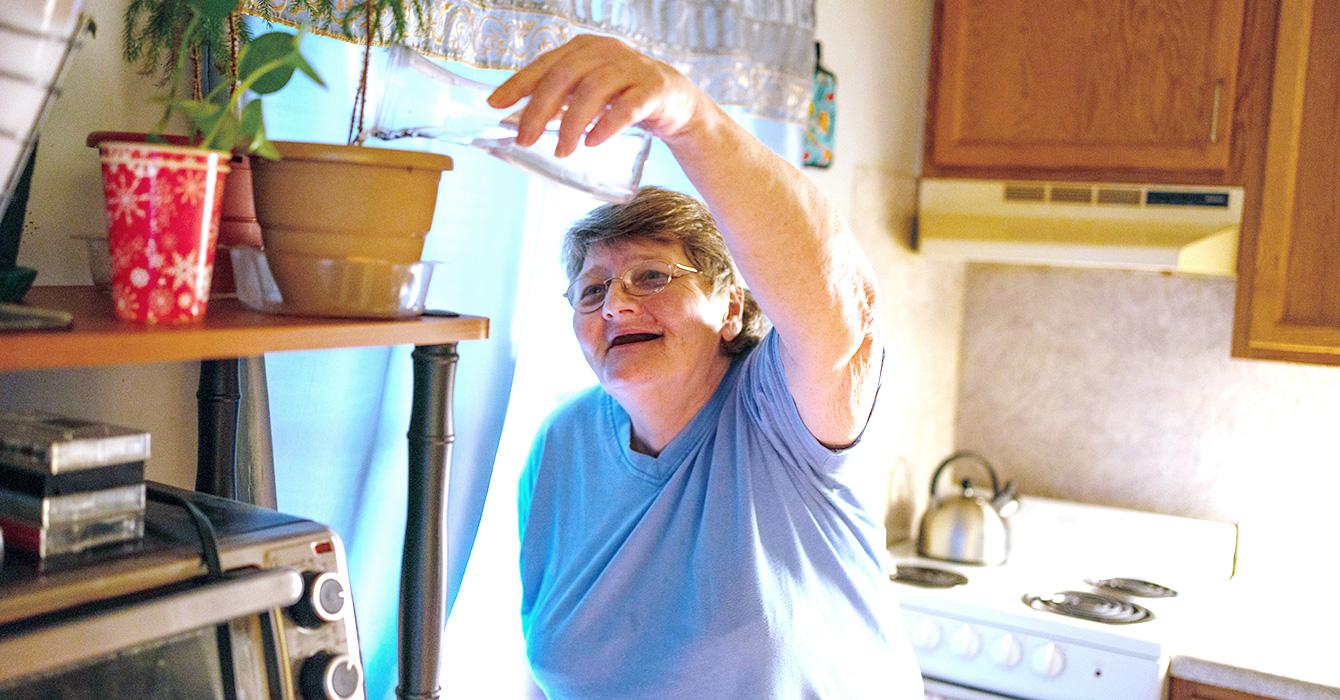
Upstairs, Maxwell’s one-bedroom unit on the second-floor is cozy. Photos of her family hang on the walls. Plants soak up sun by the windows, which look out toward the snow-capped Rocky Mountains. And her kitchen is decorated with pig-themed collectibles. Her unit, like all the others, has Energy Star appliances, a walk-in closet and a washer and dryer.
How might your church utilize the gifts already within your congregation in partnership with others to meet the needs of your community?

First-floor residents have their own patios, but everyone has access to the outdoor arbor with picnic tables, rocking chairs, a firepit, a grill and two small climbing structures that Maxwell’s grandkids enjoy playing on. There is also a small playground and a park across the street for residents to enjoy alongside their neighbors.
For Maxwell, it’s the mix of residents that has made Brigit’s Village feel like home. Adult tenants range from 19 to 84 years old.
“It’s wonderful,” she said. “I like having all the little kids running around outside.”
“I plan on staying forever.”
Questions to consider
- How does your congregation assess its role in the community and in meeting what the community needs?
- Does your vision for ministry shift and adjust to meet real-world circumstances?
- How do you identify and work with secular partners?
- In what ways do you share what your congregation is doing within the larger community?
- How might your church utilize the gifts already within your congregation in partnership with others to meet the needs of your community?