
It started with the house.
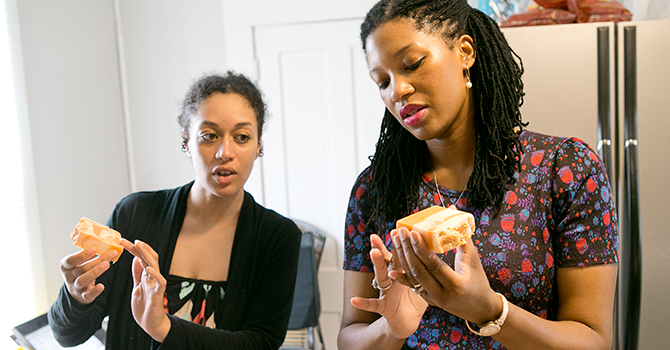
Argrow’s House was founded in 2017 as a place for women who had experienced abuse and violence to find a safe space to heal. The modest, two-story home sheltered two women and served as a social enterprise where women made bath and body products in the kitchen.
Eight years later, the Rev. Dr. Argrow “Kit” Evans-Ford’s project has blossomed: the organization has purchased a strip mall and opened a café and community space and a production space for the bath and body products. A food truck helped double the sales from the café, and two homes now offer shelter to women in need.
Moved by her own experience with assault, Evans-Ford named the social enterprise after her grandmother, Argrow, who was a survivor of violence and abuse. Her organization has helped hundreds of women in the Quad Cities area of Iowa and Illinois and hopes to support more.
“Our goal isn’t for women to be with us for 21 days, but for 21-plus years if they decide,” Evans-Ford said. “This is a community; this is a family that we are growing.”
Evans-Ford spoke with Faith & Leadership’s Sally Hicks about the growth of Argrow’s House. The following is an edited transcript.
Award winners are recognized institutions that act creatively in the face of challenges while remaining faithful to their mission and convictions. These monetary awards help non-profits continue their work.
Faith & Leadership: We wrote a story about Argrow’s House when you had just opened the house and had begun producing the bath products. What have you added since then?
Argrow “Kit” Evans-Ford: I mean, it’s been a journey. We started, and then COVID hit, and other things, and we’ve had to pivot our social enterprise in different ways.
Our sweet spot is social enterprise and justice enterprise. I’m grateful we also have housing and residential as well, because it’s a great need for our women and children.
But we’re realizing we do social enterprise well, and we’re working to focus in on that as our mission. We do that by providing dignified employment to the women we serve, which ultimately benefits their children as well.
We started with our bath and body business, which we still have. We recently received a grant that allowed us to purchase a strip mall. We wanted to expand our bath and body product production and business, but we also have seen other social enterprises that mentor us, like Thistle Farms and others, that have started cafes. So we wanted to use the space as a cafe.
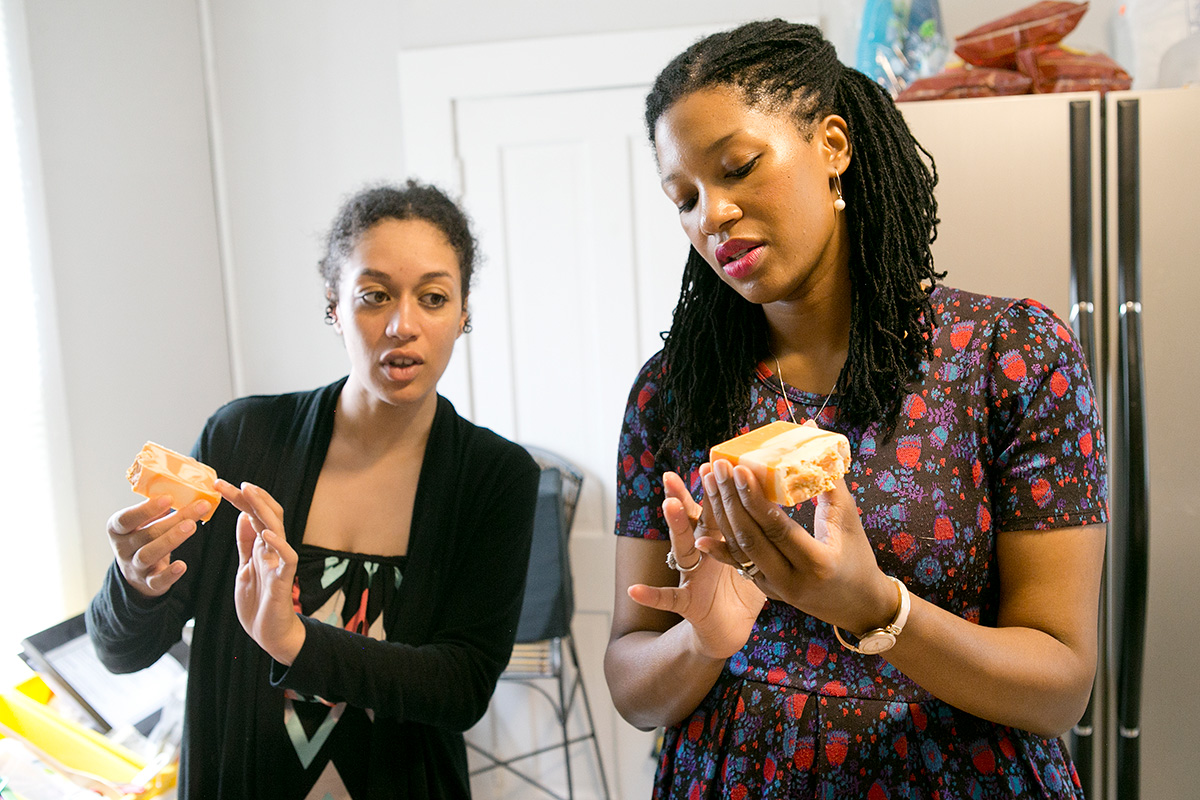
We flipped a very dark bar and turned it into a beautiful cafe and also now a food truck business. Having purchased the strip mall, we also were able to become a landlord, and the resources from renting our space helps to pay for the strip mall moving forward long-term. We’ve really had to pivot with diversifying in order to be sustainable.
We ultimately want at least 50% of our budget to come from the social enterprise resources that we bring in, for sustainability purposes. And so that’s our 10-year plan moving forward.
We’ve served hundreds of women and children over the years. We have cohorts, four to five women, that come into our program, our workforce development program. We journey with them. These are women healing from addiction, healing from abuse, healing from all of these different realities, sometimes for 30, 40 years.
We focus on not just providing jobs, but holistic care for them and also for their families. We’re working to help them with therapy, spiritual direction, financial wellness, jobs, cars, homes, all these different things.
And so for us, in our eighth year now, it’s more about quality and journeying with our women and children long-term so that we can really help to bring about generational, sustainable change long-term for our families. They deserve that.
F&L: It’s a fascinating balance between the social piece, which is helping survivors, and then the enterprise piece, all of your businesses. As you’ve moved along and had to pivot, is there a balance that changes, or is that sort of intention as you run the organization? Or do they naturally integrate?
KEF: They definitely do not naturally integrate. It’s been a journey.
There are so many organizations around the country modeling this for us. They let us know what’s possible if we continue to endure and be mindful and purposeful as it relates to how to balance a nonprofit and the business. There’s my dear mentor, the Rev. Becca Stevens with Thistle Farms, she’s a great mentor to so many of us. And our dear colleague, Father Greg Boyle with Homeboy Industries. And so we know that this has been done, right?
With us, we’re always thinking, OK, what do the women and children survivors in our community need? How do we assist them with getting the resources that they need? But then also, What do our customers need? Who is our customer? What do they need, and how do we create the best possible product for them?
So I think it’s always an intentional balance. I’m trained as a chaplain and a theology professor. Over the years, I’ve had to take classes in business and move things forward in different ways, so that’s been interesting.
I think as ministers and chaplains and ordained clergy, it’s important [that] if we don’t have that skillset [we remember that] it takes a village. Get board members, or if you’re able to hire, have someone who has those skillsets to help with being intentional about product development, business growth and sales.
F&L: What’s your vision for expanding your community resources and broadening your ability to serve?
KEF: One thing that we’re doing is partnering more with our local community resources. We work with women and children healing from abuse, but sometimes our ladies also have a history of struggling with addiction. We didn’t have that 24-hour residential care supervision, but there is a program in our community called One Eighty that has a program where people healing from addiction have 24-hour support.
And so we lean on them. Our ladies may be housed at One Eighty, but we provide the workforce development in that daily case management, so we do double case management. We’re starting to do that with several organizations.
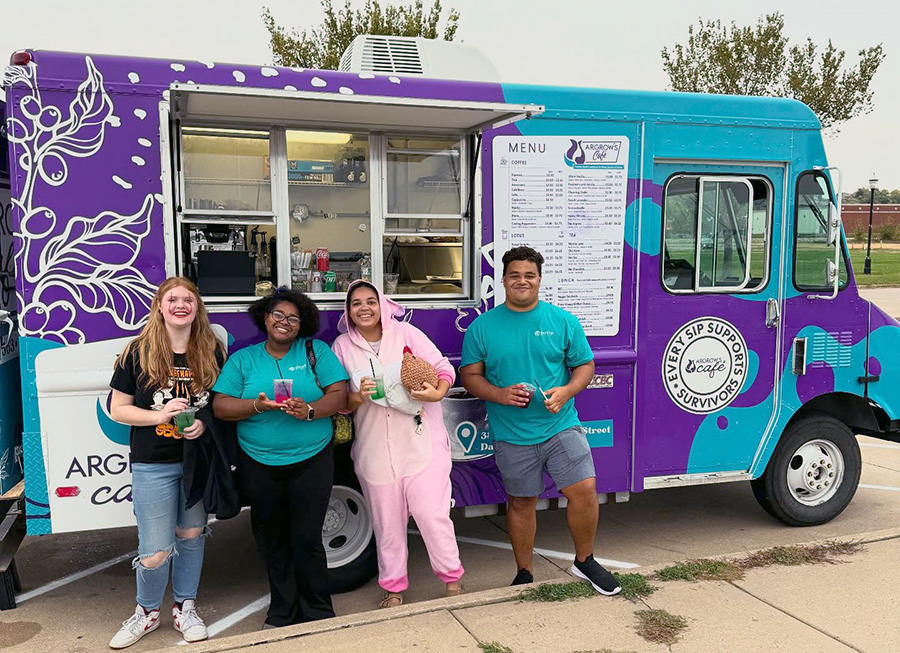
For our social enterprise, the sky’s the limit. It’s taken eight years, but we’re finally figuring it out. With the cafe, our missing link was a food truck. Now that we know that, we’re leaning into it and continuing to grow it. Our ladies are getting more hours and our business is growing, and it’s really beautiful to see.
So humble beginnings. We bought a little food truck. We use purple for domestic violence awareness, teal for sexual assault awareness. On the front, it says, “Every bite brings hope, every sip supports a survivor.” You can find us almost every day around town, you know? It’s doubled our sales.
With our bath and body, it’s a continued growing process. Now we have the resources to have a sales team to help move things forward. It’s a blessing to be at a point where we have the resources to really have a solid team for growth in different ways, and so we’re excited about it.
We still take it one day at a time. We started with zero dollars. A United Methodist Church heard about what we were doing, and we got a $10,000 grant to hire our first survivor employee and buy our first barrels of coconut oil.
A church heard about what we were doing, and they put up one of their buildings as collateral for us to get our first small house. We had two ladies living upstairs and a small kitchen where we made our products. We had soaps everywhere, but the house smelled really great.
To go from that very humble beginning to owning a strip mall and pushing forward in social enterprise with some really courageous women — we just try to be mindful. We take it one day at a time; we pivot when necessary. We’ve always had a really great board, which has also been really helpful.
It’s been a journey. It’s not always beautiful tulips, even though the beautiful tulips are great. But in order to do this work, it takes a lot of faith. It takes a certain amount of resilience to push forward and not give up. There have been times where I wanted to give up, and I’m like, “God, have you really called me to keep doing this?”
But the huge thing is, you don’t have to do it alone. God is always here. He really never leaves or forsakes us. We just have to remember that in those tough times.
F&L: Is there anything else you want to add?
KEF: To anyone thinking about being a Christian social entrepreneur or a Christian justice entrepreneur, you can do it! Don’t be afraid to reach out. Just keep going.