


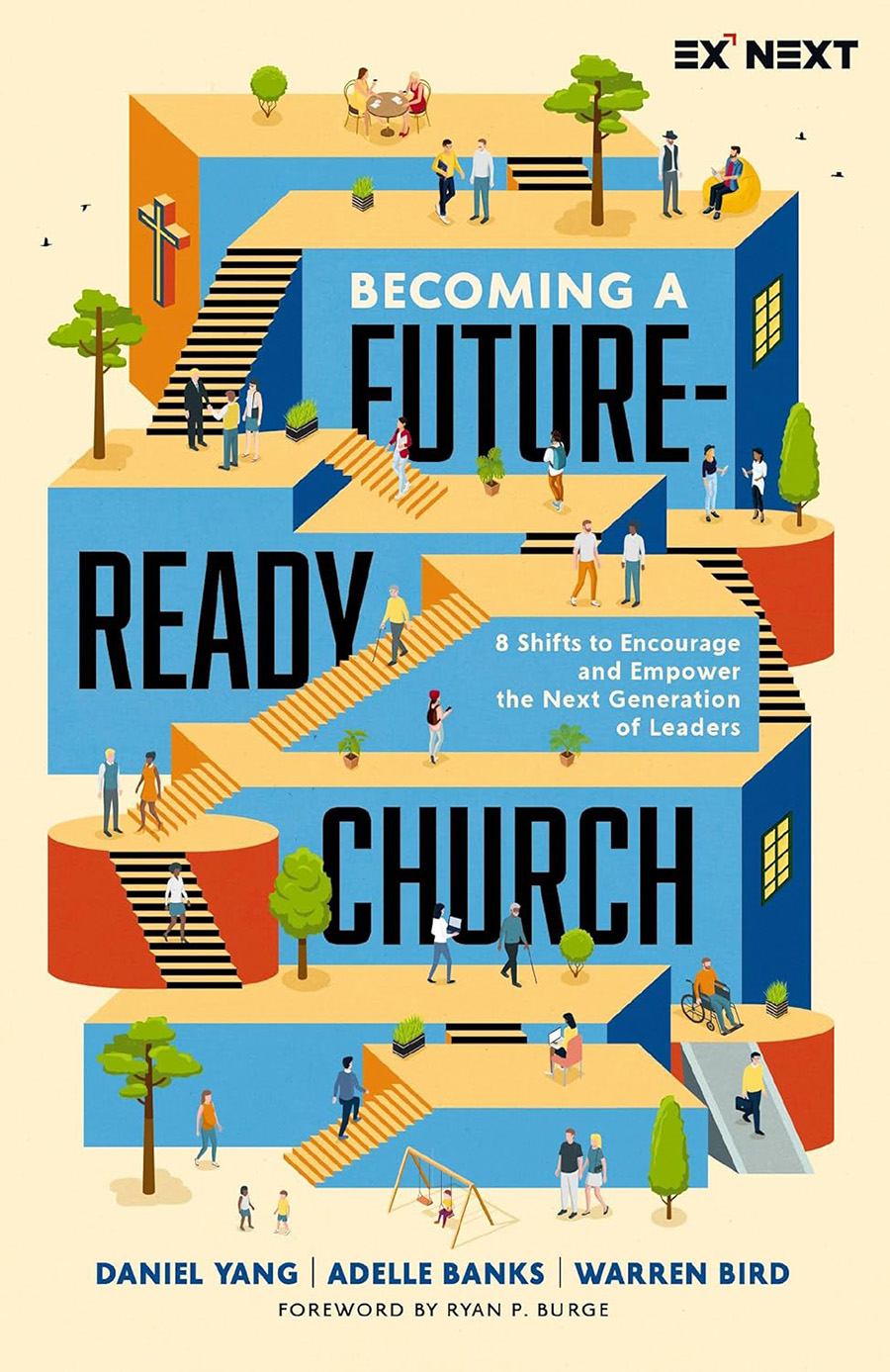
Today’s American church is deeply shaped by a particular time in history as well as a culture that no longer exists. Thus, one of the most important contributions “Becoming a Future-Ready Church” can make is to help you process the following questions: “Have we built institutions that don’t work for the next generation of believers and their leaders? And, if so, what should we do about it?”
Consider the church — Akron Baptist Temple — that first met as fourteen people at Rimer Elementary School in Akron, Ohio. In just a few years, it began receiving national recognition for the number of people that were making decisions there to follow Jesus. Over time, it also became an inspiration and training center for hundreds of other churches to do likewise.
The founding pastor of this church, Dallas F. Billington, was a layperson who had moved from Kentucky to take a factory job in Akron. Significantly, several thousand other people from impoverished areas of Appalachia were doing likewise. Billington, who had become a believer at age twenty-one, obtained an education through remote-learning Bible classes. He was a passionate evangelist with an infectious personality who shared Christ at every opportunity. Besides calling people to follow Jesus at work and in his neighborhood, Billington spoke regularly at a downtown mission, and he started an Akron radio program that billed him as the “Southern Evangelist.”
Akron Baptist Temple, which at its peak had a membership of more than ten thousand active participants, was distinctly Southern in its music, preaching, and culture. However, it was also bold, visionary, and downright unstoppable in the ambitious evangelistic activities its leaders would attempt. Several times a year the church sponsored large events to attract community attention, especially in reaching out to children. For example, it held many “Friend Days,” encouraging everyone to bring a friend to Sunday school. The church also invited big-name preachers to speak during the year, especially radio personalities whom many had heard but never seen in person.
Elmer Towns, the leading authority on the Sunday school movement, wrote a bestselling book that prominently featured Akron Baptist Temple, and that attracted the attention of the local newspaper. The church subsequently invited Towns to speak at a morning service, where he also presented a plaque recognizing it as the largest Sunday school in America. This was big news, since Beacham Vick’s Temple Baptist Church in Detroit, Michigan had previously been generally considered the largest. Local newspapers and television immediately directed a major spotlight on the church.
Beyond local outreach, Akron Baptist Temple developed radio and television programs along with generous missionary support, leading to a worldwide ministry. This congregation became a household name among independent Baptist churches.
As the church expanded, its campus became a jaw-dropper for anyone who visited. Besides the mammoth 263,000-square-foot building (technically, seven interlocking buildings), the property included three sanctuaries (one with 4,000 seats and another with 2,800 seats), a full-size basketball court, two baseball fields, and plenty of parking. The total campus covered twenty-nine acres.
Love it or hate it, everyone in the Akron community knew about this church and about all the cars and buses that flooded there each week. So did thousands of church leaders across the nation.
Looking for a New Future
Wait . . . you haven’t heard of Akron Baptist Temple? If not, this might be because the church went into a long decline after its attendance peaked in the 1960s. It ultimately sold its property, moved, and renamed itself. Today, the restarted congregation, chartered in 2019 as Connect Church, meets five miles away in a 375-seat, 20,000-square-foot facility, seeking to reach its new neighborhood for Christ.
Why that name? “We feel that connecting people to Christ, community, and purpose is the most important method to reach people in this day and age,” says Jason Knight, the current pastor. He had grown up in Akron Baptist Temple, the third generation in his family to do so, and had been its youth pastor.
Thus, America’s largest church in the 1960s no longer exists in location or name. For all the good Akron Baptist Temple did, and for all the godly leaders at the helm there, none were wired to keep the momentum going. The church had initially found a winning leadership formula for outreach, discipleship, and growth, but it couldn’t raise up another generation who would thrive at the same level going into the future.
Why? The question of how churches transition over time (or don’t!) triggered the writing of this book. Asking “why” questions is imperative, not only so we don’t repeat blind spots or failures of the past but also so we create a better context of ministry for the next generation.
Many churches during the 1960s had difficulty trying to navigate the culture around them. Perhaps the Christian bubble was big enough and separate enough from the rest of society that certain questions didn’t rise to the forefront. For example, Akron Baptist Temple was largely white. A local newspaper quoted Pastor Billington as simply accepting that fact:
“Our people are predominantly of Southern heritage,” said Billington, referencing Appalachian migrants who settled in Akron around the church. “We have colored folks who come here from time to time, but they usually come once and don’t return.
“They just don’t seem to feel as welcome here,” the church leader said.
Unfortunately, that observation seems to be where the church’s investigation into this reality ended. Akron Baptist Temple didn’t know how to ask the “why” question underneath African Americans not committing to the church. And while a later pastor affirmed that segregation is “something our church has repented of,” too many churches experience repercussions to this day for not fully addressing their struggles with racial issues in the past — and with other kinds of cultural and biblical issues that construct identity and belonging in the church.
To remedy this situation, this book proposes eight conversations — one per chapter — unpacking the “why” questions underneath complex issues like race, technology, community, and identity that today’s churches must discuss. Though we often feel uncomfortable in doing so, asking “why” questions is imperative so we don’t repeat failures or maintain blind spots of the past. We can create a better ministry context for the next generation.
Excerpted from “Becoming a Future-Ready Church” by Adelle M. Banks, Daniel Yang, and Warren Bird. Copyright © 2025 by Adelle M. Banks, Daniel Yang, and Warren Bird. Used by permission of Zondervan.