
After Hurricane Ida in 2021, when commercial electricity sources vanished, many New Orleans neighborhoods went dark. The storm left most of the city without power for 10 days in early September, when the average high temperature is close to 90 degrees.
But hurricanes — as destructive as they are — aren’t the only problem. Last year, for example, the city lost power due to grid overload and Mylar balloons. Louisiana has the longest power outages in the country, with an average of nearly eight hours, according to data from the U.S. Energy Information Administration.
And in metro New Orleans, where 20% of residents live below the poverty line, the most vulnerable often have nowhere to go for relief. Indeed, nearly a dozen deaths were attributed to the outage caused by Ida. This includes deaths from heat exhaustion and carbon monoxide poisoning from improperly installed gas-powered generators.
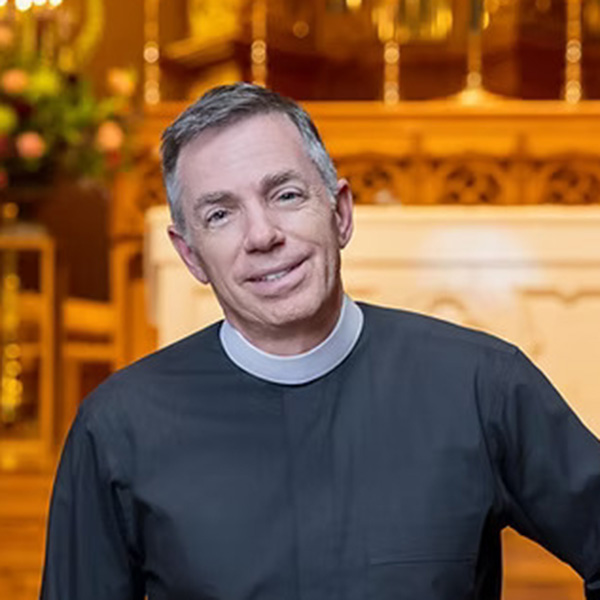
The Rev. Shawn Anglim, founding pastor of First Grace United Methodist Church in the Mid-City neighborhood, said Ida was a wake-up call. In the months following the storm, he and other community leaders took part in a Zoom meeting to discuss options for community-led solutions.
The online gathering was hosted by Together New Orleans, a faith, labor and community organization that is part of the larger group Together Louisiana, a statewide network of more than 250 congregations and civic organizations.
“The utility company was not going to lead the way, and the city was not going to lead the way,” Anglim said.
Their proposed solution: Create “resilience hubs” across the city in church buildings and other community centers.
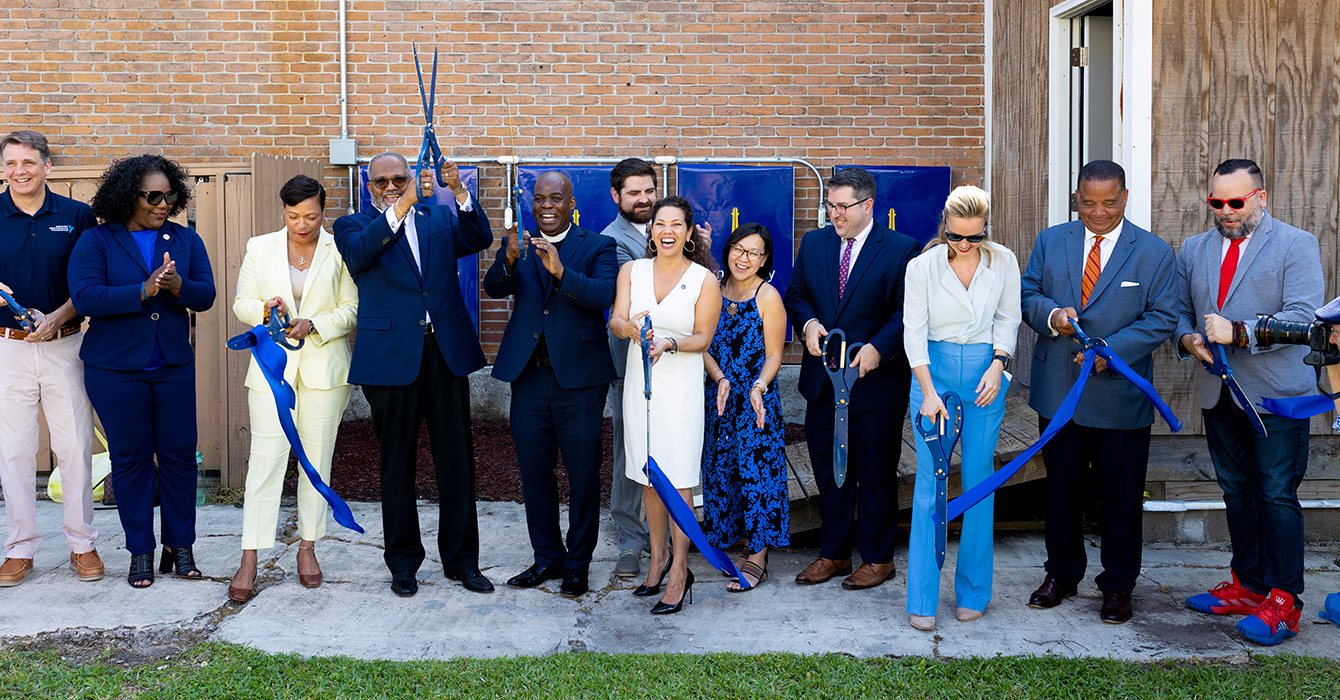
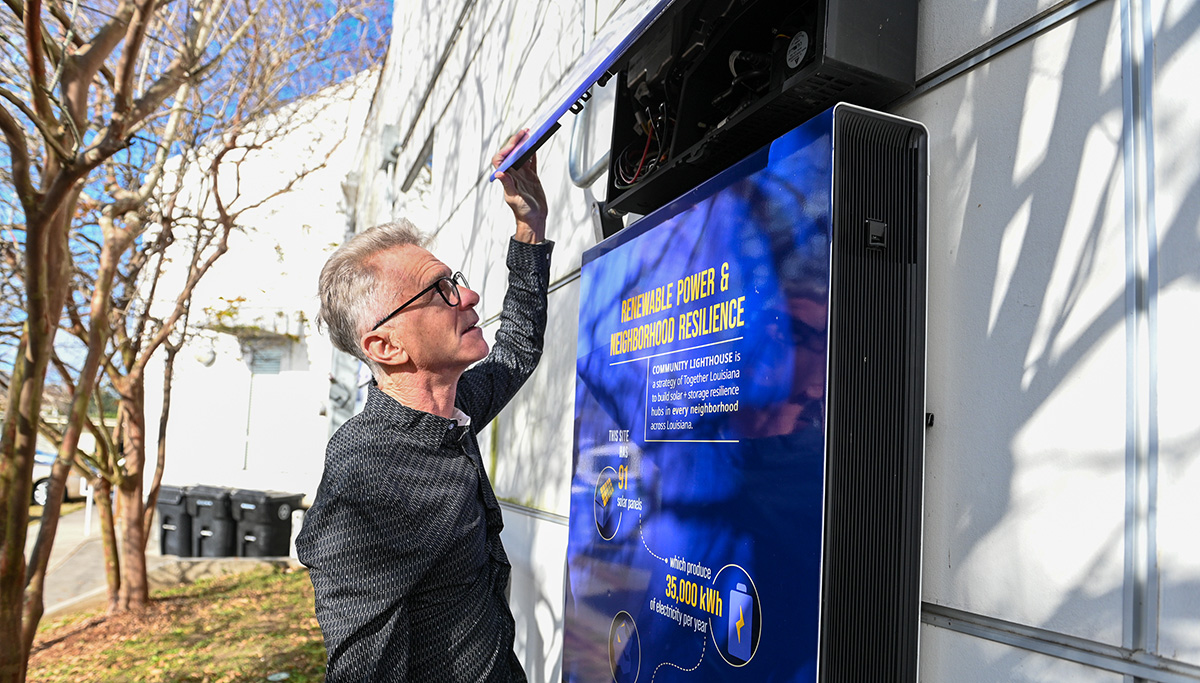
In 2022, Together Louisiana approached the Greater New Orleans Foundation, which provided $1 million to launch the Community Lighthouse pilot strategy to install commercial-scale solar power systems with backup battery storage to shine a light for residents throughout the city during times of need.
Are there opportunities for your congregation to lead the way in improving life in your community?
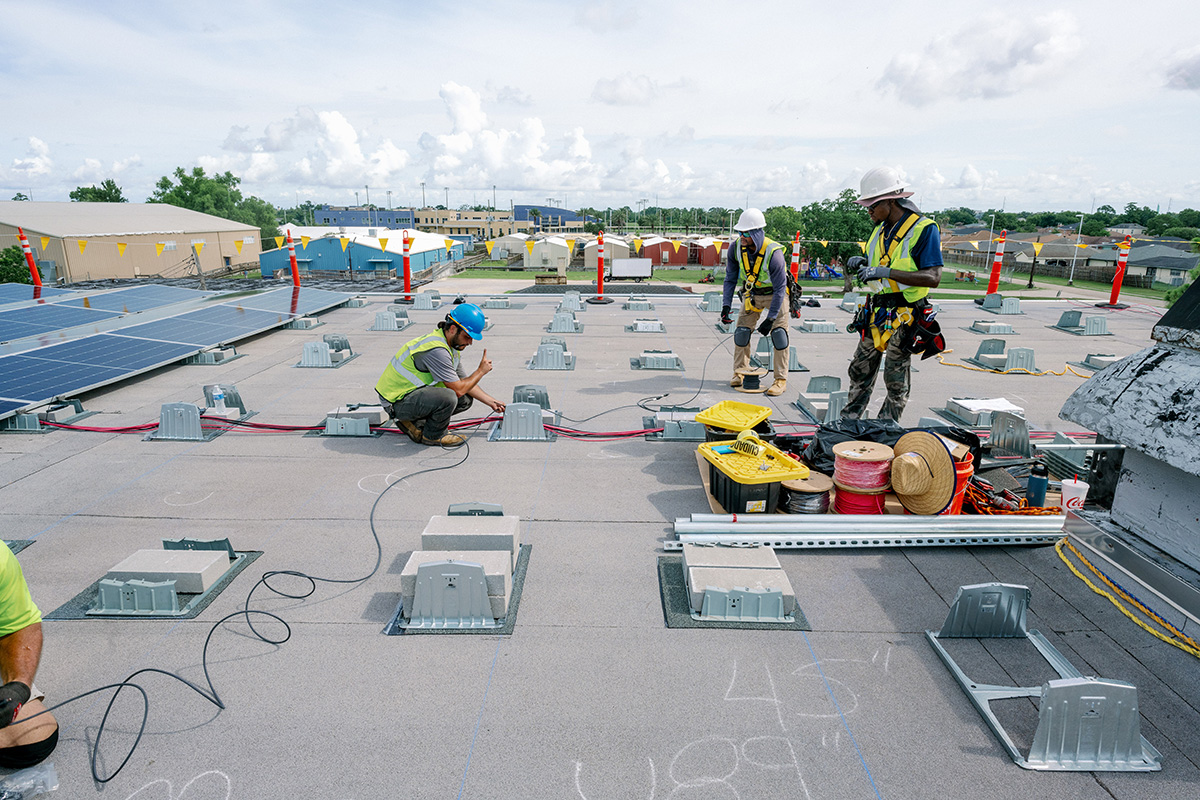
Since Hurricane Ida, Together New Orleans has established 14 Community Lighthouses across the city to generate clean electricity and store it for emergency use. Solar energy also reduces electricity costs during normal weather — no small thing in a city known for its oppressive heat and humidity.
The project aims to build a network of 86 lighthouses so that every New Orleanian could walk to one in less than 15 minutes. The lighthouse locations are spread across the city, established in both Protestant and Catholic churches, as well as at the CrescentCare Community Health Center. Together Louisiana plans to build as many as 500 across the state.
“The largest microgrid in the world is in New Orleans,” Anglim said. “It’s called Community Lighthouse.”
Offering a sense of safety in a crisis
In the wake of Hurricane Katrina 20 years ago, Anglim led the consolidation of a historically Black church, Grace UMC, and a historically white church, First UMC, which came together to worship under one roof as a larger Methodist congregation called First Grace UMC.
Anglim asked longtime parishioners whether the two churches could do more for the city “as one body of Christ, more than we could ever do as two bodies one long mile apart.” The congregations blended their musical and liturgical traditions into a sanctuary that reflects the multicultural reality of the Big Easy.
During Hurricane Ida, the National Weather Service recorded peak wind gusts of 113 miles per hour in New Orleans, which tore the roof off the sanctuary at First Grace. Today, the new roof is outfitted with solar panels and storage batteries; electricity connects to a fellowship hall with an occupancy of about 150 people. The communal space offers charging stations for neighbors and a cooling center to escape the daytime heat, Anglim said.
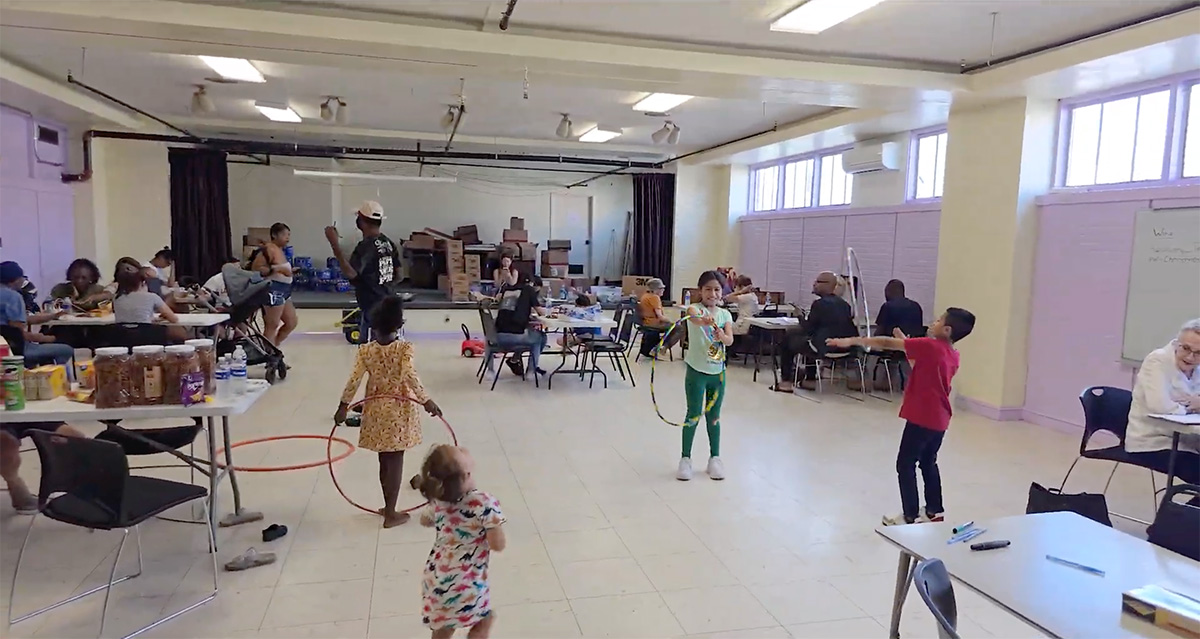
The church provides transitional housing for women, children, trans and gender-nonconforming folks year-round through a program called Hagar’s House. The community also runs Project Ishmael, a pro bono immigration legal program for children and those living in Hagar’s House. During an outage, the Sunday School classrooms upstairs from the fellowship hall are reserved as sleeping quarters for this community.
When Hurricane Francine made landfall in Louisiana in 2024 it brought the first test of the microgrid that went online in 2023. The Category 2 hurricane caused significant flooding but no fatalities.
At First Grace, the energy stored in batteries kept the lights and air conditioning on in the fellowship hall and the church’s main office, which powers internet access to coordinate additional disaster relief. The Salvation Army and other local aid organizations arrived with food, oxygen tanks and electric generators to keep medical devices running overnight.
“Wherever there’s a steeple, people expect you to be the church. It doesn’t matter that they’ve never gone to church,” Anglim said. “When the lights go out, they knock on the church door.”
The mayor directed residents to the operating lighthouses across the city. In New Orleans East, an isolated neighborhood of more than 75,000 people that’s subject to frequent outages, Garreth Johnson, a member of Cornerstone United Methodist Church, fielded questions about the newly installed solar panels and batteries.
Do people come to your church in a crisis? In what ways can you “be the church” when that happens?
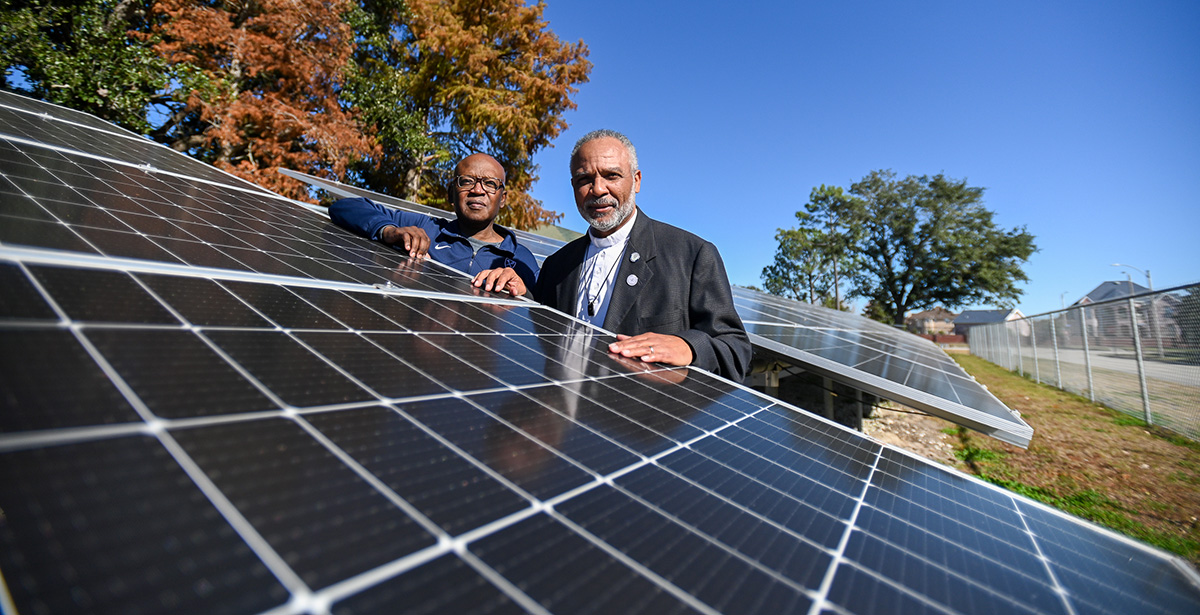
“We had an influx of calls asking what the Community Lighthouse is, from folks who weren’t Methodist, who were unchurched, who were just willing to help,” Johnson said.
Johnson sees the program as an opportunity to offer a sense of safety during an unsettling time for all the church’s neighbors.
“It makes perfect sense to be located in our church community,” he said. “Our purpose is to do good and help others, and there’s no better time than during the aftermath of a storm.”
When the idea arose to install commercial-scale solar panels that connect to a backup battery storage system, the Rev. Duane Gidney of Level Ground Community Church in the Hollygrove neighborhood suggested the “Community Lighthouse” name, drawing on the opportunity to build beacons to provide not only electricity but also hope and support.
While the project has brought many people a heightened sense of individual faith, most see the larger benefit as creating a stronger responsibility between the church and its neighboring community.
“For me, the church has always been a place not just to develop my own spirituality, but to use its power in the larger community,” said Max Reichard, a member of St. Paul Lutheran Church.
“I don’t know why we exist if we’re not out there doing for other people what they can’t do for themselves.”
Faith as a means to grow community resilience
In coastal New Orleans, which bears the brunt of hurricane season most years, the importance of the Community Lighthouse is immediately recognizable. But across Louisiana, the appeal is deeper than just having energy when the grid goes down.
Ben Peterson, a community organizer with Together New Orleans who previously worked for Central Louisiana Interfaith, said that even away from the coast, one of the most appealing aspects of the project is the human component.
In addition to connecting congregations across denominations, the Community Lighthouse initiative has required relationship-building with each church’s immediate neighbors.
In creating a Community Lighthouse resilience hub, a congregation or civic center also builds a team of people who are deeply connected to their neighbors. This has created resilience beyond community disaster response, said Jen Scott, an associate professor of social work at Louisiana State University.
Scott credits much of the Community Lighthouse program’s success to its grassroots development and the collaboration of everyday people who were interested in working with their communities to build new ways to care for one another.
“It’s helping to re-anchor institutions in their neighborhoods,” she said.
Joshua Blount, a relatively new member of Bethlehem Lutheran Church, was searching for a way to get more involved in his community. He found it within the church’s Community Lighthouse program.
Blount took on the role of head “lighthouse keeper” at Bethlehem Lutheran in Central City, becoming the go-to expert on keeping the solar panels and backup batteries running year-round. He also helps keep track of parishioners and neighbors who may need extra support during emergencies.
Why does your church exist?
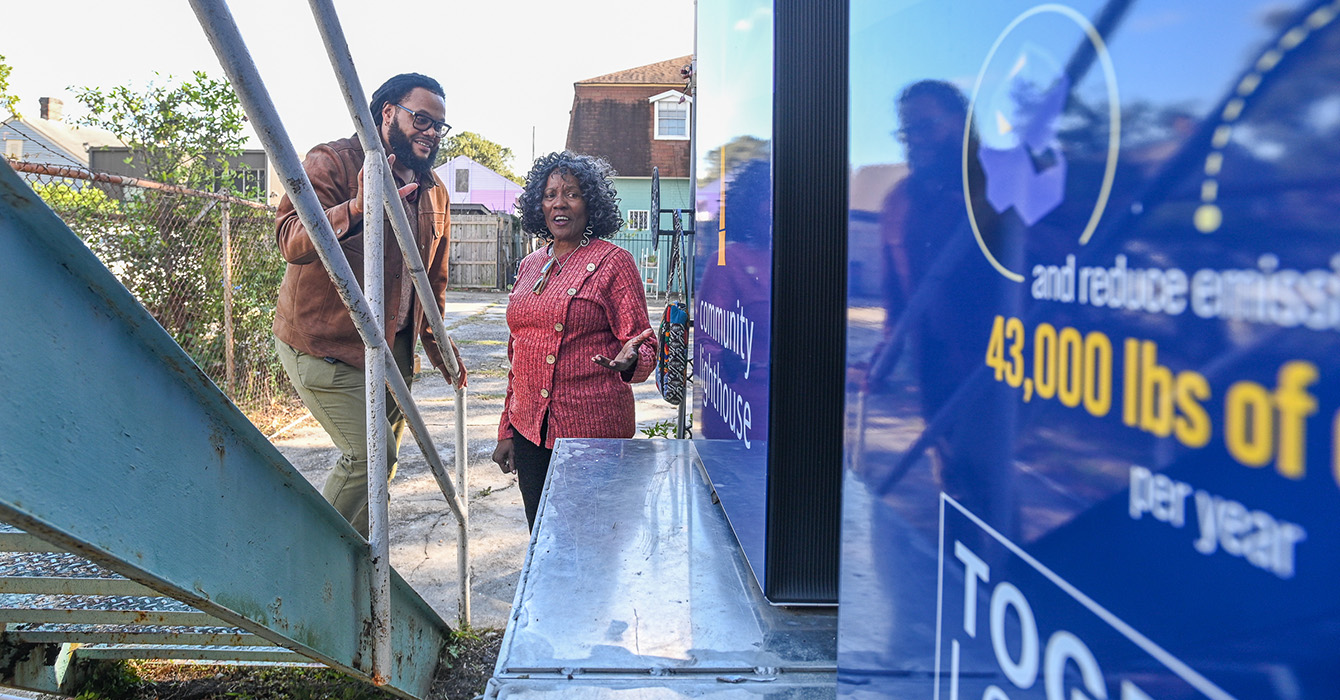
Reichard also credits the Community Lighthouse project for strengthening St. Paul Lutheran’s relationship with the local neighborhood association, which has helped the lighthouse team find volunteers.
Working with the community was key to scaling an idea into a network of operational solar-powered neighborhood shelters across congregations.
To introduce this concept of solar microgrids to communities, Together New Orleans developed structured presentations called Civic Academies to educate those interested in creating these new resilience hubs. These trainings have taken place continuously over the last few years.
Educating the congregation took patience, said Reichard of St. Paul Lutheran. Over the last two years, he worked to keep his community informed about the opportunity afforded by Together New Orleans. Solar panels and batteries were installed at his church in the Marigny neighborhood in 2025.
The Civic Academies “helped to sell not only our communities but the city at large on investing in this process, because it was just an idea and we didn’t have any money for it,” Johnson of Cornerstone UMC said.
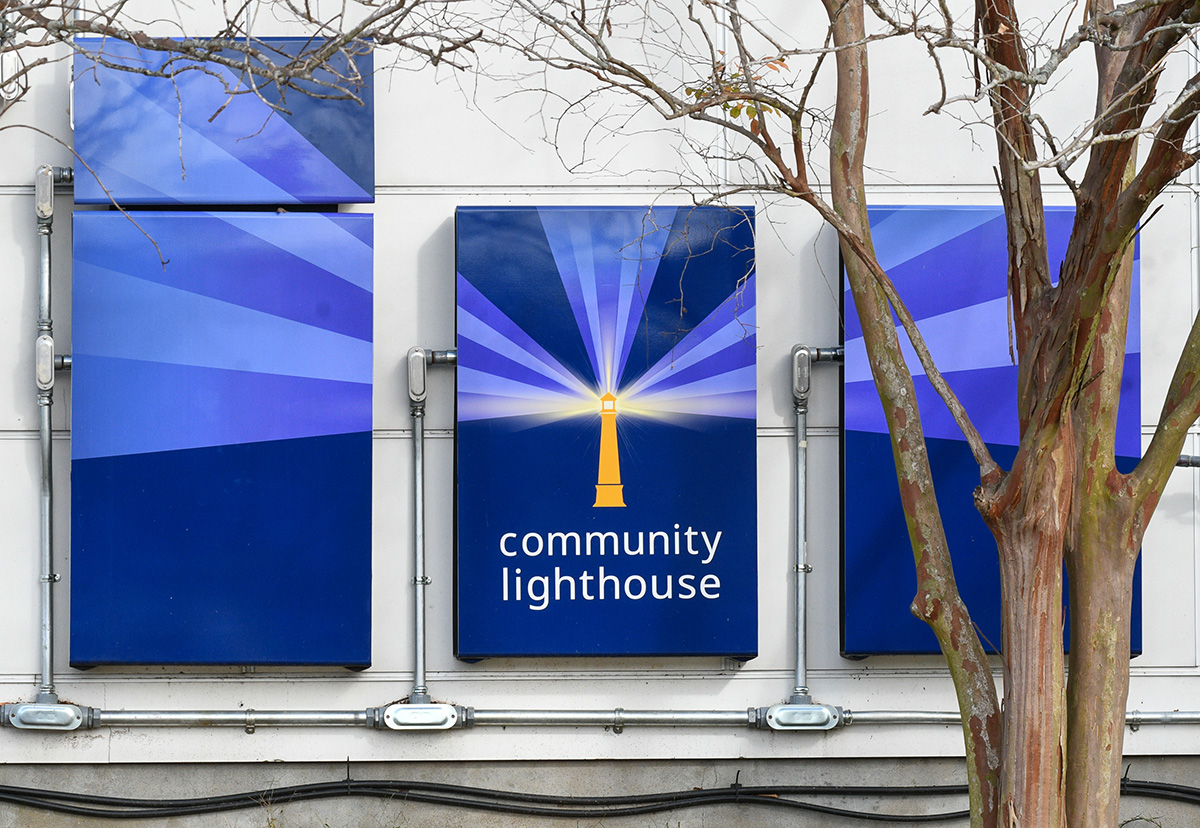
Network offers more than electricity
Although the idea is a simple one — offering shelter to neighbors in times of need — the execution is complex and extends beyond crisis response.
Johnson said he was impressed by the importance placed on supporting each congregation in its individual journey, including the emphasis on creating apprenticeships to give people new economic opportunities.
The initiative works with organizations such as the International Brotherhood of Electrical Workers to hire unionized green energy experts and the Louisiana Green Corps to offer apprenticeships to young people interested in finding their place in the green energy economy.
And in addition to technical training, the initiative prepares lighthouse keepers to respond to mental health crises.
Scott and other social workers developed a brief group mental health intervention called Communities Organizing for Power through Empathy (COPE) to teach coping skills for everyday people thrust into caregiving roles. The development of this training was inspired by mental health workshops offered after Hurricane Katrina to address the immense burden and traumas wrought by the levee failure during and after Katrina.
“It’s a stressful situation when people are having to come into this lighthouse because they have no power and don’t know when they’re going to,” said Michele Firestone, a member of the Community Church Unitarian Universalist in the Lakeview district.
“We learned some coping skills for ourselves and also to help take care of the people who come to us in that situation.”
Does your congregation have opportunities to connect with partners in the community?
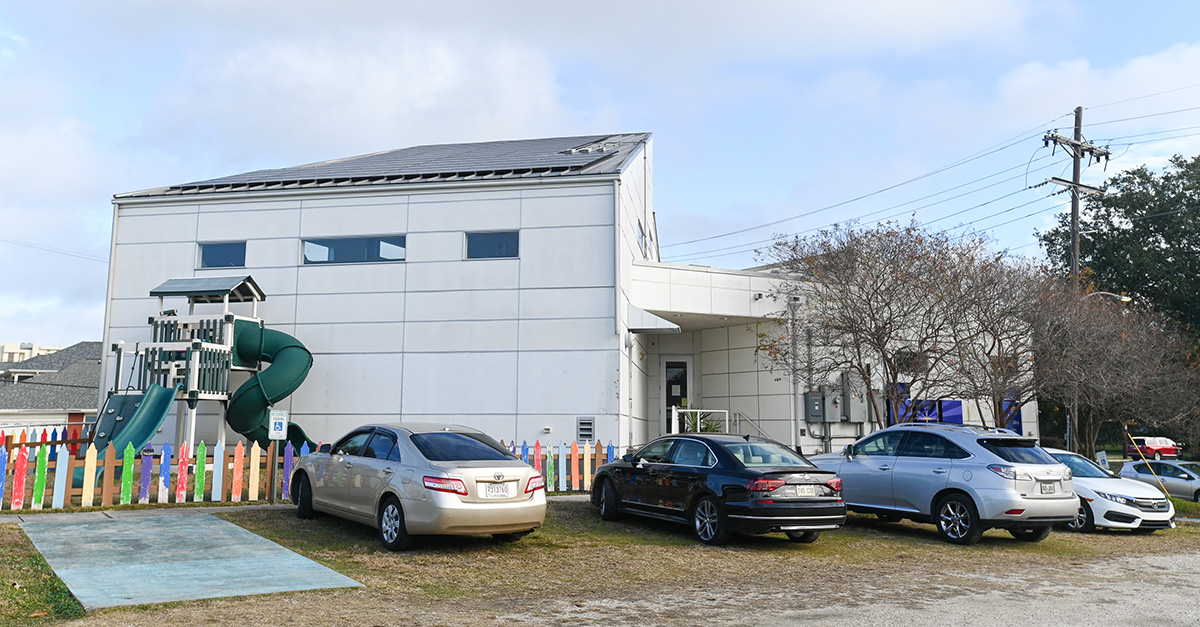
Expanding the network
A mix of public-private partnerships and philanthropic donations has funded the project, including $2 million from the City of New Orleans and $3.8 million in federal funding secured by U.S. Rep. Troy Carter (D-LA). This fundraising has allowed even small congregations to afford the commercial-scale solar panels and backup batteries.
At First Grace, for example, the equipment cost around $300,000. The congregation didn’t pay a cent.
On Sept. 9, 2025, the National Academies of Sciences, Engineering, and Medicine’s Gulf Research Program and Lever for Change announced the Community Lighthouse Initiative as one of 10 finalists for the $50 million Gulf Futures Challenge.
That funding would allow Together Louisiana to scale the Community Lighthouse strategy. Broderick Bagert, lead organizer of Together New Orleans, said such expansion would create a systemic approach to address the social isolation that often determines health outcomes during emergencies.
The scope of work is also expanding. In December, the New Orleans City Council advanced a plan to spend $28 million from a power company overcharge settlement on hundreds of battery installations across the city. This follows a pilot project launched at the Sisters of the Holy Family to reduce electricity bills for their neighbors in New Orleans East.
During this year’s Epiphany, which kicks off the Carnival season in New Orleans, Anglim and leaders at First Grace celebrated the expansion of the city’s inclusive microgrid.
Together Louisiana’s Community Lighthouse initiative grew from parishioners’ sense of increasing urgency to take action after they had waited for decades for a governmental organization to create a plan to keep the city’s residents safe.
The most vulnerable communities in New Orleans have long distrusted the government, going back to the Great Mississippi River Flood of 1927, when white elites used dynamite to blow up parts of the levee that protected poor Black and Acadian communities.
And before Hurricane Katrina’s floodwaters burst through the levees in 2005, a 1965 storm called Hurricane Betsy overtopped the city’s earthen protections and breached the levee in the same place where the Lower Ninth Ward would flood 40 years later.
As more hurricane seasons passed with no plan emerging to protect those most vulnerable in the aftermath of a storm, New Orleans congregations and their allies took it upon themselves to create a system that could offer a new way forward.
This need is likely to grow across the country as storms become more severe and frequent; extreme weather places immense stress on aging energy infrastructure, leading to an increase in weather-related power outages.
“Don’t wait for someone else to do it,” said Peterson, of Together New Orleans. “You’re going to be the one.”
Have any of your projects had positive consequences beyond their main purpose?
Questions to consider
- Are there opportunities for your congregation to lead the way in improving life in your community?
- Do people come to your church in a crisis? In what ways can you “be the church” when that happens?
- Church member Max Reichard says, “I don’t know why we exist if we’re not out there doing for other people what they can’t do for themselves.” Why does your church exist?
- The churches involved in the Community Lighthouse project joined a statewide network that includes everyone from green energy experts to city officials. Does your congregation have opportunities to connect with partners in the community?
- Have any of your projects had positive consequences beyond their main purpose?