
Ever since I was a little girl, I’ve felt closest to God when I’m listening to a story.
When Jesus first clicked for me, I was sitting in a Sunday school semicircle listening to Mrs. Cameron animatedly tell the story of the woman at the well. There were felt boards and wildly inaccurate portraits to boot. Pale-faced Jesus wore pristine white with a red sash. And yet, in that retelling, I heard truth.
Even through the felt figures, something real reached me. A love — bigger than judgment and hate — made sense to me for the first time. That is when I decided (without yet having language for it) that this was for me: both Jesus and storytelling.
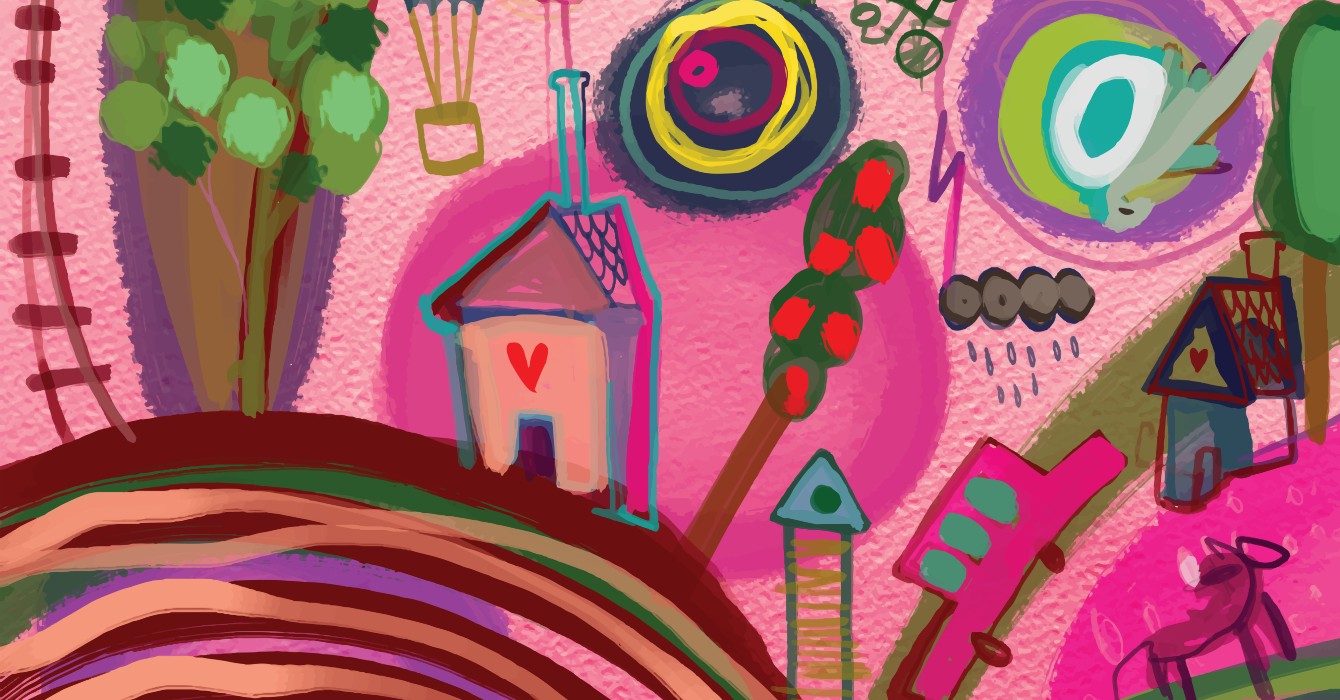
I have loved listening to stories ever since — moments where lived experience and truth converge, where beauty connects through pain toward repair. Even despite meager attempts (like bad Sunday school art) to describe things beyond us.
I’ve heard those stories from pulpits and in Sunday school rooms, yes. But even more poignantly, I’ve encountered them in community, on journalism assignments, facilitating cohorts, interviewing folks from behind a camera, reading or watching something new and timely.
And what I’ve come to recognize is that the moments that stand out as spiritually impactful share a common posture: I was not performing or producing anything. I was present. I was listening.
Storytellinglistening
Listening to story is not only a spiritual practice; at times, it is a spiritual discipline. Quaker theologian Douglas Steere once said, “To ‘listen’ another’s soul into a condition of disclosure and discovery may be almost the greatest service that any human being ever performs for another.”
I believe that — and I’ve witnessed it.
To listen well requires building trust, cultivating safety, and taking care. It requires the discipline of decentering self and opening to another’s truth, even when that truth presses uncomfortably against one’s own. And it means doing the ongoing interior work required to show up with humility and presence.
Story listening is spiritual because it assumes God is already there. My role is not to summon meaning, but to arrive attentive enough to recognize and point to it.
This kind of listening is wildly inefficient. It takes time. I know this pull toward efficiency not only because I observe it, but because I’ve been formed by it and regularly wrestle to free myself of it.
Much of what passes for storytelling today is not based on listening at all, but on consumption. We are trained to consume stories quickly; to react rather than respond. Even when stories come to us through books, films or podcasts (forms I deeply love), they often invite reflection without relationship. What is lost is not creativity, but reverence.
Story as inheritance
I come from a Hawaiian family, and words from the Hawaiian language shaped my upbringing. Perhaps because of this, I fell in love with words themselves. Hawaiian is a storytelling language. Hawaiian words do not merely describe reality; they carry it.
One such word is moʻōlelo. It is often translated simply as “story,” but its meaning is much richer. Moʻo refers to succession or lineage. ʻŌlelo means word or voice. Moʻōlelo, then, is not just a story, it is a succession of spoken truths, wisdom carried across generations.
Every story we tell is an act of stewardship. We are not merely reporting what happened. We are declaring what mattered. We are shaping meaning from something that is still unfinished, still alive.
I was trained as a journalist. In that work, soundbites, headlines, efficiency and deadlines all matter. What I eventually learned, often the hard way, is that the spiritual work of storytelling requires time, trust and honesty, not just factual accuracy. To discern truth, to articulate it faithfully, and to do so in a way others might actually receive it, is spiritual work.
Over time, I came to understand that this posture — attending to relationship, place and context — was not only journalistic, but deeply theological.
I remember covering devastating tornadoes that struck communities throughout Missouri and Alabama in 2011. Entire neighborhoods had been flattened. At one point, I stood amid the wreckage and turned in every direction, seeing only destruction. I felt small and overwhelmed by the scale of loss.
When I sat down to write, I realized that smallness was instructive. I was not the owner of this story. I was a steward of a very small inheritance, one vantage point within a much larger whole. That stewardship began before I ever wrote a word, and looked like folding donated clothes, sorting food, standing shoulder to shoulder with volunteers who had driven in from three states away and with neighbors organizing mutual aid in their own community.
It changed how I wrote: I resisted easy conclusions, made room for voices beyond my own, and allowed the story to remain unfinished rather than forcing resolution.
It trained my eyes to widen and ears to open. It taught me to honor the many other perspectives present, the countless others that had shaped the moment long before I arrived, and those that would continue shaping it long after I left.
To hold even a portion of that story with care felt like a privilege – holy, even.
Narrative change requires long faithfulness
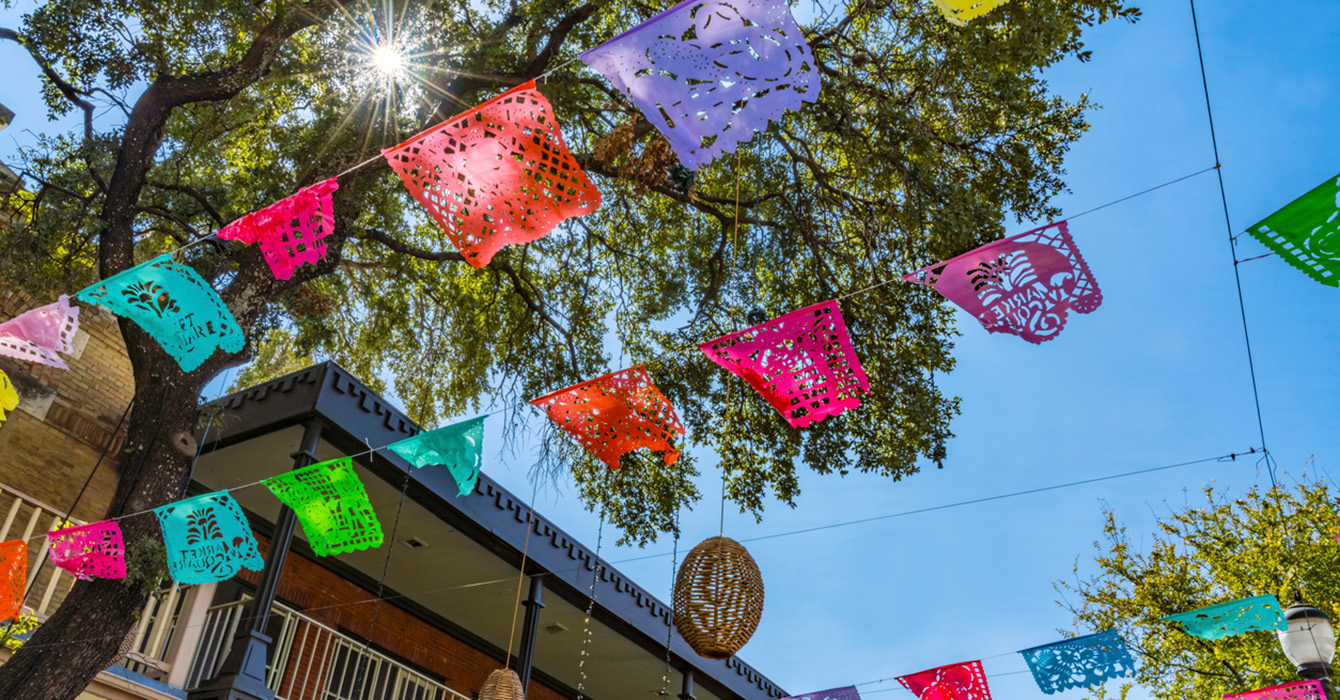
Years later, while leading a narrative change storytelling initiative focused on economic segregation in San Antonio, Texas, I encountered another formative interruption. The effort brought together San Antonians of all kinds, perspectives and lived experience to listen across difference and to surface how deeply held stories about poverty were shaping who was seen, valued and invested in — and to imagine what might change if those stories were told differently.
As part of that effort, we hosted community listening sessions and proposed what we called a “narrative change campaign,” an attempt to gather and share stories in ways we hoped might challenge entrenched assumptions and invite more truthful, humane narratives.
During one of those community listening sessions, an Indigenous leader responded to our proposed campaign by saying, “We’ve been doing this kind of storytelling for three centuries. A campaign won’t change anything. If you’re serious, you’ll commit to this long-term.” Then he added, “We’ve been institutional roadkill before. What will make this different?”
His words unsettled me. They still do.
Shifting deeply held narratives is spiritual work because it requires a re-examination of the values we’ve inherited and the histories we tell ourselves about who belongs and who does not. Over the years that followed, I learned far more about leading this kind of work from poets, social workers, faith leaders, educators, children and elders than from any communications training.
The work looked less like messaging and more like meals. Less like strategy and more like walking alongside. Less like directing and more like companionship.
Participating in narrative change demands long faithfulness. It cannot be rushed or optimized. It begs us to hold our souls up to the mirror and ask why we believe what we believe. It also asks us who pays the cost of those beliefs. This work only functions in community, where lives shaped by different histories meet one another with humility and care.
That kind of mending is not merely political or relational. It is spiritual. And storytelling, when practiced as listening, stewardship and restraint, becomes a vehicle for healing rather than harm. But it begins not with technique. It begins with posture.
To discern truth, to articulate it faithfully, and to do so in a way others might actually receive it, is spiritual work.