

While volunteering at La Casa del Migrante in Tijuana, Mexico, I met a woman who had recently arrived from Guatemala. She was pregnant, within weeks of her due date, she told me one evening in the best Spanish she could put together. She was from a Mayan community in the mountains, and Spanish was probably her third or fourth language, which was all she needed for the task at hand. We were chatting while sorting through piles of clothes. I was on ropa duty that day, which meant that after the community meal, I would unlock the storage room with all the donated clothing, and residents of the shelter would line up for an opportunity to pick out new pants, a shirt, a jacket, socks and underwear, shoes — whatever was available, whatever they needed.
She really needed a new pair of shoes, she said. I walked her over to the shelves and rummaged through the stacks to find a decent pair in her size. As we poked around at the options, which weren’t ideal, she glanced over at a huge stash of shoes on the floor and chuckled to herself. I looked over and laughed too. The mound in the corner was made up of high heels — stilettos and platform shoes. She asked me if anyone picks from those, and I told her that no one ever does, which is why the pile just gets bigger and bigger. Then I tried to explain the cultural phenomenon called “Southern California,” and how all the donations came from nice people in wealthy neighborhoods in Los Angeles and San Diego, and how I guess they hadn’t quite thought through what it’s like to try to walk through the desert, to cross the border, in stilettos. We both shrugged and laughed as I handed her a pair of very reasonable Nikes that looked like they might fit.
Later that evening a long-term volunteer at the shelter stopped by the cuarto de ropa and asked if I could pick out some baby outfits. She’d decided that the shelter should throw a baby shower for the soon-to-be mom. So I stayed late that evening, sorting through boxes of clothes, picking out the cutest onesies and newborn outfits, and pondered how the world has come to be the way it is, where the best option some people have for survival is to leave their ancestral land, their community, their family, and risk everything at the border.
The next day, as we gathered for morning prayer, our cohort of volunteers, the eight of us, decided to pitch in some cash to buy a cake and party supplies for the grandest baby shower celebration the migrant shelter has ever seen. We passed around a basket as the priest led us through the morning liturgy, which concluded with a lively rendition of Leonard Cohen’s “Hallelujah.” I’m not sure if, before this moment, I would’ve considered the song appropriate for prayer; but, somehow, a month before I arrived, a volunteer had convinced the young priest from Vietnam — who, mind you, hadn’t at that point in his ministry needed to learn English —that Cohen’s song was appropriate to sing as a kind of benediction.
The priest took out his guitar (he’d learned the tune at the volunteer’s request), and we had a Leonard Cohen sing-along as we held hands and swayed. Even though the priest didn’t know all the words, he led us as we offered to God our broken hallelujahs.
That night there was a party, with all the newly arrived guests gathered to offer gifts to a woman they’d never met before, as she prepared to welcome a child in the shadow of a society that couldn’t care less about her life or the life of her child. But there, in Tijuana, among strangers from everywhere, from Syria to Nigeria, from Brazil to Ecuador — there, in that shelter, the community celebrated with balloons and streamers, cupcakes and hot chocolate, music and dancing.
A couple weeks later, after I’d returned to North Carolina, a friend from the shelter texted me pictures of the newborn. She let me know that the mother and infant were healthy. The lead priest of the shelter was committed to letting them stay for as long as needed, until she was ready to try to cross the border again, this time with a baby.
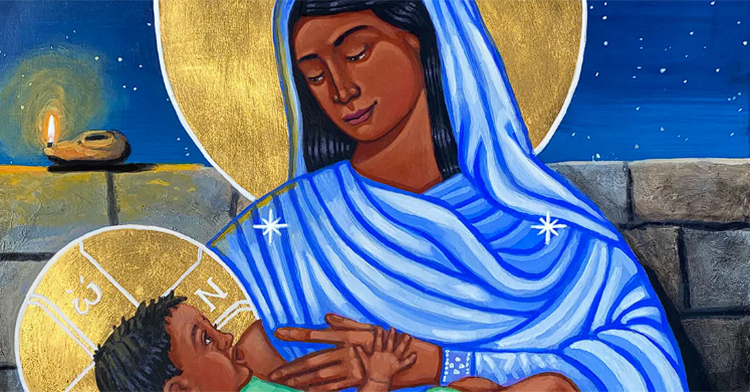
That world at the border is not far from the world into which Jesus was born, with Mary and Joseph on their own, far away from their community, in an abandoned corner of society, alone, except for the strangers who showed up to celebrate. At that first-century baby shower, the shepherds from the fields offered the only gifts they had: words, the words from the angels they had seen in the fields, the promises of God, news of hope. And “Mary treasured all these words and pondered them in her heart,” the Scriptures tell us (Luke 2:19).
With the shepherds and animals gathered around her child, Mary received their words as treasures and kept them in her heart for safekeeping, to be there for her when she would need them again, when she’d need the strength of God’s promises for her plight.
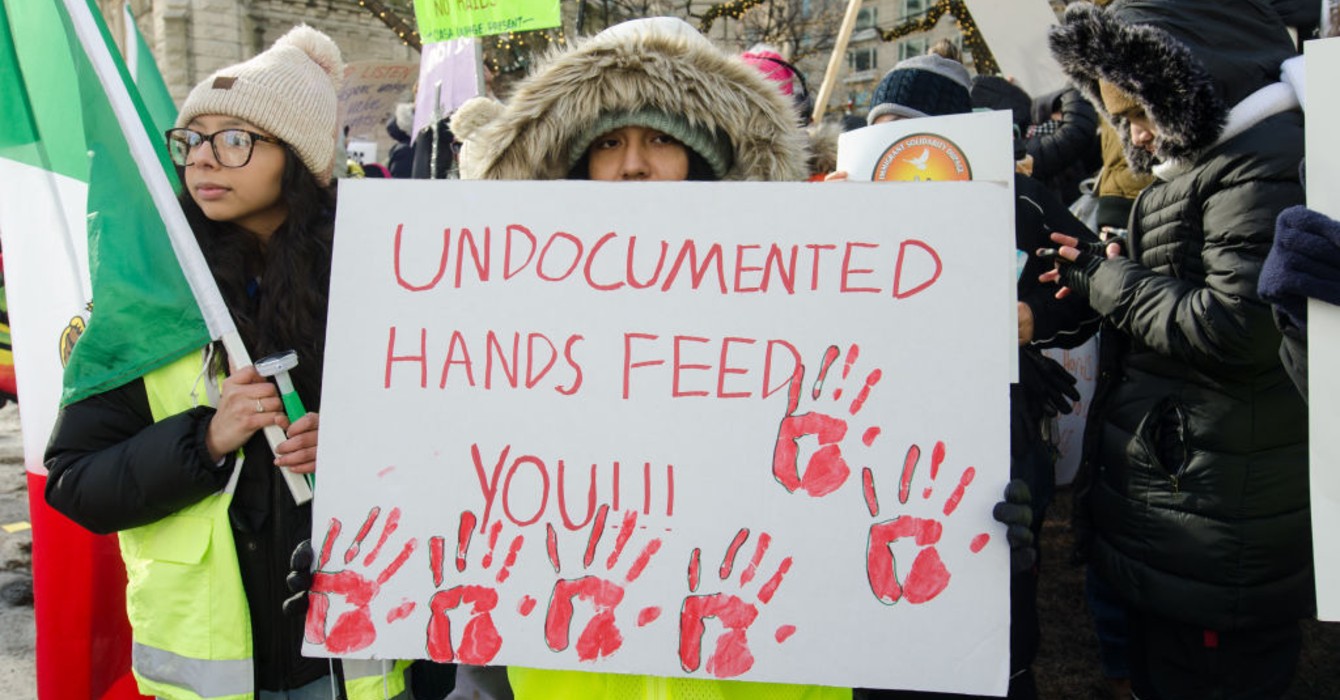
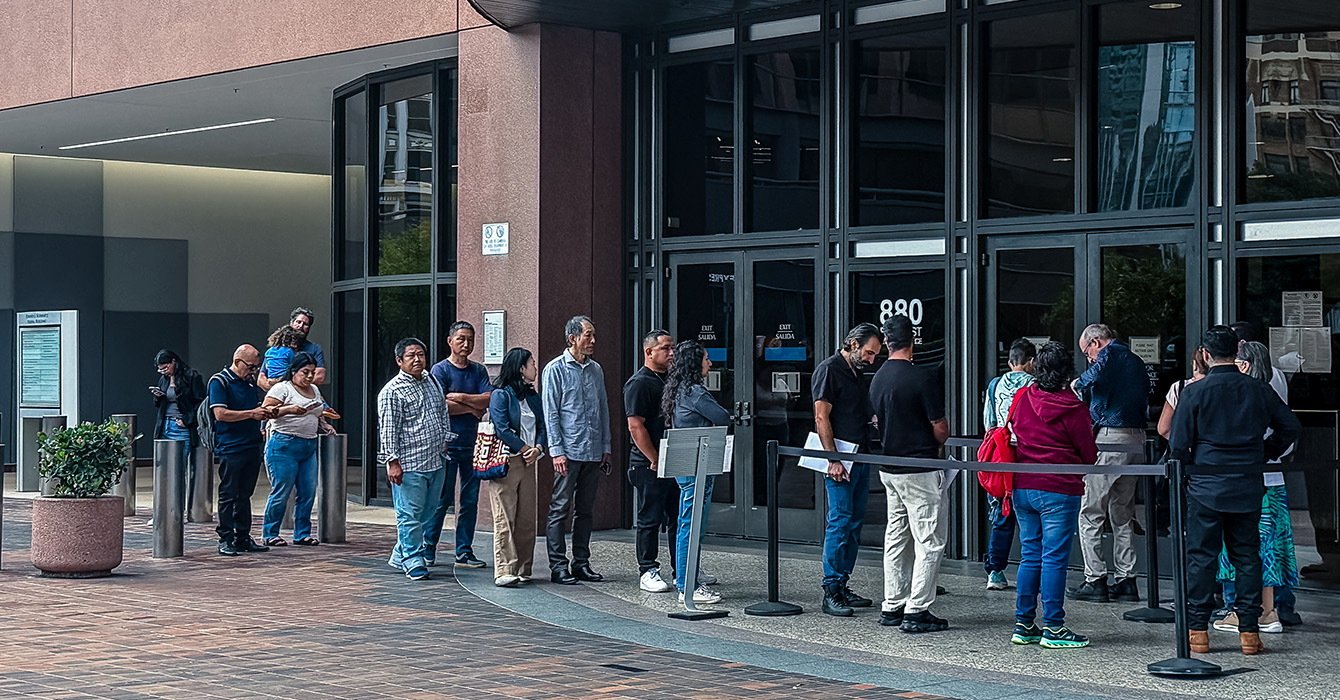
There is much to wonder about, so much to ponder — about what has happened to us and what has happened to our world. Lives devastated as a result of immigration policies and enforcement. Family members torn from each other. The pounding dread that today will be the day of their arrest and deportation. A weaponized environment, orchestrating death in the borderlands. There is a political wound at the heart of how we organize ourselves as a country. There are people like Mary at every juncture in our body politic, where the border between citizen and alien cuts into our common life.
There are people like the woman in that Tijuana shelter, hoping for a better world for her teenager; and Rosa, living in a church, waiting for the promise of a life with her children. People like Mary — bewildered and exhausted, searching for words to treasure, to hold on to, signs of a world about to turn, daybreak to end the nightmares.
And, in the meantime, people invent reasons for joy in the face of despair. Like the detainees at the Eloy facility who pool their meager resources to buy overpriced Doritos and “pork product” as ingredients for their creative attempt at a Christmas feast of tamales.
Despite it all, there are people who get together to make hope possible. There are baby showers in migrant shelters and people who look out for each other and strangers who do what they can with what they have — to celebrate life in the midst of violence, to prophesy the dawning of a new day even while walking through valleys shadowed with death.
There are always good reasons to sing a hallelujah, even if our hope falters, even if we’re overwhelmed at the realities of our wounded world, overcome at the devastation — to sing a broken hallelujah on behalf of a broken world. Because we believe that our neighbors — regardless of citizenship status, residency documentation, or whether they live on this side or the other side of the border — are held in God’s care. The Bible reminds us that God has been known to join caravans in the wilderness. The Spirit of God dwells with people on the move. A migrant God for migrant life.
To believe in this God is to live with hope, to depend on and lean toward hope, to entrust our hope to the transforming power of the Holy Spirit — the Spirit who invites us to pray, with Jesus, for God to remake our earthly lives according to the image of heavenly life. “Thy kingdom come” (Matt. 6:10). Our spiritual longing is also a political longing. To pray for the transfiguration of our earthly politics is to open ourselves toward God’s promises — for hope to come alive in our collective struggle as we ready ourselves for a new world.
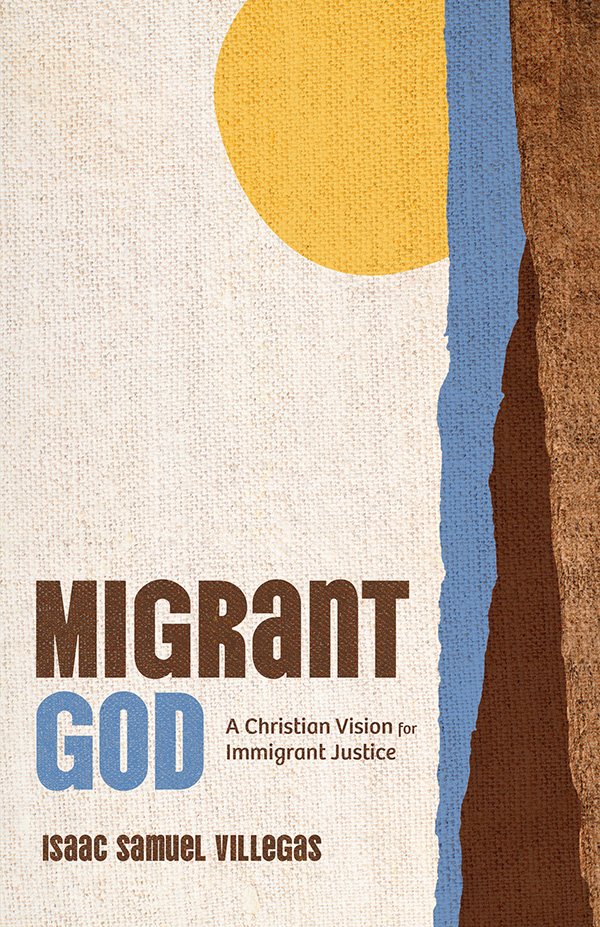
Excerpted from “Migrant God: A Christian Vision for Immigrant Justice” by Isaac Samuel Villegas ©2025 (Wm. B. Eerdmans Publishing Co.). Reprinted with permission from the publisher.
That world at the border is not far from the world into which Jesus was born, with Mary and Joseph on their own, far away from their community, in an abandoned corner of society, alone, except for the strangers who showed up to celebrate.