
I’m standing in the narthex at the end of Great Vespers with a young man who looks nervous and, as he’s probably already figured out, decidedly overdressed. He’s in a three-piece suit for a service at which most people show up in whatever they find themselves wearing on a Saturday at 5 p.m.
“I would like to speak with Father Joshua,” he says. I’ve offered to answer any questions he has and he’s turned me down, opting instead to wait for my husband.
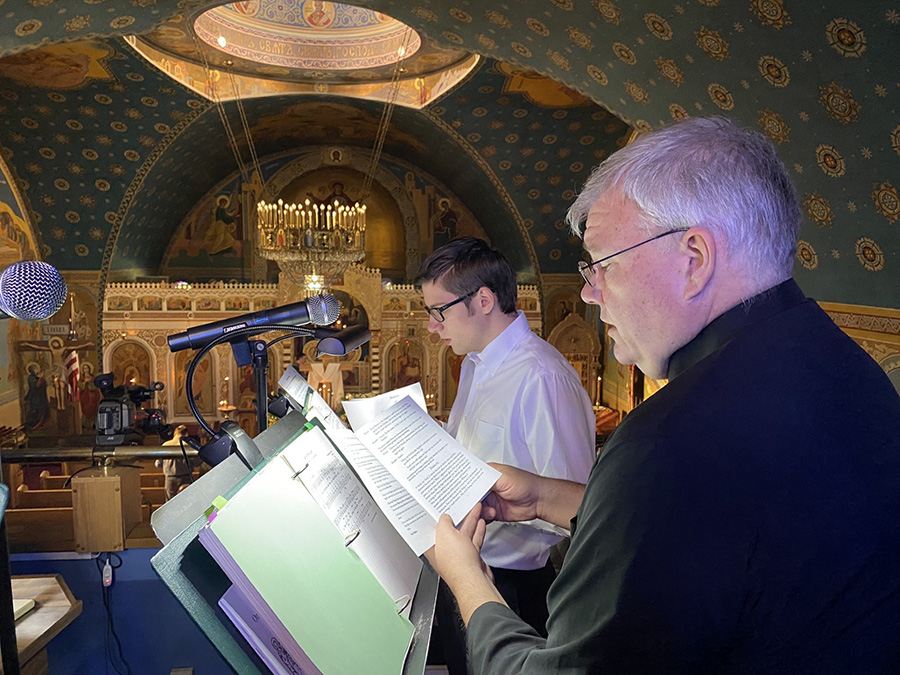
I warn him he’s in for a long wait. Confessions after vespers have stretched into a several-hours-long affair, a vastly different reality from when we first arrived at the parish 20-plus years ago.
At that time, my husband spent every Great Lent pleading with the mostly older congregation to please come to confession. But this new flood of younger people — and flood really is the only appropriate word — keeps my husband at the confession stand until at least 8 p.m. on Saturdays. It’s tiring, but he’ll be the first to tell you that it’s an incredible joy.
So whenever articles such as the New York Times story “Orthodox Church Pews Are Overflowing With Converts” show up in my feed, I cringe a little before clicking, readying myself for analysis that feels superficial, bobbing along on the surface of societal anxieties and trends.
And I prepare myself to see Orthodox Christianity cast into a certain role in the United States: as a kind of colorful, exotic, disturbing receptacle for any young person — especially young men — exploring traditional gender roles, conservative politics and Byzantine liturgics.
I get it; this is how Orthodox Christianity appears from the outside, with, as the Times article describes, our male priests with “large beards and big families.” But from the inside, I see something different.
I’m a religious education professional working with young adults; a mother of three young men with many friends, most active in their parishes; and the wife of a priest serving in parish ministry. What I see and discern doesn’t align with the popular explanation of our faith and our current convert surge phenomenon.
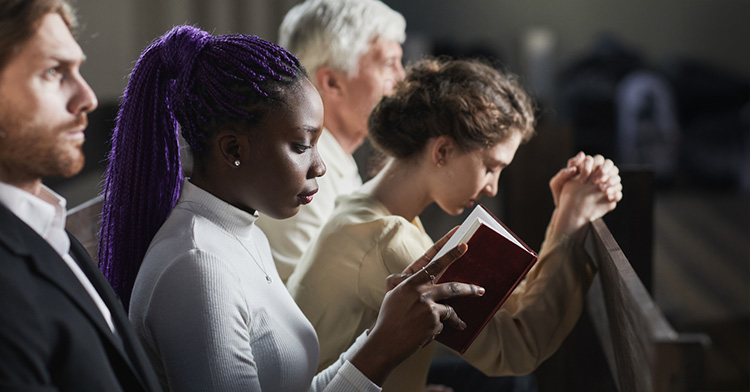
First, the converts flowing into Orthodox churches right now are not all young men. We’ve received single men and women, young and old; single moms and their children; married women and men choosing to convert apart from the rest of their families; and couples, young and less young, with and without children.
Our parish has never been such a riot of both ethnic and religious backgrounds. You are just as likely to encounter West African fish stew or Guatemalan tamales at coffee hour as you are kielbasa or hummus. In the last few years, we’ve chrismated, or received, former Episcopalians, Roman Catholics, Methodists, Pentecostals, Baptists, evangelicals and people who grew up without any religion.
We had one woman walk in the door and ask, without any preamble whatsoever: “Can you tell me about Christianity?” These people now pray alongside parishioners whose immigrant factory worker ancestors established the parish over 110 years ago.
Yes, there are a lot of young men, some of whom have particular philosophical and political views. But those young men are being received and welcomed warmly into an incredibly diverse church family.
And that’s what I find missing from so many of these cautionary articles. In my experience, a huge part of what these young men are looking for is a healthy, loving family and all it can offer — diverse intergenerational human engagement, support and guidance.
I’ve done no formal survey, but, anecdotally, from our own parish and the parishes of multiple colleagues, I see that a high percentage of these young men come from families ravaged by various struggles. Others come from stable families, but with parents who are preoccupied with their jobs, concerns and interests, that very little personal investment came their way. Some come from wonderful families, but have suffered personal challenges of their own, with mental health or abuse.
COVID-19 gave them — and many other folks — a deep reverberating shock. It exposed the fragility of their connections. It forced questions about whether they actually occupied a meaningful place in their families, schools, workplaces or neighborhoods.
Hitting at a critical point in their social development, it also had a concrete impact on their ability to engage easily with others. In the years since, an increasingly digital existence and AI have only dialed up those anxieties and struggles.
The result? These young men are starving for human connection and a sense of place. They will spend hours talking about theology or philosophy because, in part, it is hours spent with human beings who will look them in the eye, take their thoughts and questions seriously, and wrestle with existential things right alongside them.
They will show up at the parish picnic and instantly pitch in, moving chairs and tables because it is a chance to contribute concretely, to do something objectively useful. They will attend every service because it is a chance to anchor themselves, unmoored in an infinite digital world, in grounding narrative, ritual and a particular address in the cosmos.
Foundational to all of this involvement, they are deeply hungry for God. They have tried, at the encouragement of our individualistic society, to be the center of their own universe, and they have found it exhausting, overwhelming and deeply unsatisfying.
They have wandered onto the internet in search of connection, answers, meaning, purpose — and they have found it wanting. And at this societal moment, due a convergence of many particular things, they have found their way to us.
For those of us in the trenches of Orthodox parishes, a more important question than “Why are so many young men becoming Orthodox?” is “Will these young men stay Orthodox?”
Will they discover Christ in our midst and God’s image in their own person? Will they find people who will help them bear their burdens, heal from their wounds, grow in virtue and use their gifts for good? Will they learn, alongside us, to love God and their neighbors? I hope so.
Because the young man from the narthex is still here, and he’s delightful. He’s relaxed, he laughs, he showed up for the bishop’s visit wearing a loud floral shirt. The young kids find him hilarious; the older people find him dependable. He’s given up most of the internet for a vibrant real life. May it be so for all of us together.