During a car ride four years ago, L. Roger Owens asked his 12-year-old daughter, Mary Clare, “Do you want to write a book with me?”
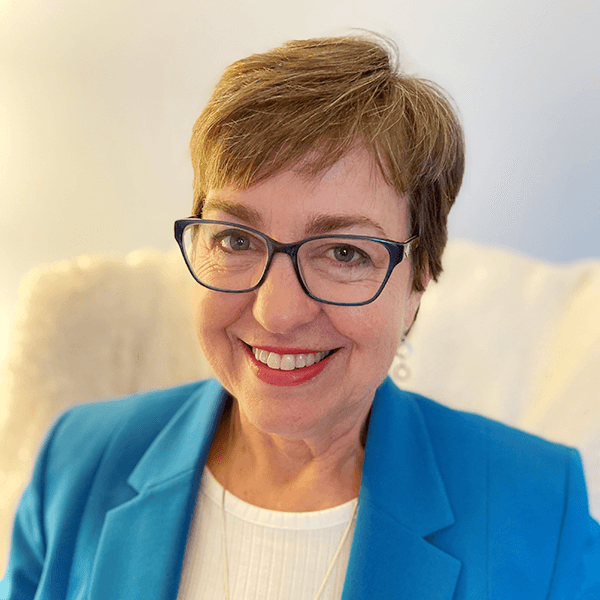
Roger, a professor at Pittsburgh Theological Seminary, is the author of numerous books on pastoral care and spiritual life. He and his wife, the Rev. Ginger Thomas, live in Pittsburgh and have three children.
Yet despite his experience teaching and writing about faith, Roger realized that he didn’t always know how to translate the lessons he shared in classrooms and churches at home. He thought Mary Clare could help.
In the Owens household, bedtime is more than just a nightly routine. For many children, bedtime signals the end of the day’s fun, but for Mary Clare, it was something to look forward to.
It was a time to play with stuffed animals, reflect on the day and talk. She often asked about life after death, how the world came to be and other big questions that don’t have simple answers. Roger began wondering how he could encourage his daughter to have a prayer life where she felt comfortable bringing her questions, doubts and feelings before God.
Mary Clare already was wrestling with big questions by writing her own meditations on them. Rather than seeing the book project that her father proposed as intimidating, she saw it as both a challenge and an opportunity to grow her skills as a writer and thinker.
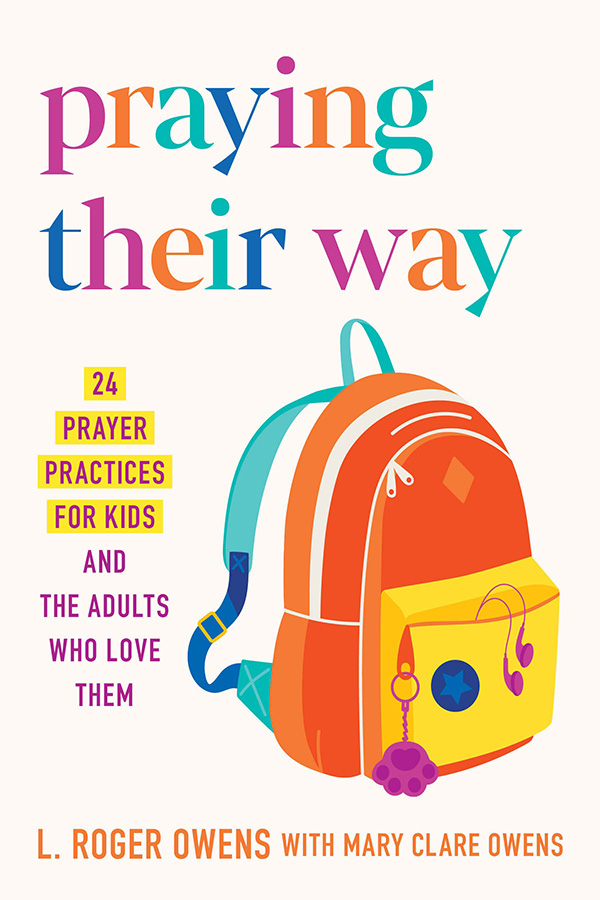
“Praying Their Way: 24 Prayer Practices for Kids and the Adults Who Love Them” combines personal storytelling with practical spiritual guidance, inviting young readers to see prayer as a natural part of everyday life.
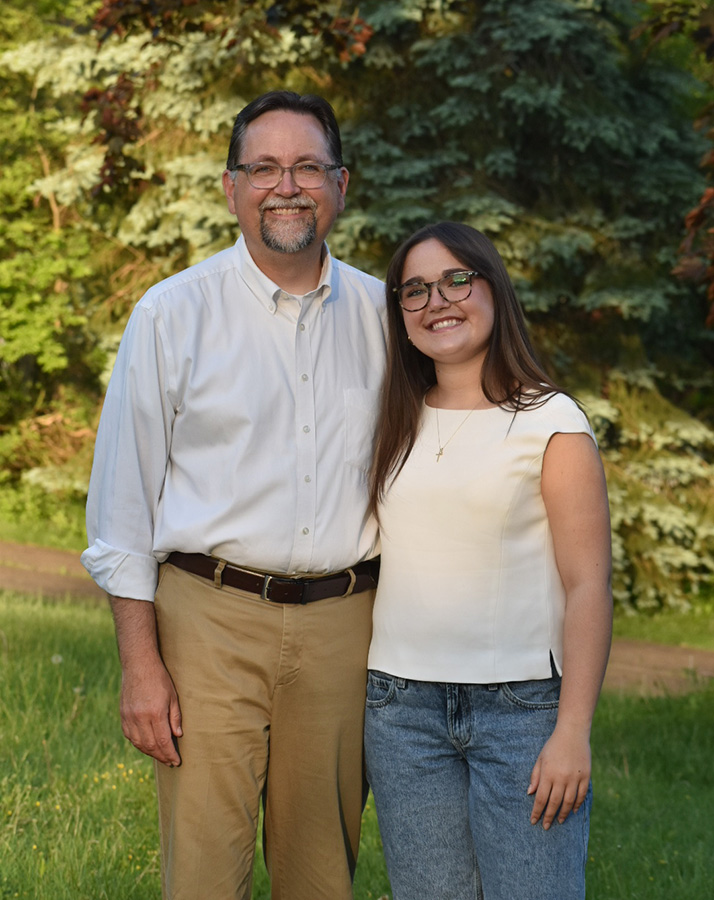
In the book, Roger reflects on his own experiences to explore feelings and situations many young people face. Mary Clare provides an authentic teen perspective through a recurring section called “Mary Clare Says.”
They hope their voices combine to create an approachable and engaging resource that helps young readers discover that there is no “right way” to pray and that faith can be explored through their own experiences and questions.
“Part of the posture of this book is to say, ‘Let’s trust the wisdom of the kids and teach them to trust their own wisdom,’” Roger said.
L. Roger and Mary Clare Owens spoke with Brianna Jackson, Faith & Leadership’s 2026 Charmaine McKissick-Melton Communications Fellow, to reflect on the inspiration behind the book, the writing process and what they hope readers will take away from it.
Faith & Leadership: Mary Clare, what was it like working with your dad?
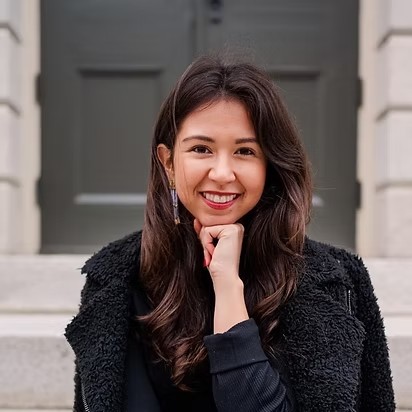
Mary Clare Owens: It was hard to do it at home, but we would go out to coffee, which was really nice, to spend that time together. It was never really a struggle; it was just fun to write together. I really enjoyed showing him what I had written and how we would talk about how that all fit together with what he wrote.
I feel like the other books that he’s written I haven’t had the opportunity to read, or they’re not really geared toward me, but this has been cool, because I’m like, “Yeah, my dad’s a good writer.” It’s cool to see that he’s able to do this. It was cool to also see my work along with that.
L. Roger Owens: It is true! I’d say, “It’s about time for you to write one of your essays,” and she’d just lock in. Sometimes I’d be like, “Well, you might want to write about this,” or, “Maybe think about this.” She would be like, “Dad, I know what I’m going to write,” and just hammer out those first drafts. She did a nice job!
F&L: In the beginning of the book, you emphasized that children already are spiritual. How should that reshape how leaders approach teaching and discipleship?
LRO: I think it means not assuming that the primary job of teaching is input and shaping and changing. Resist the temptation to correct them in the moment. Because then they’ll just shut down, but there’s so much wisdom already there.
So, it’s a posture shift toward listening and dialogue and leading out rather than only input and teaching and helping them get the right way to do it.
Obviously, there are things kids don’t know; there are practices they can learn. You wouldn’t write a book if we all knew everything.
F&L: You identify two main obstacles to prayer for young people: prayer can feel very personal, and many parents or guardians lack the confidence to help their children develop a prayer life. At what point did you realize that the act of prayer doesn’t have to be so silent and this intimate thing?
LRO: We think of our spiritual lives as so private and individual, and they are in many ways very personal, but that doesn’t mean that we can’t share them with others.
I grew up in a family where we did not wear our faith on our shirtsleeve. We went to church, we were faithful, we did all that stuff, but we just didn’t talk about God in the house. I noticed that that translates into our own home.
So we started having family prayer on Sunday evenings. We’d read a passage of Scripture, and I was just amazed at the insight and the wisdom of the kids and the questions they had about God.
We could just share that without feeling like I had to teach them something or correct them. Just to create that open space for conversation about God and prayer seemed really important.
F&L: In chapters like “Big Feelings,” you reiterate to readers that “all feelings are normal,” including the ones that seem too big to handle. What role can prayer play in helping children navigate complex feelings like anxiety or uncertainty, or big faith questions?
MCO: I have always been a big questioner. I want to know when the universe was created and how, and how long ago. I used to ask God for those answers, but as I’ve learned other ways to pray, and that prayer is not just asking God for things, it’s more just spending time with God. I’ve learned that prayer helps me say to God, “I don’t know, and you do.” And that’s OK! You’re here with me, and I’m here with you. And that’s what’s important.
LRO: With regard to anxiety and mental health in children, my familiarity with mindfulness practices shaped my thinking about this topic. I think the undercurrent is there. It’s OK to show up however we are and not judge our own experience in prayer or how we’re feeling when we show up to prayer, and trust that God is not doing that as well.
F&L: Mary Clare, one of the unique features of the book is the “Mary Clare Says” sections at the end of certain chapters, where readers hear directly from you. What topics did you feel were important to speak to from your own experience?
MCO: I don’t know how we ended up dividing it up. We didn’t want me to write for every single chapter, so he would give me ones that maybe would be more interesting to me.
But there were some that were more difficult to write about. I tried to continue instead of choosing not to write about it, because that’s what the book is about. When things are hard or when you’re not sure how to pray or what you’re doing, work through it and be OK with not knowing.
F&L: Have you tried to use the book as a resource for children in your church community? If so, have you received any feedback?
LRO: I led a five-week Sunday school class at the church where my wife is an associate pastor. It’s the church where we worship. It was a group for parents. One of the things that was so clear is that parents don’t feel like they’re equipped. They’re hungry for resources that can help them lead their kids into a spiritual life and to friendship with Jesus.
One of the moms really loved what we call “morning offering,” and it’s just about praying in the morning by thinking about your day and offering it to God. And she would do this with her kids and she actually said she did it herself many times. That’s been really helpful feedback.
MCO: I have not done a lot of that, to be honest. I told my friends about it. I read a few excerpts to the Bible study that I attend. When I’ve read a couple excerpts, they appreciated it and enjoy it. That’s nice to hear.
F&L: After writing this book, how have your prayer lives changed?
MCO: Oh, man. It’s been easier for me to be a little more intentional with my prayer. I think it was a big learning process as well. I was learning all the things that are in the book as I was helping to write it. I get swept away in the busyness of life and out of a routine of prayer. I’m trying to get back on that, and I think that’s real. I think that happens to many people.
But having the book as something that I can lean back onto is really helpful, instead of just grasping in the dark like, “What do I do? What are these other ways that I can pray?” Now the next time I go on a walk, that can be prayer. Even in my busy life, that can be prayer. That’s important to remind myself even when I fall out of that pattern.
LRO: This might seem surprising or counterintuitive, but it’s giving me a little bit more permission to be flexible in my prayer routines. It reminds me: When I re-read it and think about the book, I remember, “Oh, yeah. There’s so much freedom here!”
My usual prayer routine is to get up in the morning and spend 40 or 45 minutes. Then I always would set my little timer for 20 minutes of silence. And lately, I’ve been like, “I just feel like 10 minutes of silence today.” That’s just fine! There’s a little more flexibility there, especially on busy mornings, without telling myself, “You got to get up early,” or, “You got to do this better.”
I’m pretty sure God doesn’t have a timer to see how long my silence is. And it’s good for me to remember that.