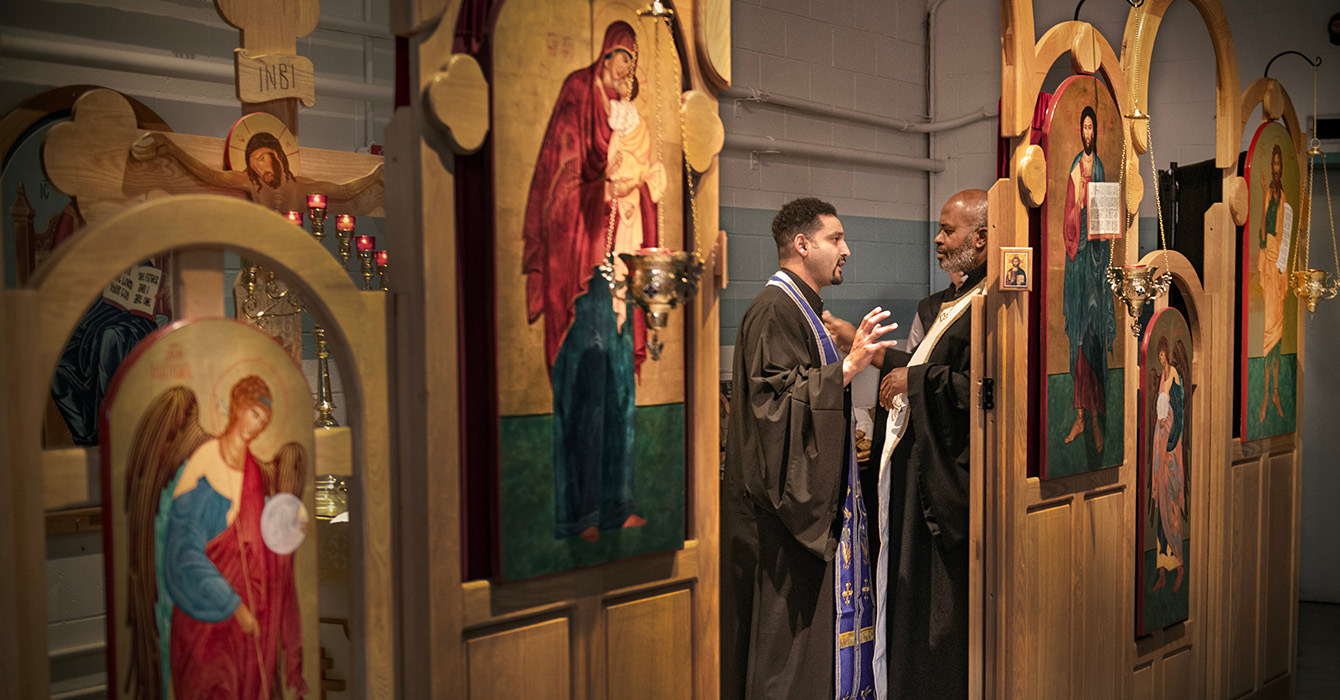
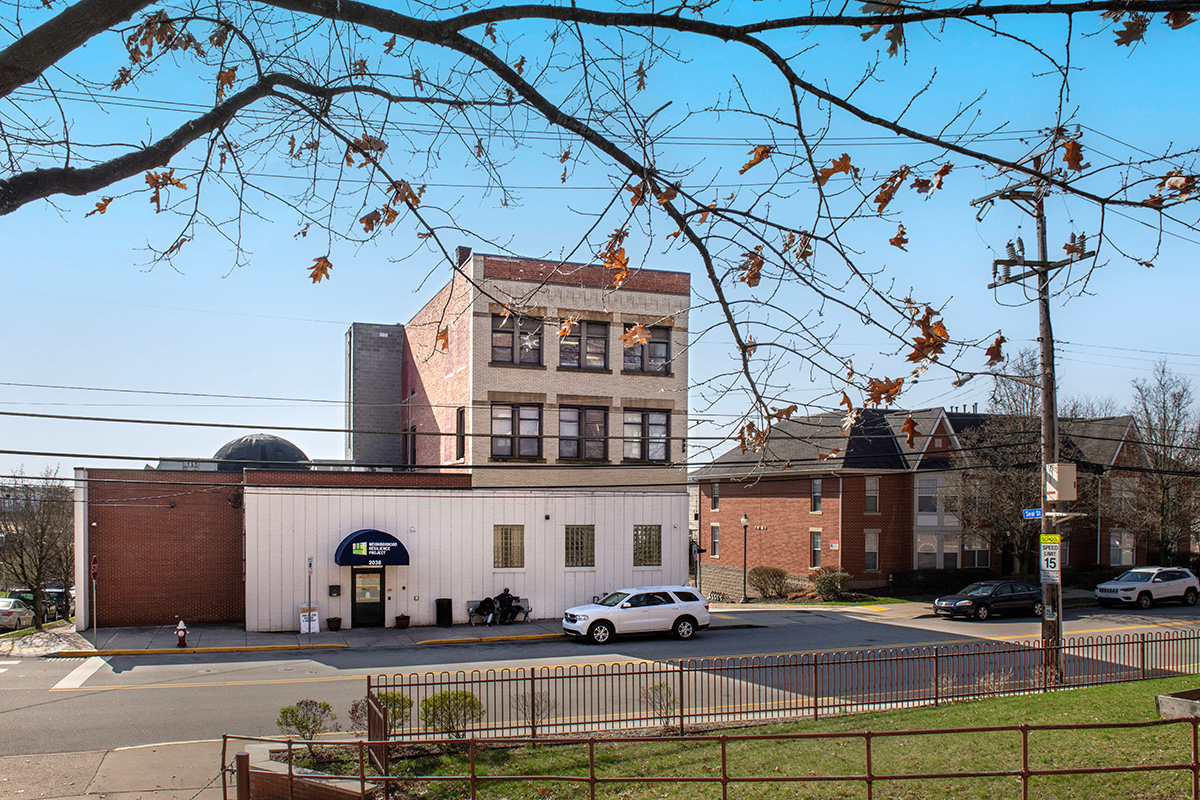
In Pittsburgh’s impoverished Hill District, Neighborhood Resilience Project operates on the belief that people can only reach their full potential once they’ve healed from the suffering they’ve experienced, whether it’s gun violence, abuse, food insecurity or systemic racism. The faith-based project uses trauma-informed community development, and its champion is an Orthodox priest, Paul Abernathy — who, like most of the people he serves, is Black.
The Rev. Abernathy is founder and CEO of the Neighborhood Resilience Project, which offers a range of services aimed at building a healthy, resilient community. These services include a free medical and dental clinic, behavioral health programs, support groups, educational programs, a food pantry, a clothing closet and a trauma response team that’s dispatched to provide “psychological first aid” after incidents of gun violence.
Pennsylvania-based writer Tina Hay profiled the Neighborhood Resilience Project in early 2024; recently she spoke again with Abernathy for an update on its efforts. The following is an edited transcript.
Award winners are recognized institutions that act creatively in the face of challenges while remaining faithful to their mission and convictions. These monetary awards help non-profits continue their work.
Faith & Leadership: Of all that’s happened at the Neighborhood Resilience Project since we did the story about it, what stands out to you the most?
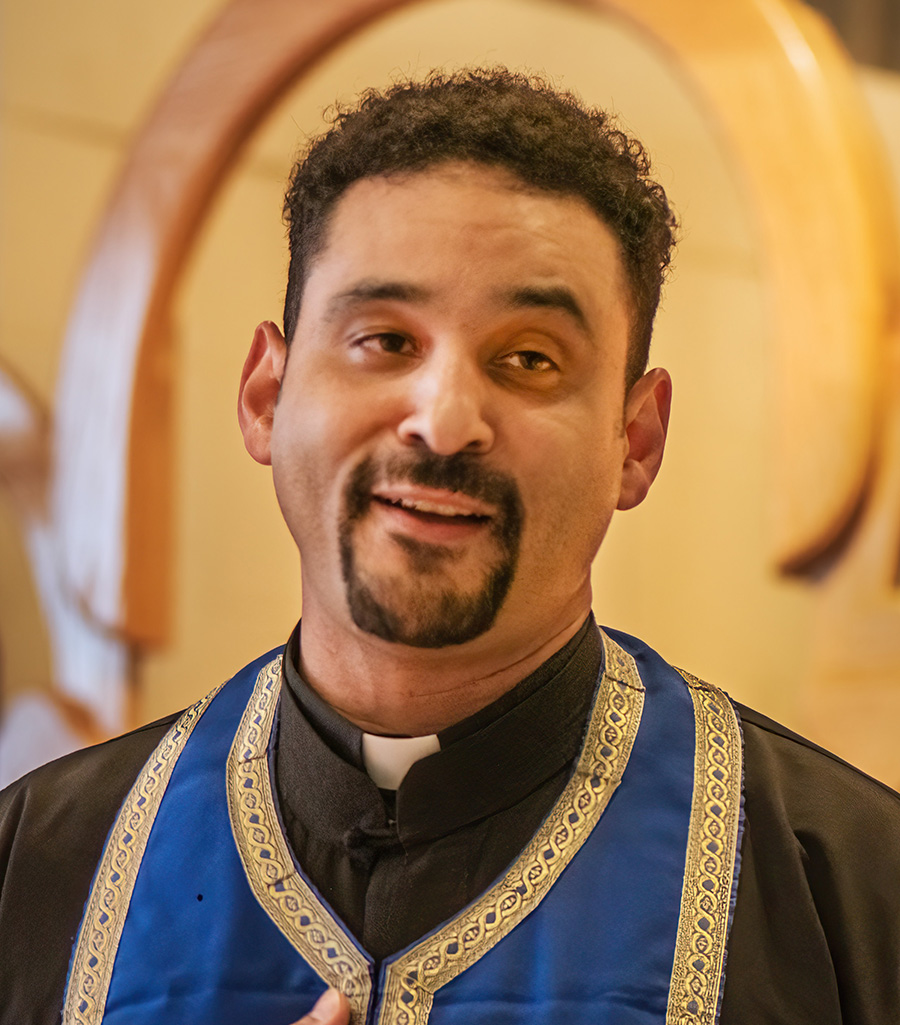
Paul Abernathy: There are two things. The first is the evolution of the team and the work that’s driving an impact in Pittsburgh. It’s truly humbling.
We’ve been collecting data on these micro-community interventions that we’ve been facilitating. [Micro-community interventions involve engaging local residents on a block-by-block basis to encourage a range of desirable behaviors, such as getting a flu shot for the first time, picking up trash in the neighborhood, or taking food to a neighbor who’s recovering from surgery.] We have a health assessment system we designed in partnership with the University of Pittsburgh to measure the impact of these interventions on health and well-being.
We have seen that, as a result of these interventions, health and well-being in the pilot area has steadily increased since 2017. We’ve also been looking at homicide trends. Homicides are down nationally, and we wanted to measure the impact specifically in this area.
What’s really fascinating is that homicides trend upward until 2017, which happens to be the year that we completed our first micro-community intervention. From that time forward, homicides trend down until they hit zero. We haven’t had a single homicide in this pilot area for five years now.
The other thing is that so many people are reaching out to us from across the country. We’ve given training on trauma-informed community development to people from Richmond and Petersburg, Virginia; Crawford County here in Pennsylvania; Kansas City; and Indianapolis.
We’ve trained Shoshone and Arapaho from Wind River Indian Reservation. We have a formal relationship with the health department in the City of Columbus, Ohio, now, and we have established a partnership with a community group in Sarasota, Florida.
We have also been engaged by groups from as far away as Uganda and Kenya, asking if we could send teams to those countries, and to refugee camps, to help address some of the significant trauma that people there are facing.
Just this morning, there was a gentleman who came to the center for help. He had severe mental illness; he was under the influence and he was hungry. We were able to give him some food, some financial assistance, and some transportation support. He said something to me: “You know, the reason I come here is that when I go other places, they really don’t believe that change is possible for me. It seems as though you all believe that it is.”
I think that’s what it means to engage this trauma from a Christian point of view: We understand that with God, all things are possible. We don’t believe that this is simply the status quo that we’re stuck with.
We actually can see communities that are renewed by the grace of the Holy Spirit. We have a deep and abiding sense of hope in this, and we also have an unrelenting, unconditional love for people who are in these suffering communities. I think this is why so many people, Christians and non-Christians alike, reach out to us for direction and insight on how to engage the pain in their communities. That’s been an extraordinary thing to witness.
F&L: What are these micro-community interventions? What do they entail?
PA: We’ve looked at everything from health and well-being to building economic and social capacity, engaging the influencers who establish the cultural norms in that area, and working to achieve a “culture of health,” as Robert Wood Johnson talks about.
A very important part of this is placemaking. We’ve learned a lot about the role of beauty in health and well-being; there’s a lot of data around aesthetics and reduction of violence. We’re becoming experts in crime prevention through environmental design.
From a Christian point of view, we understand the power of divine beauty, and we’ve incorporated that into this work. We’re helping people bring beauty to their houses, to their blocks, and we’re seeing the correlation between this beauty and positive health and well-being.
Jeffrey Murray, a Pittsburgh architect who’s a dear acquaintance, has taught me that we have often reserved aesthetics for the privileged, the wealthy — but that actually beauty is for everyone. So the equity of aesthetics becomes something truly central to our work.
F&L: What form might the beauty take? Are you talking about, say, flowers being planted in a neighborhood?
PA: Absolutely, we’re talking about flowers, about trees. If a structure is abandoned and there are broken windows, it means beautifying that structure. It also means beautifying the structures that people live in. There was an example of a woman who had a living room where the paint was chipped and falling apart; when you were in the living room, it seemed like a cave.
We had a team of volunteers come, facilitated by our staff, and the only thing they did was to paint this room white. And when the woman walked in, she took this deep breath of astonishment and said, “Now I don’t have to be depressed in my own living room.”
Of course, the underlying principles of all of this for us are absolutely theological, especially from an Orthodox Christian point of view — the role of beauty in inspiring a heavenly ascent. It’s central even in our worship. So this is something we’ve tried to apply in a community setting.
F&L: On another note, have any of the cuts to federal social funding found their way to you? I’m sure they’ve affected your clientele, but I’m wondering how the Neighborhood Resilience Project itself has been impacted.
PA: Over the last year, we did lose about $400,000 in funding. Some of that was lost to us through our partners that had been receiving federal funding, and some of it was direct.
We lost it without any notice whatsoever, and in some cases, with us having already done the work and not yet been paid for it. It’s inspired us to pivot to promoting philanthropy on a personal level to a much higher degree.
Last year, there were some private donors who were really inspired to give, which helped us make it through that particular season. And, really, giving for us is a ministry. It’s been so inspiring for me to see how many people have become monthly donors. They help because they believe serving their neighbor is important. It’s a priority for them.
F&L: You’ve engaged the former Pittsburgh Steeler great Troy Polamalu in your work. How did that relationship come about?
PA: Troy and his wife, Theodora, have been staunch supporters from our very beginning. In the summer of 2020, when things became very difficult across the nation in the aftermath of George Floyd’s murder, Theodora called me and said, “We really need a movement in this country that brings both healing and hope, that helps us forge a new future. We want to reaffirm our commitment to that.”
And even since that time, the Polamalus have helped build this not only locally, but also nationally. Their formal role in the organization is “national growth champions.”
Now we’re rolling out a capital campaign, and they are the honorary chairs. Not only are we expanding our facility, we are also raising money for operations and for equipment, because the need is much greater.
If you look at our health center, where we’re giving free primary, behavioral, and dental care for the uninsured, our patient base has increased 83% since 2023. And we expect the need to continue to grow.
Many people are going to lose their health insurance in November because the health care changes that were legislated last year were designed to take effect after the midterm elections. So when the midterms are over, many people will suddenly face really significant changes in their coverage. We’ve been in a lot of conversations about how we respond.
It’s not only that our patients see the doctor for free, but their medicine is free, their lab work is free, and their procedures are free. We even work with hospitals so that their surgeries are free. So this capital campaign will bring money to help with the growth in need that we’ll face.
We’re also starting a growth fund to help seed this work on a national level, because we meet so many groups that feel inspired to do this work. They hear the call of the gospel, but they don’t have any resources. In June, we have a group of Northern Cheyenne coming here, and we were able to go spend some time with them in Montana over the past year.
It’s heartbreaking, honestly, to see that in this nation of wealth, they don’t have some of the things that we have. So we’re really thinking about how we seed this godly work across the nation and beyond. The Polamalus are a key part of all of this. They’re devout Orthodox Christians, and they’re doing this as an expression of their faith.
F&L: When last we talked, the Neighborhood Resilience Project had been named the convener of the Allegheny County Community Violence Reduction Initiative. Any progress to report on that front?
PA: We just completed our time doing that, and in the time that we served in that role, violence in Allegheny County was reduced by 57%. Now we have moved specifically into crime prevention through environmental design, because previously there was a significant investment in things like violence interrupters and hospital-based interventions — all, of course, meaningful work — but there wasn’t an investment in environment.
We have found that focusing on the environment actually provides some of the more sustainable impact around reducing violence. If you were to do some violence reduction interventions in particular area, maybe violence would dip, but then three years later it would go back up. But when you do the block-by-block, micro-community interventions, you start seeing five years without a homicide.
There are 30,000 blocks in Allegheny County, and gun violence happens in 0.3% of them — about 90 blocks. We want to focus on these areas and these social networks, because, while a 57% reduction is wonderful, one homicide is too much for us. So now we’re taking a hard look at how we can help close the rest of that gap.
We’ve got some great partners on this now, looking at a very granular level. And we still have trauma response teams that are going out after a homicide takes place to help foster healing in the immediate aftermath of gun violence. So we’re very encouraged. We’ve had a lot of success since we’ve last spoke, by God’s grace.
F&L: You sound so upbeat. I would think that that in your role, it would be easy to get discouraged at times, because the need is everywhere. What gives you so much hope?
PA: You know, I have spent many days immersed in pain. It’s just all around me. And I have found that when immersed in pain, the brokenhearted are praying fervently to the Lord. It says in the Psalms, “A broken and humble heart God will not despise.” I have found that in the midst of this pain, where there are such fervent prayers among the brokenhearted, Christ is very present. And to be in the midst of hell and also in the presence of Christ brings extraordinary joy.
I have come to appreciate truly in the book of Daniel the three holy youths who were thrown into the furnace by Nebuchadnezzar, and there they find themselves dancing in the furnace, dancing in the fire — fire so hot that it killed the soldiers who threw them into the flames.
Amazed, Nebuchadnezzar looks into the flames and sees the three holy youths dancing with the Son of God, and the fire is to them but a dewy breeze. I found myself thrown into the furnace, but dancing with the Son of God, by the prayers of the brokenhearted, and it has made the flames but a dewy breeze. This is very joyful for me, and there’s great hope in it.