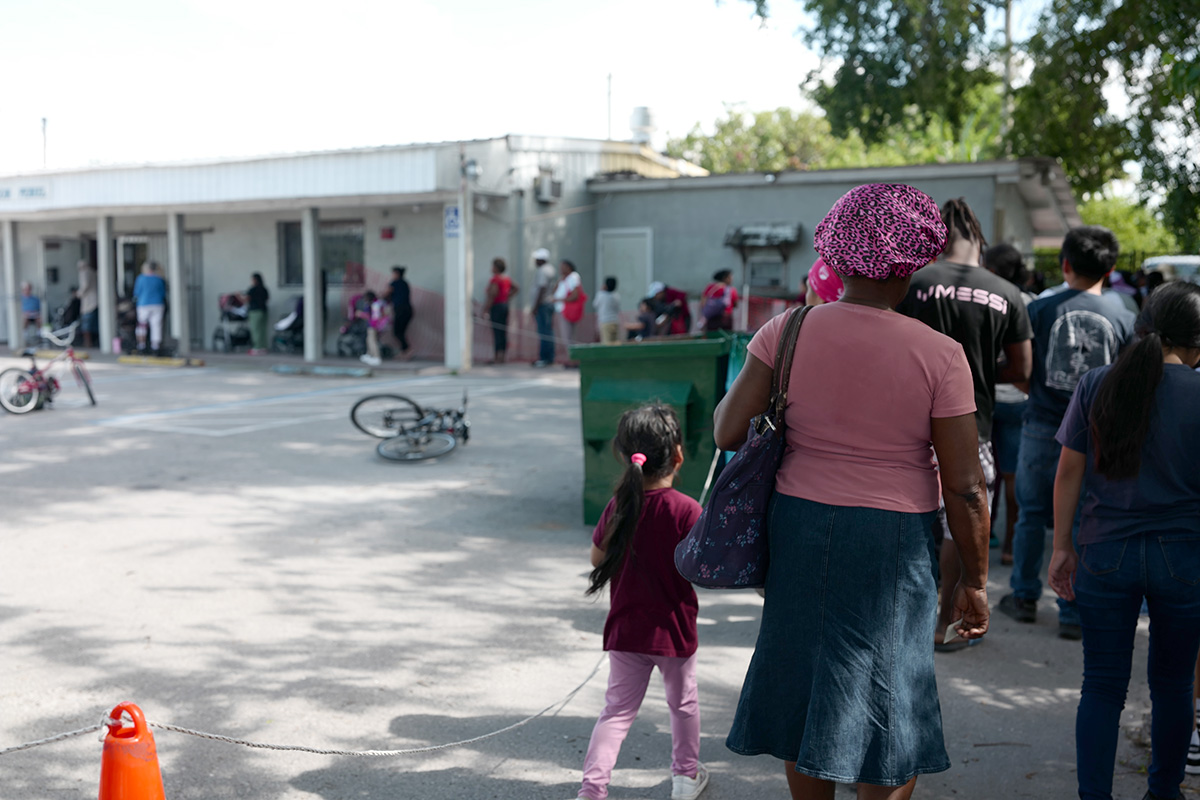
On Friday afternoons in Immokalee, Florida, a line forms outside Misión Peniel well before food distribution begins.
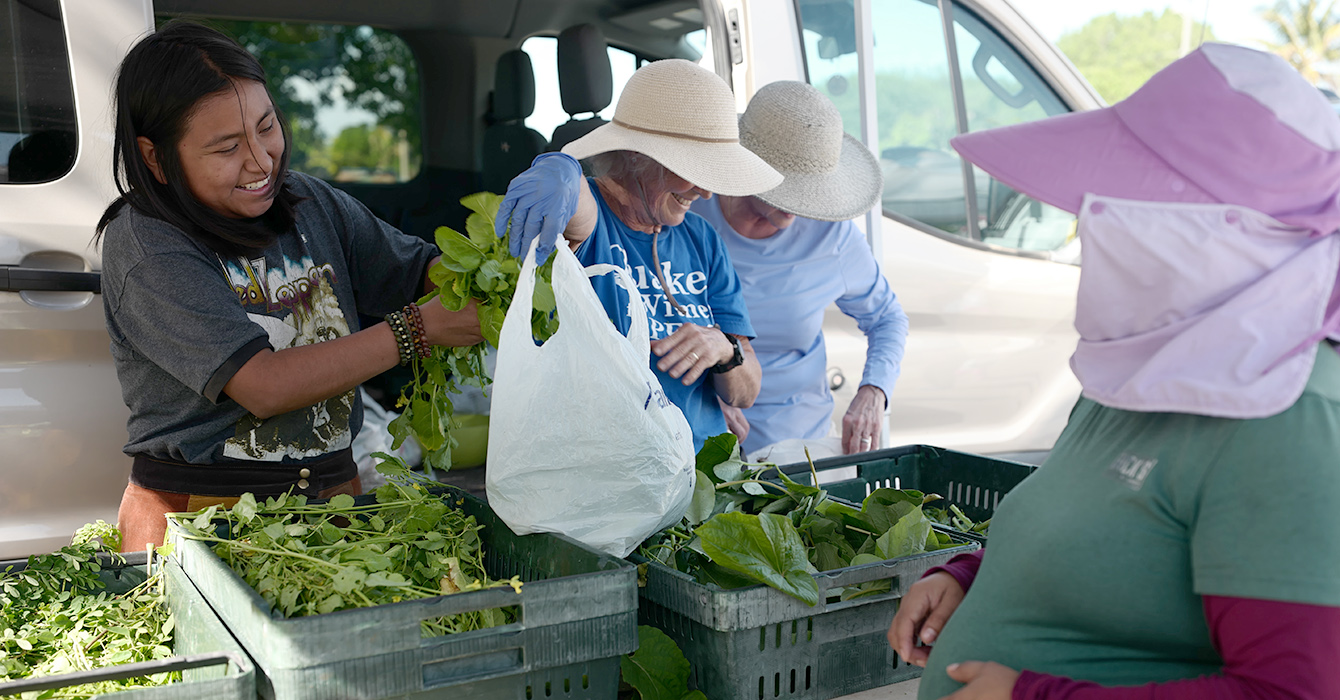
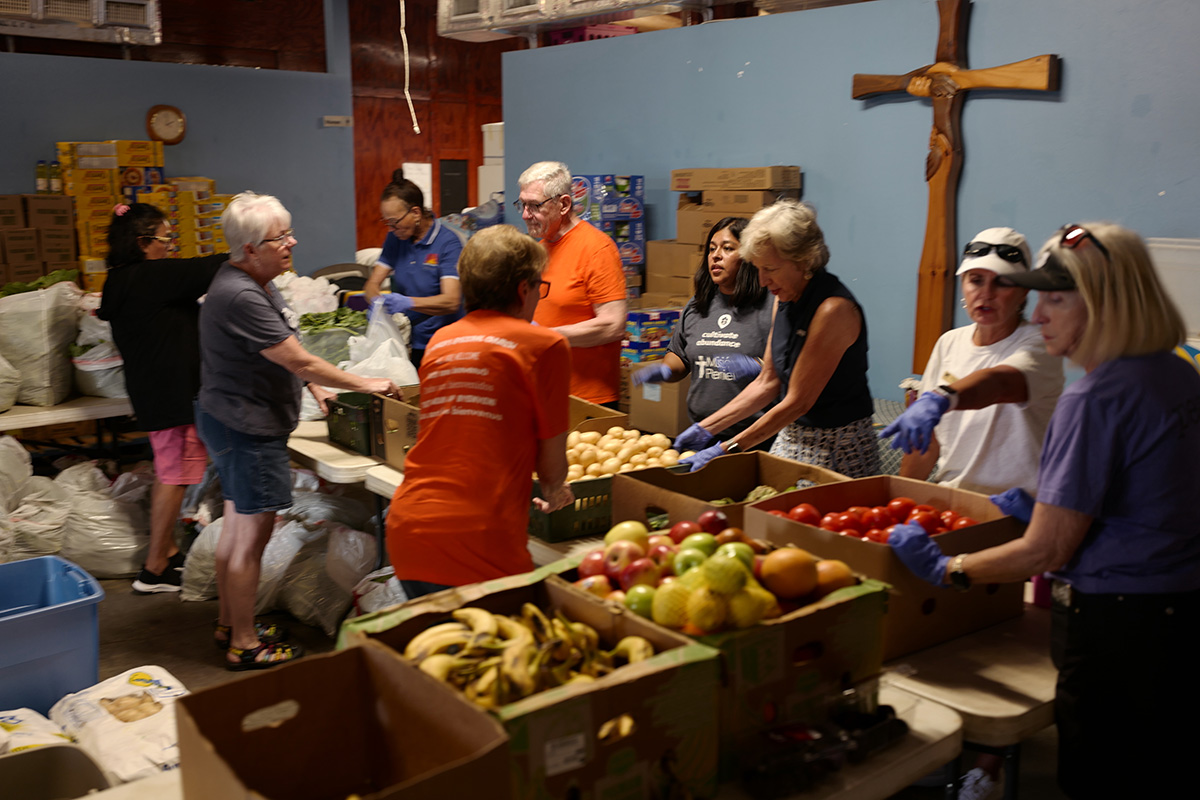
By the time the doors open, hundreds of farmworkers and their families are waiting, some arriving on foot, some by bus, some after leaving the fields or other jobs early. Women stand with babies tied to their backs. Children weave in and out between adults. Volunteers move quickly inside the church, filling bags with rice, beans and canned goods.
Outside, fresh produce is laid out across folding tables: collards, chayote, moringa, green onions, papaya, yuca, herbs and greens familiar to the many diasporas that call Immokalee home. For many in line, the support is immediate and practical.
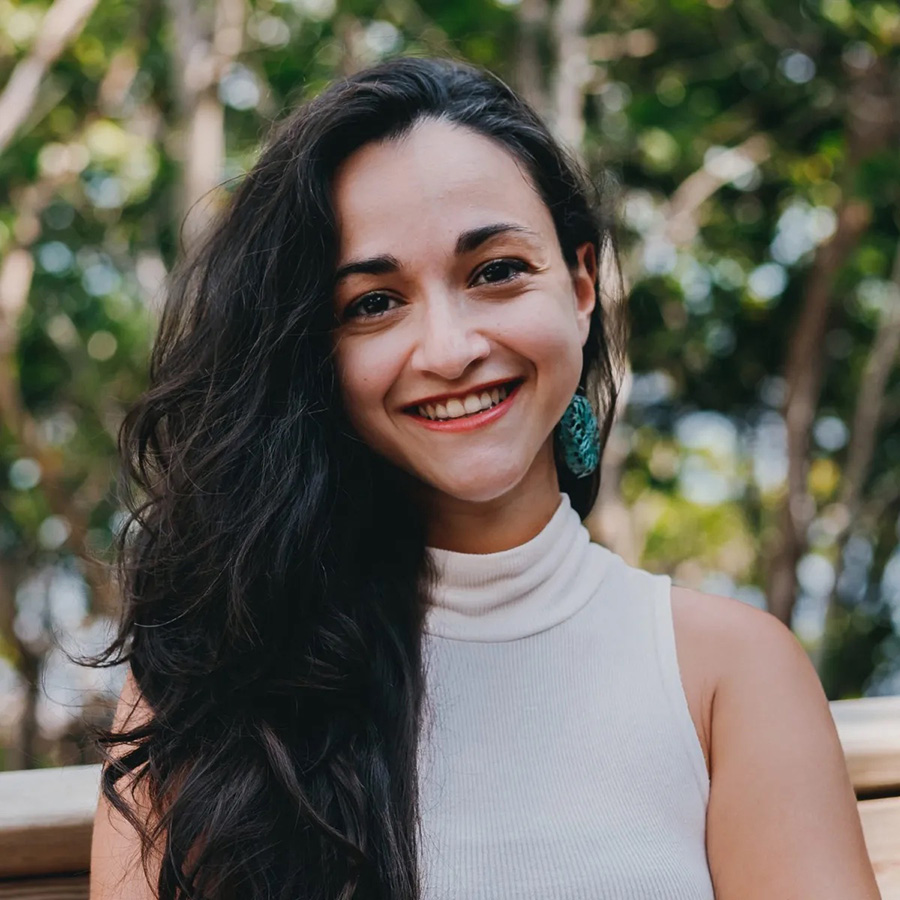
“It’s a blessing that they’re helping us,” said Máxima Castillo, who has lived for 10 years in Immokalee, an unincorporated part of Collier County on Florida’s west coast.
Nearby, a woman from Guatemala, who requested to remain anonymous, explained why she had come that day with even less ceremony: “Because there are no jobs. It’s really tough.”
This weekly distribution is part of Cultivate Abundance, a nonprofit co-founded by Rick and Ellen Burnette in partnership with the Rev. Miguel Estrada at Misión Peniel.
Together, they have built a system that provides food in a region with one of the country’s sharpest agricultural contradictions: the area produces enormous quantities of food, while many of the people harvesting it struggle to access fresh, affordable food themselves.
For the people behind Cultivate Abundance, that contradiction is the starting point.
“Immokalee is considered a food desert,” Estrada said. “That’s a complete contradiction. It’s the same place where a lot of food is produced, but at the same time, people like farmworkers have no access to nutritious food.”
That problem has only intensified. In 2025, Immokalee’s only major grocery store closed, removing the town’s last full-service supermarket. Residents, who were already accustomed to traveling long distances for groceries, were left with even fewer options. For families without reliable transportation, the closure deepened a long-standing crisis.
What are the contradictions in your community that could be a starting point for ministry?
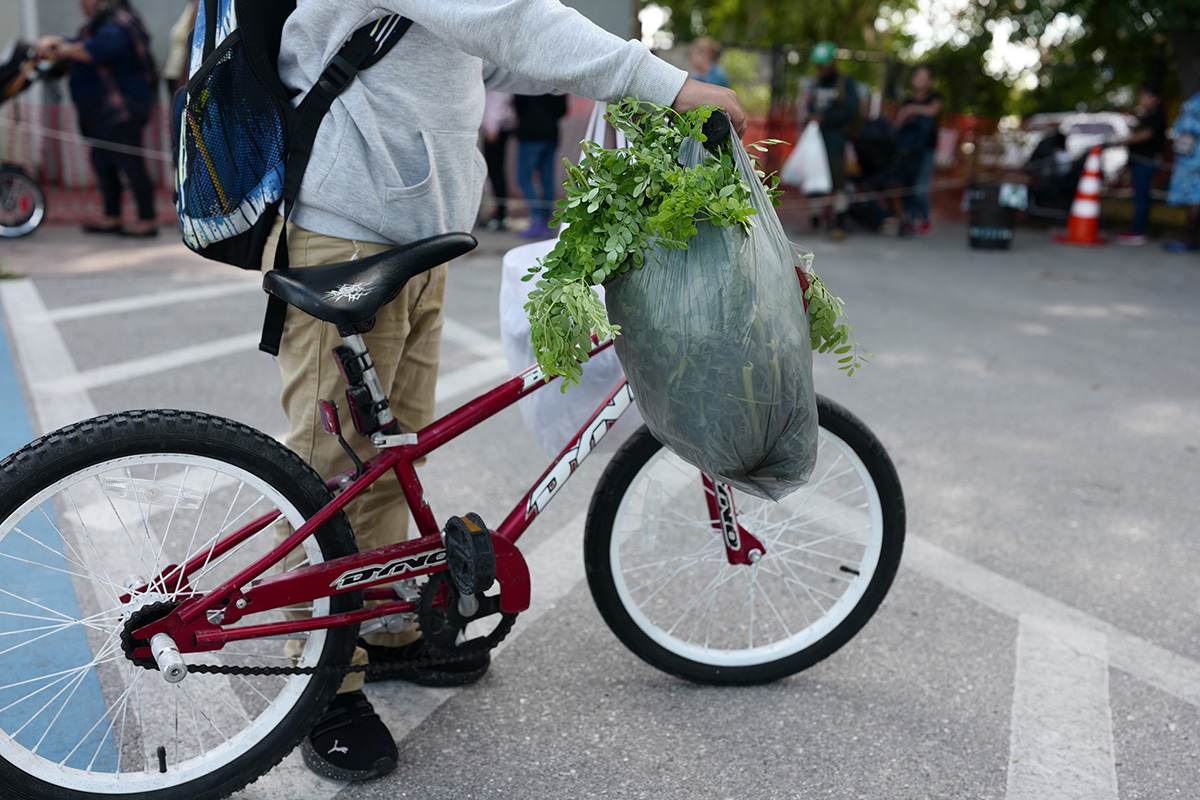
In order to go shopping or to have more choice, we had to be a family that could transport ourselves … into Fort Myers … or into Naples,” said Lupita Vazquez, a community garden leader who was raised in Immokalee. “And that was always a commitment of 45 minutes to an hour each way.”
That distance has always carried costs beyond gas money. It means time off work, childcare coordination, extra planning and risk, especially for those who are undocumented. It means choosing between freshness and convenience, or between immediate need and what can fit into one trip. In a community where wages are low and work is often unstable, those burdens accumulate quickly. The instability is visible in the line outside Misión Peniel.
Sammy Estrada, who works in remodeling, said he had come to the pantry only a few times. Lately, though, work had become harder to find.
“The economic situation is dire,” he said. “There hasn’t been any work at all.”
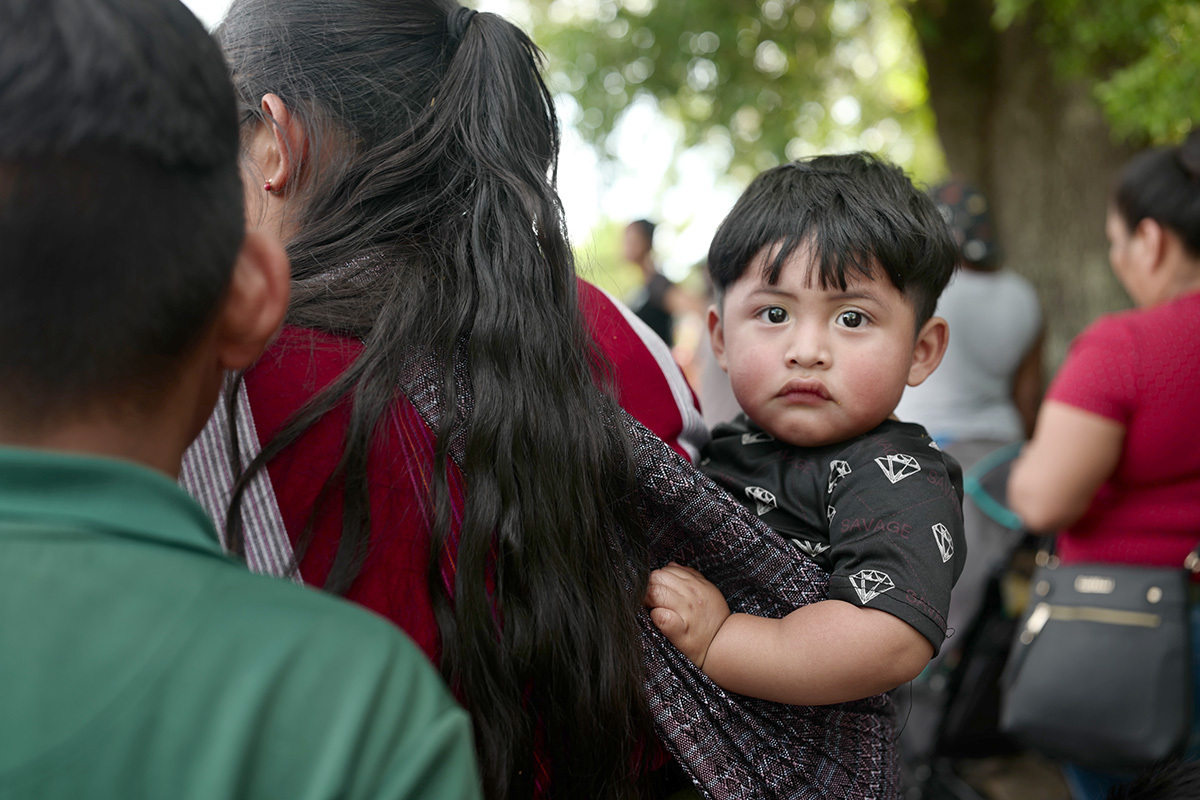
In recent years, residents and organizers say, labor conditions have become less predictable. Weather disruptions have damaged crops and reduced available work. Employers have increasingly turned to temporary labor systems that can push long-term local workers to the margins.
Immigration enforcement and fear of surveillance shape daily life for many residents, especially those who are undocumented or live in mixed-status households. Even seeking help can carry risk.
Cultivate Abundance’s data reflects the shift. According to their 2025 impact report, the organization grew, collected and shared more than 43,600 pounds of fresh, culturally relevant produce, reaching up to 1,200 people each week.
Since 2018, they’ve shared 785,000 servings of food with the help of 275 volunteers. More people are coming, and they are coming more consistently. What once functioned as a supplemental resource has become, for many families, a central one.
Have conditions changed in recent years for the marginalized in your community? Has your ministry adapted to these changes?
From Thailand to Florida
Cultivate Abundance did not begin in Florida, or even in the United States. Rick and Ellen Burnette spent nearly two decades in northern Thailand, where they worked with displaced farmers from Myanmar.
Their work focused on small-scale agricultural systems — gardens, livestock, water access — and the larger structural issues that shaped whether communities could feed themselves: land rights, legal status, exploitation and displacement.
“I think that what farmworkers face in the U.S. isn’t unlike what we saw elsewhere,” Rick Burnette said. “They’re underpaid [and] easily exploited. These are people who are leaving their homes for very important reasons.”
That experience shaped their understanding of food insecurity itself. Hunger, they learned, was tied to labor systems, migration, access to land and who held power over the conditions of survival.
When the Burnettes moved to Florida in 2013, they were returning to the United States after nearly two decades in northern Thailand. The move was driven by family needs: their children were older, Ellen’s parents were aging and both Rick and Ellen were ready to be closer to home. They settled in North Fort Myers, where they joined ECHO, the Christian agricultural organization that had supported their work overseas for years. Rick became ECHO’s director of agriculture, and Ellen managed its retail operations.

Award winners are recognized institutions that act creatively in the face of challenges while remaining faithful to their mission and convictions. These monetary awards help non-profits continue their work.
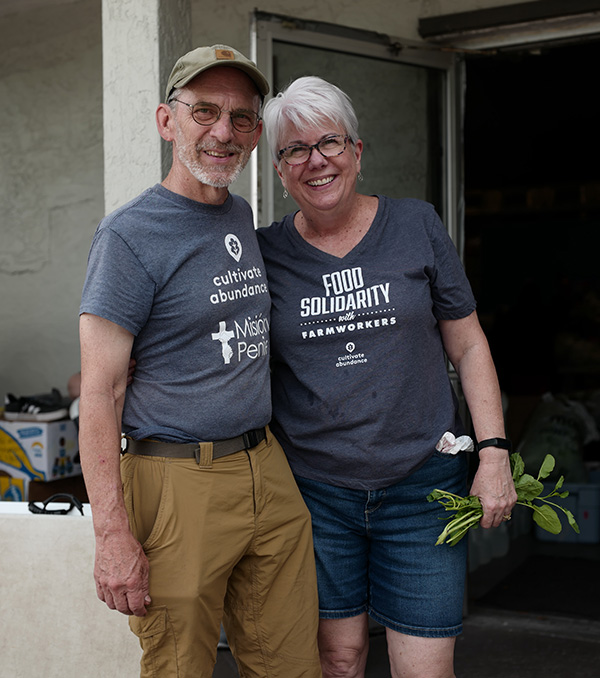
Before the move, they had read “Tomatoland,” which introduced them to the conditions facing farmworkers in Immokalee. Once in southwest Florida, they volunteered at Misión Peniel, a long-standing faith-based organization serving farmworkers. What they found in their new home felt familiar: a place built on agricultural labor, sustained by immigrants and marked by structural exclusion.
Miguel Estrada had already spent years building trust in the community through the church’s outreach and food ministry.
“[Immokalee] has always been a spot where everyone has been taking advantage of the farmworker community,” he said. “So there was a huge need for something like this.”
The church was already distributing food. What the Burnettes proposed was an expansion of that work to build a local system to grow and distribute fresh, culturally relevant produce. Estrada agreed, and his reasoning was theological as much as practical.
“We consider food kind of a spiritual deal,” he said. “When you share food with someone, you are basically sharing part of yourself.”
That idea helped define the partnership from the start. The Burnettes brought agricultural experience, systems thinking and a broader vision for how a local food network might work. Estrada and Misión Peniel brought deep community relationships and credibility that had been built over years of showing up.
Before planting, though, the Burnettes listened.
Mapping scarcity and abundance
In one early meeting, they gathered local women — many of them farmworkers — and asked them to describe how food moved through their lives.
Together, they mapped the barriers they faced: long drives to shop, inflated prices at small stores, lack of access to familiar ingredients, the way unstable work shaped what a family could buy from week to week.
But they also mapped abundance: fruit trees in yards, family knowledge about growing and cooking, informal networks of sharing. That process shaped the organization’s model.
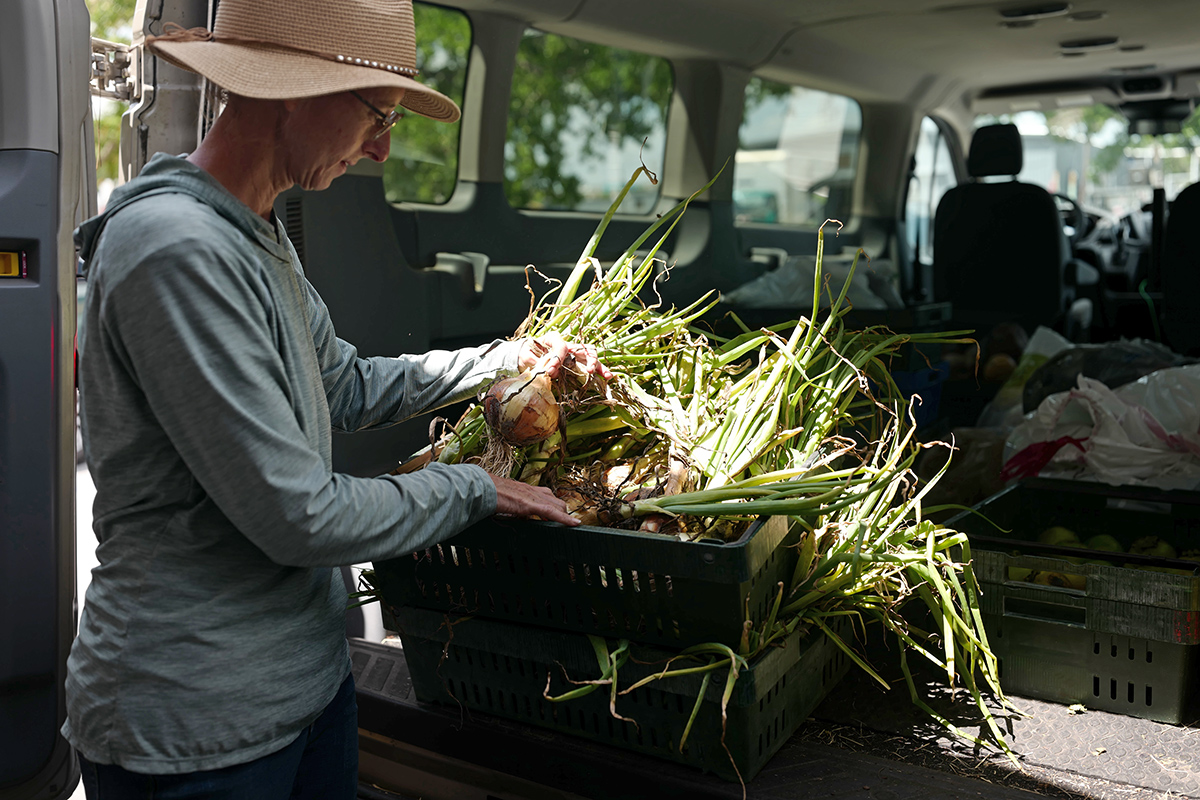
“The first thing we want to do is look at the local assets,” Rick Burnette said. “We don’t want to harm what’s already working.”
They had also begun noticing something else across southwest Florida: how much food already existed outside formal markets, and how much of it went unused. Trees dropped fruit no one harvested. Backyard gardens yielded more than households could eat. Research farms and growing programs often had surplus with nowhere to go.
“That was the seed of an idea,” Rick Burnette said. “What if we start a nonprofit where we would grow and collect and share the nutritious food that’s culturally preferable?”
Relying on local knowledge
In 2017, they launched Cultivate Abundance. The system they built is decentralized by design. Some food comes from the garden behind Misión Peniel. Some comes from other church plots, private yards, partner growers and community gardeners. Some is donated. Some is purchased.
Throughout the week, staff and volunteers gather what is available, organize distribution and prepare for Friday.
“We have to do it with nature,” Rick Burnette said. “And when you’re doing it that way, you can’t do this at scale. We cannot become a 4,000-acre Cultivate Abundance. We do this in patches, and that’s why it has to be so participatory.”
That emphasis on local knowledge and shared labor made people like Lupita Vazquez essential.
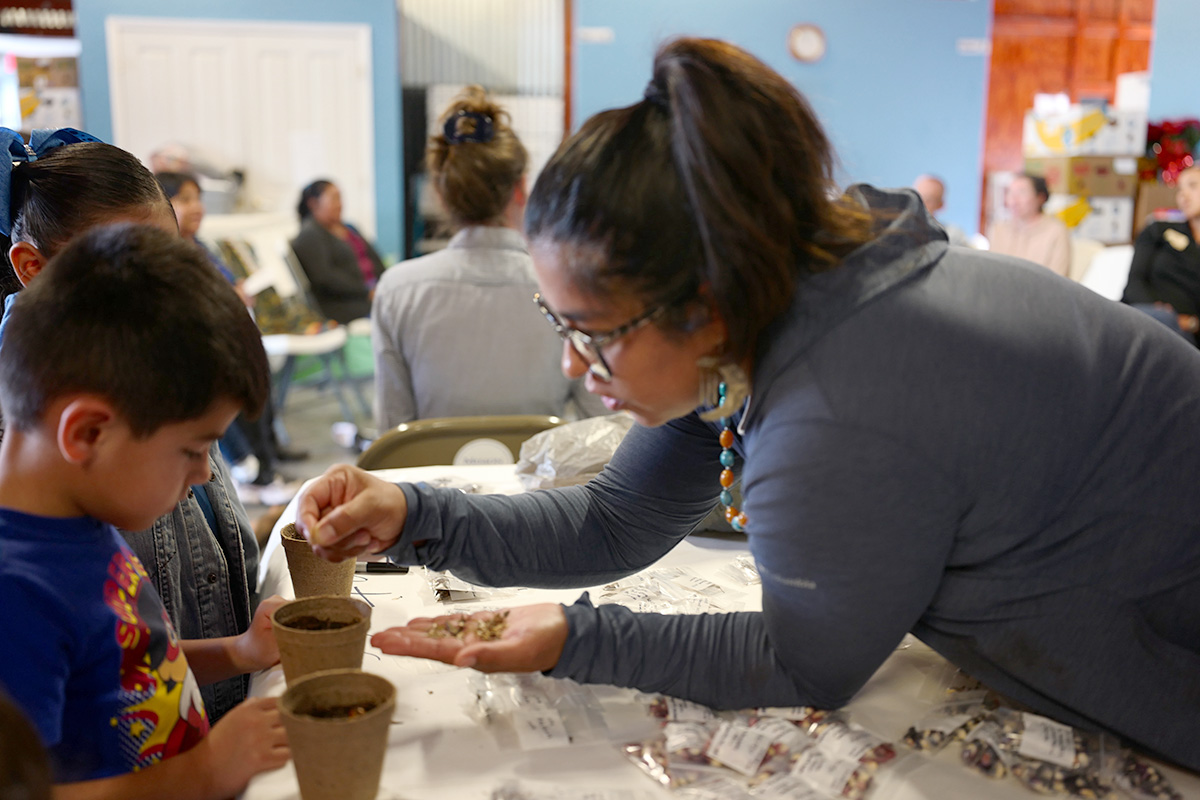
Vazquez returned to Immokalee in 2019 after nearly two decades away. She had grown up there, left for college, joined the Army and later built a life elsewhere. When she came back, it was to care for her mother and rebuild her own life after a divorce.
At the time, she was volunteering with a local soccer program that met at Misión Peniel. For months, she came to the site without realizing there was a garden behind the building.
Then one day, Rick walked out holding a bundle of greens. Her reaction was immediate.
“I can’t even believe that there’s a community garden here,” she recalled thinking. “This has never been the case for us.”
She began talking with Rick and quickly voiced what she felt had long been missing in Immokalee: meaningful access to agricultural knowledge and food-growing spaces for the very people whose labor sustained the region. Within weeks, she was working in the garden. Soon after, she joined the staff. Rick encouraged her to keep challenging the work.
Do you consult with the community you serve to make sure new ministries don’t harm what’s already working?
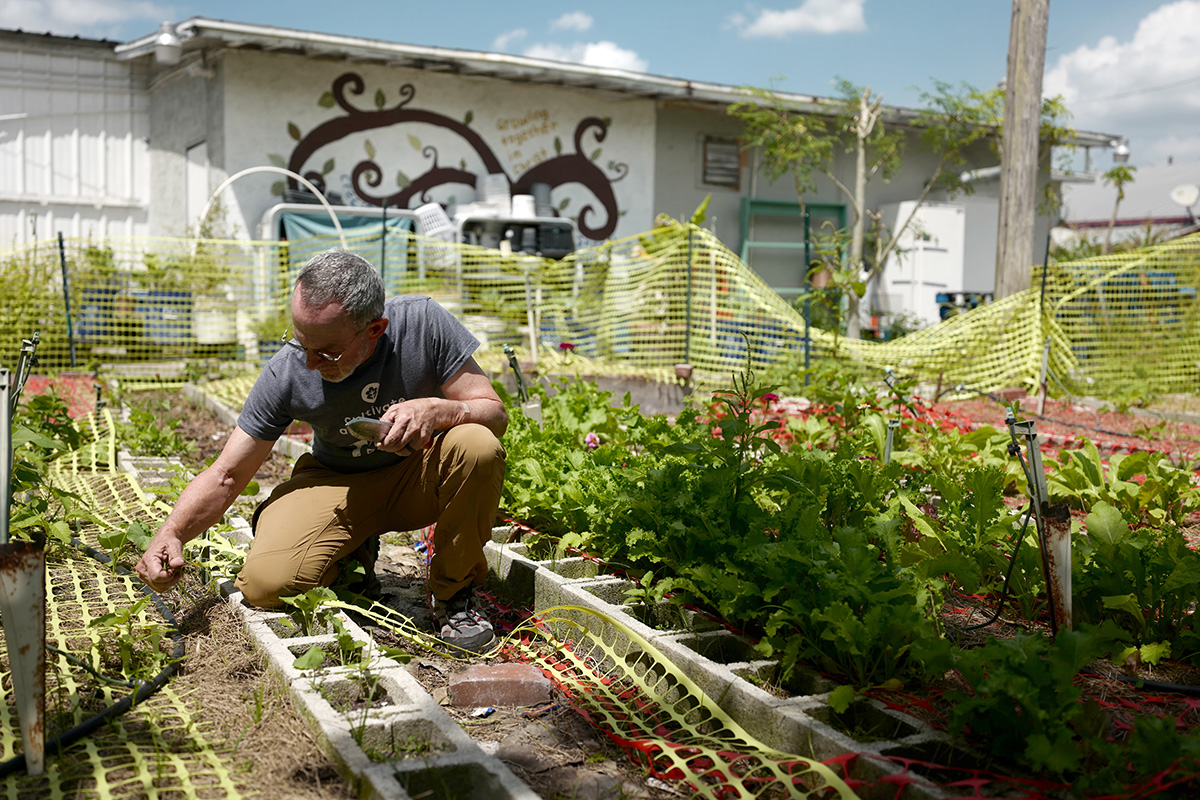
“We want you to push back on the work that we’re doing,” he told her. “You know your community.”
From the start, Vazquez pushed back against the idea that Immokalee residents were only laborers, insisting they also carried the knowledge and perspective to shape the work itself.
“As I’m meeting him … I think, we don’t have enough exposure,” Vazquez said. “We’re seen as laborers, and we’re invisible labor to the agricultural industry.”
Rick’s invitation to Vazquez mattered. She became the bridge between the Burnettes’ agricultural vision, Estrada’s ministry and the lived realities of the people coming to the pantry each week.
The garden as a spiritual space
Instead of focusing on generic produce, Cultivate Abundance prioritizes foods that reflect the community it serves. Chaya, loroco, Caribbean greens, medicinal herbs and other culturally specific foods appear in the garden because they matter to the families who use them.
“A lot of the food they are used to at home is food that is really nutritious,” Estrada said. “But they have no access to it.”
The garden also works as a place of exchange — of seeds, techniques, stories and recipes.
“Each of us has different plants, different traditions,” said Libia Jimenez, a volunteer and local healer. “When we come together, all our ideas come together.”
Does your organization offer a shared social and spiritual space beyond worship?
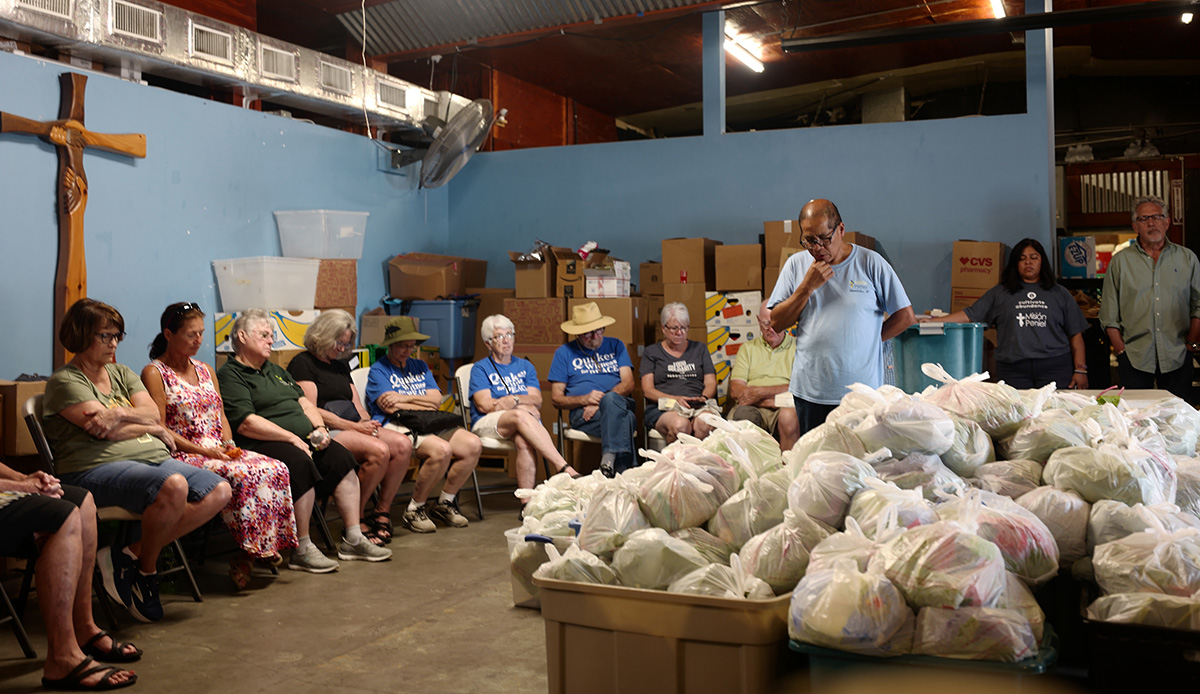
For many, the garden is a shared social and spiritual space. Immokalee itself is religiously diverse, shaped by migration from Latin America, the Caribbean and beyond. Catholicism has deep roots in many families. Protestant churches are active across the area. Evangelical communities, Pentecostal traditions, folk spiritualities and people with no formal religious affiliation all move through the same local landscape.
Cultivate Abundance reflects that reality rather than flattening it. The Burnettes come from a Baptist background. Estrada is a Presbyterian minister. Many participants are Catholic. Others belong to different faith traditions or none at all and identify as atheist.
And yet the garden functions as a place where those differences coexist without strain, because the work is oriented around service rather than doctrine.
“We realize there are many organizations doing valuable work who do not reference [faith],” Rick Burnette said. “But we have the same goal.”
Each Friday begins with prayer. After that, people get to work.
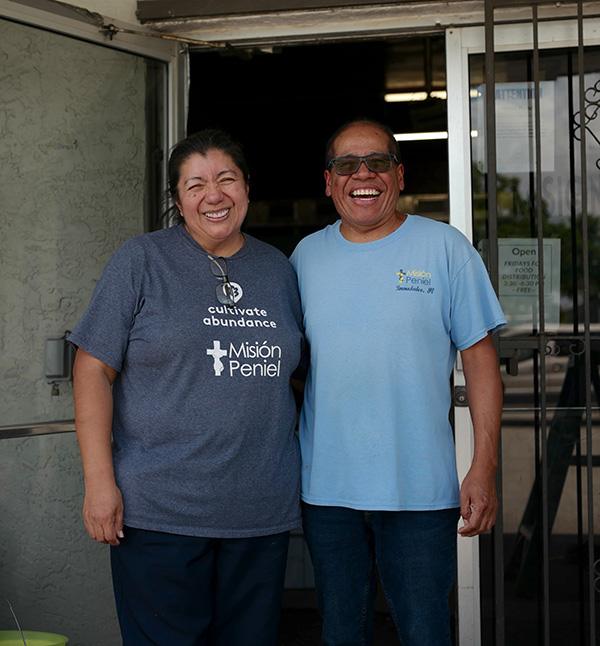
“If our faith matters, it’s to be in service,” Estrada said.
That philosophy became especially visible during the COVID-19 pandemic. While many systems shut down or struggled to adapt, Cultivate Abundance kept operating, adjusting distribution methods to protect people while maintaining access to produce.
“The need exploded,” Ellen Burnette said.
That consistency remains one of the organization’s defining features. In a place where work can disappear overnight, the ability to rely on a Friday distribution carries real weight.
Funded primarily through individual donations, along with support from churches and some grants, Cultivate Abundance operates on a modest $278,000 annual budget. More than half of that funding comes from individual donors.
Still, the organization itself operates under uncertainty. Funding is inconsistent. Staff often work with limited pay, and volunteers fill crucial gaps. The model depends on relationships, improvisation and constant recalibration.
“We have come up against it so many times where I thought we’re not going to make it another month,” Ellen Burnette said. “There’s no guarantee about tomorrow, so we have to do our best for today.”
Immokalee’s broader structural challenges compound that precarity. As an unincorporated community, it lacks local governance and many of the resources that come with it. Housing shortages and rising costs affect residents and service organizations alike.
Cultivate Abundance does not treat those systems as separate from food work. In fact, the organization has been willing to confront the political roots of hunger in ways that some donors find uncomfortable.
“There are those who might love the idea of being a do-gooder and giving food to the poor,” Ellen Burnette said, “but they don’t want to talk about the hard issues like immigration or how we treat each other.”
Rick, for his part, says the long-term goal is for the ministry to become unnecessary.
“The ultimate success would be for this need to go away,” he said.
That would require stable work, reliable food access and sustained investment in Immokalee, conditions that do not yet exist. So each Friday, the line continues to form.
Máxima comes when she needs support. Sammy comes when work falls through. Micaela, a Guatemalan mother of three, put it more simply than anyone else: “It’s something good that helps people.”
For now, the work continues to keep building a food system that prioritizes relationships and inclusion. In Immokalee, where the broader infrastructure remains inadequate, Cultivate Abundance continues to hold because it was built with the people who depend on it.
“All around us there is abundance,” Rick Burnette said. “We call it God’s economy, where people have planted their trees, and they’ve got more than they can use, and they’re willing to share it. And that’s how this abundance works.”
The Burnettes learned in Thailand that food insecurity is a systemic issue; does your ministry address such issues?
Questions to consider
- What are the contradictions in your community that could be a starting point for ministry?
- Have conditions changed in recent years for the marginalized in your community? Has your ministry adapted to these changes?
- Do you consult with the community you serve to make sure new ministries don’t harm what’s already working?
- Does your organization offer a shared social and spiritual space beyond worship?
- The Burnettes learned in Thailand that food insecurity is a systemic issue; does your ministry address such issues?