
Molting
We are not exempt from the desert wanderings — but how else would we be transformed? Debbie Blue
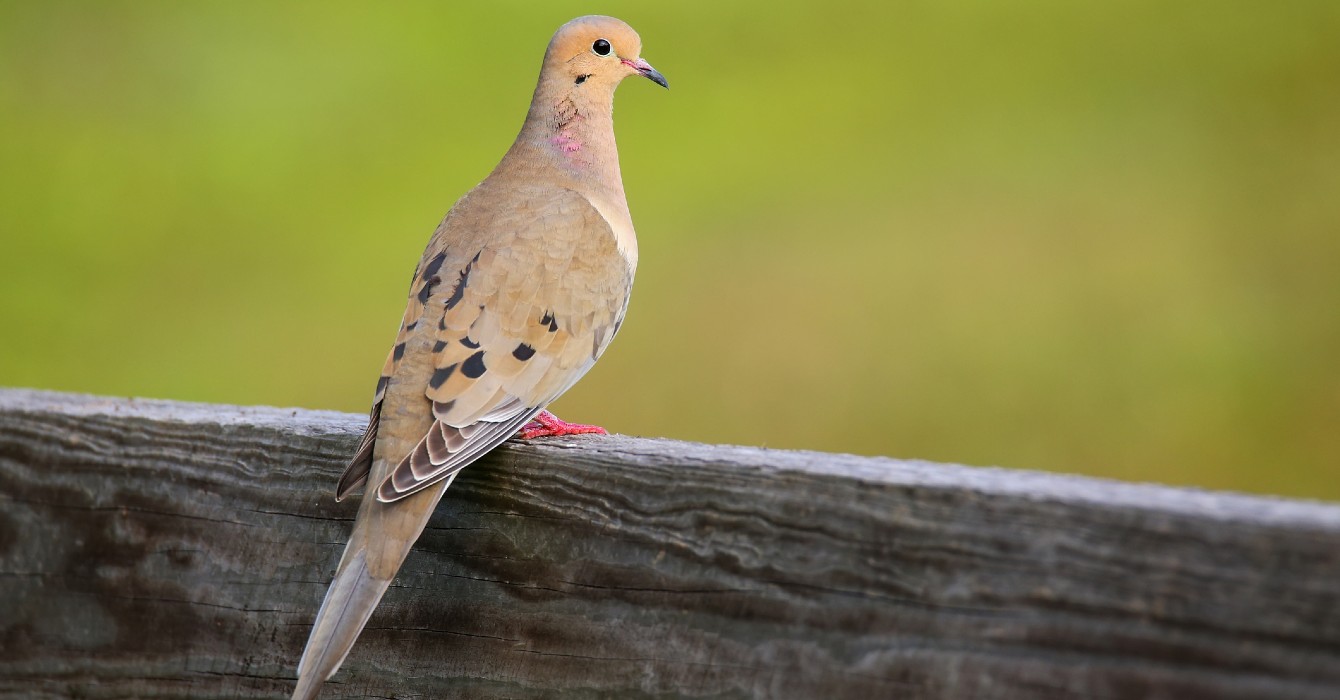
Molting is not a dignified process. Feathers fall out in singles or clumps at dedicated times once or twice or three times per year, leaving birds disheveled. Delicate hummingbirds appear as though they’ve been in a blender; gallant owls look like they’ve had one too many pints at the pub. And as birds lose the feathers on their heads, they begin to look positively reptilian, like their dinosaur ancestors of old. Molting birds are odd, messy, and bedraggled. Yet despite its indignities, molting is an essential transformation for any healthy bird.
Ornithologists have a phrase for why birds need to molt: feather wear. Feathers aren’t alive, of course, they’re made of beta-keratin and of similar structure to our own hair or fingernails. But with all the activity involved in just being a bird — flight and feeding, breeding and nesting, escape from predators and sheltering from bad weather — their feathers get pretty beat up. While flight feathers are big, strong, and obviously important, even the smallest of feathers help with insulation and temperature regulation. They all need replacing every so often — usually between every three and twelve months. Old feathers fall out and new ones — pinfeathers — slowly push through the surface of the skin and unfurl to dry in the breezes and the sun. Molting is essential, even if it isn’t beautiful. Damaged feathers must be replaced.
It takes a great deal of energy for a bird to create new feathers, expending precious calories in order to form them. But the loss of old and the creation of new must take some inner fortitude, too, because not only does it leave them less protected from temperature fluctuations and even, in some cases, briefly unable to fly — they look very silly too.
Good thing molting season is nowhere near breeding season. It would be hard for a molting male to impress the ladies. ...
Physical changes can be hard to weather well. After the birth of each of our three babies I felt wildly out of control for months, everything swollen and tender and leaking. I wanted to hole up until I could fit back into my regular pants and present my polished, put-together self to the world once more. Yet life will not often stand still in light of our fragilities. We must brave the high school halls despite our acne or we show up to the boardroom even with our arm in a sling. In an age of Zoom, we can still make it to the scheduled meeting with a virus in tow. (Oh joy.)
But sometimes physical changes take us down to the point where life does stop moving forward. There are times when we literally cannot continue as we always have. We listen to the soft animal of our body crying uncle and we say, “Okay. I hear you. Let’s push pause.” I rushed back to work six weeks after the birth of our eldest and quickly discovered that I was in no condition to be running meetings or offering pastoral care. My body was still finding its new equilibrium after the brutal changes that accompanied bringing a new life into the world. Many physical transitions require time and gentleness; they cannot be sped along. Others will force permanent change — on the other side, things will never be the same.
In Scripture, physical maladies most often show up in the text right before miraculous acts of healing. The man born blind is given sight. A dead girl is raised to life. A group of friends pick up a mat to bring their paralyzed companion to Jesus, and when the crowds won’t let them through, they open up a hole in the roof and lower him down. Jesus sees the man, praises the faith of his friends, and then commands the man to stand, pick up his mat, and walk.
Yet our injuries and ailments most often don’t resolve miraculously. We still have to wear the brace, use the wheelchair, put in the hearing aids. We take the medication so that we don’t have another heart attack or go into diabetic ketoacidosis or struggle to focus in class. The biblical stories of being made well — seizures stopped, sight restored, limbs straightened — can start to seem taunting, even cruel. Worse yet, other people of faith can add shame to our pain.
“We need to pray that out of you,” a pastor’s wife once told me when I let her know of my severe gluten intolerance. The insinuation that I hadn’t already been praying — begging — God for years to take away this expensive, socially awkward, and medically frustrating ailment irked me, but so did her concept of God as cosmic vending machine. Ask and you shall receive, Jesus says in the Sermon on the Mount, but we will all ask for many things that we’ll never receive. What gives?
Catherine of Siena was an Italian Catholic mystic in the fourteenth century who began having visions of Christ as a young girl. Burdened by physical suffering as well as her desire for more complete holiness, Catherine received a vision in which Jesus seemed to offer a balm to her in her suffering. “Very pleasing to Me, dearest daughter, is the willing desire to bear every pain and fatigue, even unto death,” Jesus told her. “Therefore bear yourselves with manly courage.” Catherine took his words to heart, finding a particular solace within even the ache of her frail body.
I do not know why so many of our trials and maladies do not end with miraculous healing but instead continue for years or decades or even whole lifetimes, but I suspect it has something to do with the intimacy of dependence. There is a unique closeness we might experience with Jesus when our physical limitations and bodily discomforts bring us, time and again, to our knees. The molting bird must treat itself with even more gentleness and care, adapting to a new reality of frailty and dependence — however long. …
Molting isn’t very dignified. Physical ailments, unplanned moves, or any change we wouldn’t choose for ourselves can be a steep hill to climb. And yet when we can learn to practice patience with ourselves, giving space for the grief of change, we can begin to find a new normal. A new way through. Adaptation.
Feather wear comes for us all. But then, so does hope.
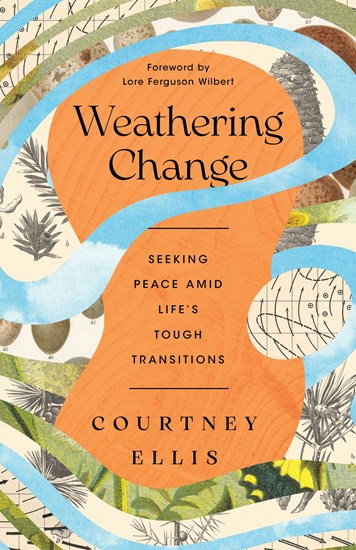
Excerpted from “Weathering Change” by Courtney Ellis. Copyright (c) 2026 by Courtney Ellis. Used by permission of InterVarsity Press. www.ivpress.com
The biblical stories of being made well — seizures stopped, sight restored, limbs straightened — can start to seem taunting, even cruel.