

By the time Mike Jones arrived at Christ House, he was ill and struggling with addiction after years of sleeping on the streets and park benches of Washington, D.C. An old spinal injury from a gunshot had left him stooped and unable to walk upright without assistance, so he leaned on his bicycle for support, making his way to the facility’s front door.
There he received long overdue medical care along with hot meals and showers, clean clothes and a soft bed. Christ House’s medical staff fitted him for leg braces, and a case manager introduced him to the facility’s substance abuse recovery program.
Now, 10 years later, Jones most remembers the compassion he encountered from Christ House’s staff, volunteers and alumni — men who also had been struggling on the margins before an illness or injury brought them to the four-story brick building in the Adams Morgan neighborhood.
“They treated me like a human being while I was stinking and dirty,” said Jones, 53, now among the alumni who volunteer at Christ House. “That’s what made me stick around.”
Christ House is considered the first live-in medical respite facility in the nation for homeless individuals. It provides 24/7 medical respite to unhoused men in the nation’s capital, along with case management services, treatment for substance use disorder, spiritual support, meals, and connections to housing resources and follow-up care.

On Christmas Eve, the nonprofit marks the 40th anniversary of welcoming its first patient. A man with congestive heart failure was admitted on Dec. 24, 1985, ahead of the clinic’s formal opening, because he had nowhere else to go despite his critical need.
From the beginning, Christ House was intended to offer more than health care. It is a community for those who feel called to provide dignified care to the homeless and for patients who may have spent an inordinate amount of time on their own. Several members of the medical staff live in on-site apartments. In the mid-1990s, Christ House opened Kairos House, a sober-living community around the corner for up to 37 former patients with chronic health conditions.
Known for top-notch wound care, Christ House’s medical staff treats everything from broken bones and stab wounds to chronic illnesses like diabetes. Three out of four patients are 55 or older, three out of four have a mental health diagnosis. Patients are usually admitted with an acute medical need and have three or four chronic conditions.
Christ House provides space where unhoused men can prepare for or heal from surgery, recuperate from cancer treatments or follow a strict diet and medication regimen — activities that might be difficult or impossible in a shelter or on the street.
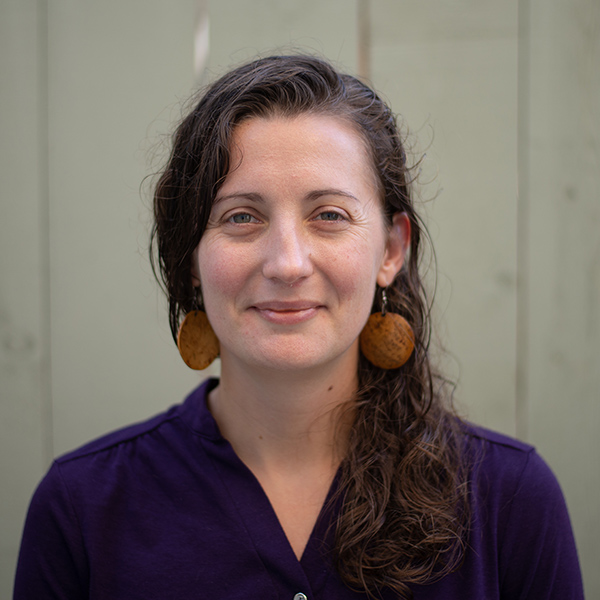
Perhaps as important as the medical care, staff and volunteers forge connections with the men who pass through. Nurse practitioner Mari Lowe said she gathers as much health information during intake as a patient is willing to share while also affirming their belongingness and their right to be treated with dignity and respect.
“We’re working on healing that wound of separation,” said Lowe, who has provided care at Christ House for most of the last 15 years. “There is something that happens — we call it the Christ House shuffle — when patients start to see the fruits of keeping promises to themselves. They start to see what happens when they take their medications every day. They start to see what happens when they don’t use substances or they eat three meals a day. And there is confidence-building from that.”
Jones recalls that not long after he arrived, a volunteer and Christ House alum shared some advice about the staff that Jones has since passed on to newer guests: “They’re gonna love you till you love yourself.”
How is creating community part of your ministry?

In the decade since he came to Christ House, Jones, who left school in the seventh grade, has earned his GED, embraced sobriety and joined the organization’s board. He also volunteers at the facility, escorting patients to appointments, serving meals and helping with Sunday church services as well as Alcoholics Anonymous and Narcotics Anonymous meetings.
He tries to ease the apprehension of some of the newest arrivals because he remembers what it felt like to walk through those doors in 2015, unsure whether he’d be cared for or judged.
“The way they treated people, it was easy for me to adjust,” he said. “They go above and beyond. And first and foremost, they hold your hand along the way.”
‘Run toward brokenness’
It’s impossible to talk about Christ House without recognizing the late Dr. Janelle Goetcheus, the physician who envisioned the project along with her husband, the Rev. Allen Goetcheus, a United Methodist minister. In the 1970s, intent on serving as hospital missionaries in Pakistan, the couple and their three children traveled from their Indiana home to Washington to secure visas.
While in the nation’s capital, they visited some of the ministries supported by the Church of the Saviour, a nondenominational congregation established in the 1940s that emphasized social justice work. The couple was struck by the lack of affordable, quality medical care available to Washington’s poorest residents. By the time their visas came through, they’d decided to make their home in the district.
Dr. Goetcheus would go on to establish four health centers to serve low-income patients in the late 1970s and early 1980s. In 1985, she co-founded the Health Care for the Homeless Project, a network providing primary health care services to people in the nation’s capital living in emergency shelters or on the streets. That project would later blossom into Unity Health Care, which today operates one of the largest networks of community health centers in the district.
Still, Dr. Goetcheus worried that some of her patients needed more complex care than what was possible in a clinic setting, and those admitted to hospitals were often discharged quickly due to lack of insurance.
She brought her concerns to her fellow congregants at Church of the Saviour; using a gift from an anonymous donor, the group purchased an abandoned apartment building at 1717 Columbia Road NW and opened it as Christ House. It remains one of about 40 active ministries — addressing everything from education and child care to affordable housing and workforce training — that trace its lineage to Church of the Saviour.
In what ways do you welcome newcomers who might be apprehensive about your ministry or organization?

But in 1985, the concept of respite care for the homeless was so new that when Christ House opened, district officials weren’t entirely sure how to license it. They classified it as a boarding house, recalls Chief Nursing Officer Mary Jordan, who volunteered there before joining the staff in 1986.
Today, the Respite Care Providers’ Network, part of the National Health Care for the Homeless Council (NHCHC), estimates that 160 such respite facilities operate in the United States. Twenty-five have earned voluntary certification from the National Institute for Medical Respite Care (NIMRC), a program of the NHCHC. Christ House was recently awarded that distinction.
From day one, Christ House emphasized respectful care and radical hospitality with each patient treated as a guest, Jordan said. Care is provided on the first and second floors, while apartments on the third and fourth floors house some of the support and medical staff, including Jordan and Lowe.

Dr. Goetcheus was still living at Christ House in October 2024 when she died of lymphoma; the Rev. Goetcheus continues to live there and remains the director of Christ House’s Spiritual Life Program, providing pastoral care to residents at Kairos House.
Jordan moved into Christ House with her husband in 1989. She said there are practical benefits to the arrangement because a medical professional is always on-site for emergencies. It also creates an extended family environment for the ecumenical staff and for the patients, some of whom have lost touch with their families of origin.
“The truth is if we’re going to live out our faith, we need to do it in very concrete ways that communicate God’s presence,” said Jordan, who is Catholic. “I think people come in with a thirst to be connected, and from the beginning, it’s recognizing that people want to connect, and how do we begin to do that? It can be a kind word, or the hospitality in the dining room, or really listening to a person who might have some concerns about recommended treatment. It’s a mutual exchange.”
That longstanding culture of mutual care and respect has meant very little staff turnover. Some employees have served for decades, Jordan said.
“If people can come in and we can create an environment that God intended for every single one of us, that’s a good day,” she said. “It’s straightforward. It’s life-affirming, and it’s really from the heart. It’s imperfect, but none of this is complicated.”
Not every patient embraces sobriety or leaves with stable housing, Lowe said. There are beautiful stories of healing, and also stories of patients leaving in the middle of the night without telling anyone.
It’s important to continue showing up as a nurturing presence because success isn’t measured purely in numbers, she said. When a patient feels safe enough with her to tell her hard things or lets her know that their needs have been met, that’s a victory.
“The people who work here run toward brokenness instead of away,” she said. “Compassion is the courage to be with one another in those places, and that compassion is woven into the fabric of everyone who works here. When my patients weep, I weep too.”
‘Health is more than getting the right pill’
Nearly 60 percent of Christ House’s patients are referred by area hospitals and clinics; the rest are from Washington shelters or walk-ins, said Zofia Joynt, the facility’s communications coordinator. Each is assigned a case manager who meets with them weekly, helping secure necessary legal documents, insurance and other benefits and referring them to community resources for mental health and inpatient recovery programs, housing initiatives and vocational training.
The average stay this year has been 34 days, Joynt said, but stays have ranged from 72 hours up to a full year. The facility has 30 beds, treats about 250 patients each year and welcomed its 10,000th admission in 2025.

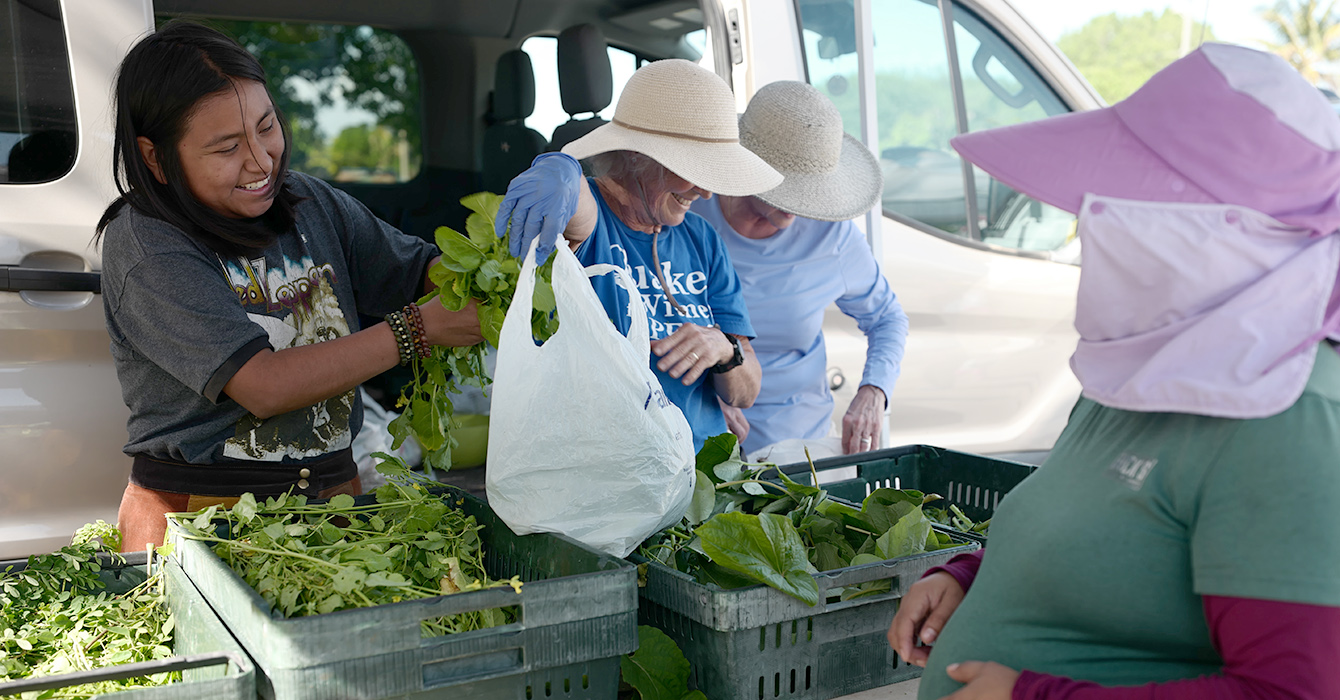
Along with about 60 paid staff, Christ House relies on services from a phalanx of loyal volunteers — 400 so far this year — who offer everything from haircuts and meals to therapy dog visits. Almost half of its nearly $5.5 million budget last year was covered by donations and grants from charitable foundations, about 20% is from investments, rental income and the like, while another 33% comes from the federal government.
Budget cuts at the federal level along with the clearing of homeless camps in Washington have introduced some uncertainty at Christ House, said CEO Lisa Purdy, who came on board in June. The staff is also still grieving the loss of Dr. Goetcheus, whom Purdy calls “the heartbeat of the organization.” They’ve engaged in daily guided meditation and other activities to support each other.
What do mutual care and respect look like in your organization? How do you measure whether they are being successfully extended to all?
But the goal of Christ House remains the same, she said: to restore hope and dignity among the disenfranchised.
“Even on the best days, this is still emotional, hard work. And we’re not living in the best of days,” she said. “Especially right now, in this day, there’s a lot we can’t control. But the way we treat people who come here and the services we offer them and the way we offer them, we can control that.”
The facility’s chaplain, the Rev. Charles Anderson-Gray, refers to Christ House as “a spiritual mutt,” noting that its founders were United Methodist, Catholic and Mennonite. Anderson-Gray, who is commissioned in the United Methodist Church, keeps a collection of Bibles, prayer mats and Korans on hand for any patient who requests them. The Sunday service he leads, which always includes Communion, follows the Catholic lectionary and pulls from Black Baptist traditions. That said, no one at Christ House is required to participate in any faith-based activity.

Anderson-Gray tells guests that he isn’t like their case manager — they’re not required to talk to him. “[I tell them] I’m here to be a spiritual resource for the patients in whatever way they want me to be.”
Anderson-Gray visits patients and often reads in the Christ House courtyard so that he’s available when a guest feels like opening up. Many of them are struggling with grief and loss alongside their physical ailments.
“I’ve had patients talking with a flat affect about coming to after using drugs and finding a family member had OD’d next to them. It was not the first time something like this had happened in their world,” he said. “The number of patients who have told me they are lone wolves is staggering.” To survive on the streets, he said, “They’ve had to be independent and not rely on anyone.”
How does your organization collectively process strong shared emotions, like grief or anxiety?
Over time, he said, some patients begin to relax and engage in community activities like art classes and football watch parties. One patient, who had learned while he was unhoused to sleep upright with his arms around his belongings to keep them from being stolen, learned to trust enough to sleep lying down at Christ House.
“People open up and become open to community. They start letting other people in, and the walls come down, and that’s really amazing to see,” Anderson-Gray said. “We take seriously that health is more than getting the right pill.”
Michael Anderson Sr. arrived in August after living on the streets for more than 40 years. His doctor referred him for a 12-week stay so he could complete a strict medication regimen to treat Hepatitis C. Anderson, who also had substance use disorder and chronic obstructive pulmonary disease, said residents at nearby Kairos House encouraged him to attend AA and NA meetings and to sit and listen for the first 90 days before sharing.
How do you practice patience in your context? How do you build trust?

“They said, ‘Don’t leave before the miracle happens.’ I was going to meetings, and I started listening. I took the cotton out of my ears and put it in my mouth,” he said. “I got hooked on the program. I got hooked on sobriety. I finally slept in a bed with a pillow and blankets, and I got hooked on that too. I definitely didn’t want to sleep on a bench no more.”
Anderson now attends weekly therapy nearby, and he doesn’t get nearly as winded as he used to thanks to an inhaler to help with his COPD and a wheeled walker secured for him by his case manager. He’ll move into Kairos House after he is discharged. With three years toward a computer science degree under his belt, Anderson, who is 69, said he’d also like to finish college.
“This is the place to come when you’re in need, when you’re in trouble, if you’re an alcoholic or a drug addict and your health is failing, because they’ve got all the help you need,” Anderson said. “All you’ve gotta do is want it.”
Questions to consider
- How is creating community part of your ministry?
- In what ways do you welcome newcomers who might be apprehensive about your ministry or organization?
- What do mutual care and respect look like in your organization? How do you measure whether they are being successfully extended to all?
- How does your organization collectively process strong shared emotions, like grief or anxiety?
- How do you practice patience in your context? How do you build trust?