O let the Son of God enfold you with his Spirit and his love. Let him fill your heart and satisfy your soul. … Jesus, O Jesus, come and fill your lambs …
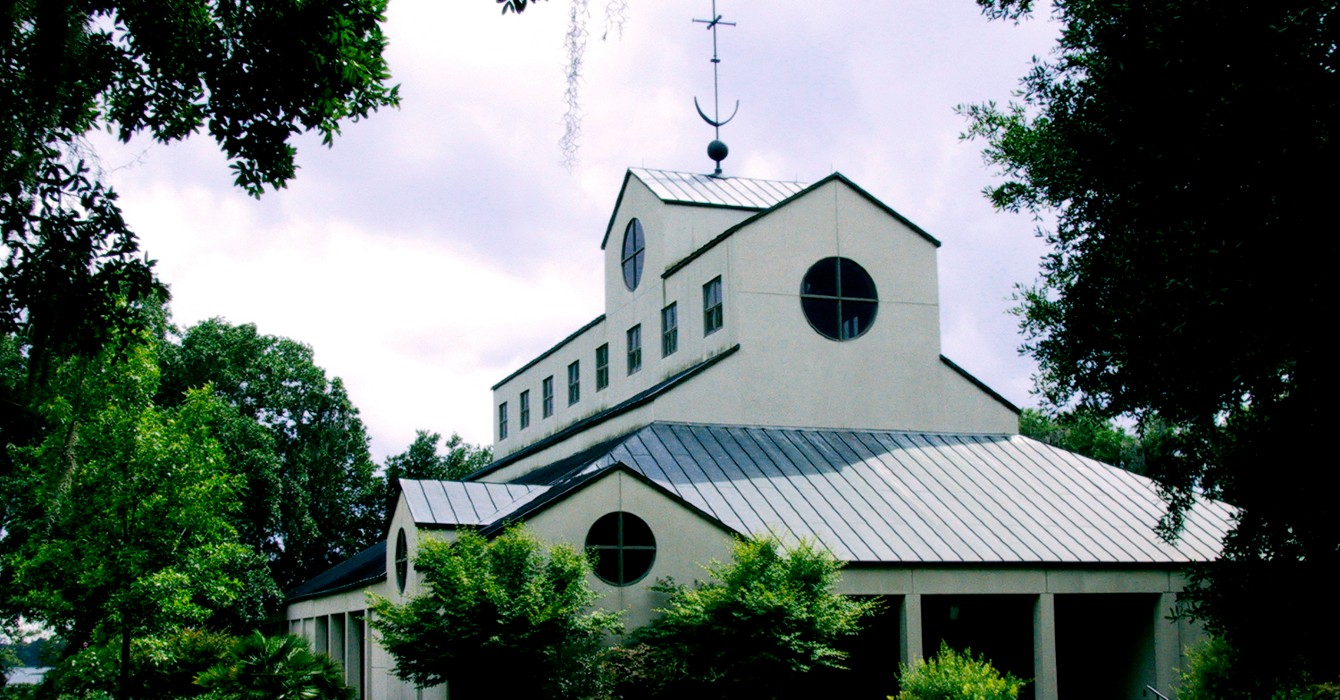
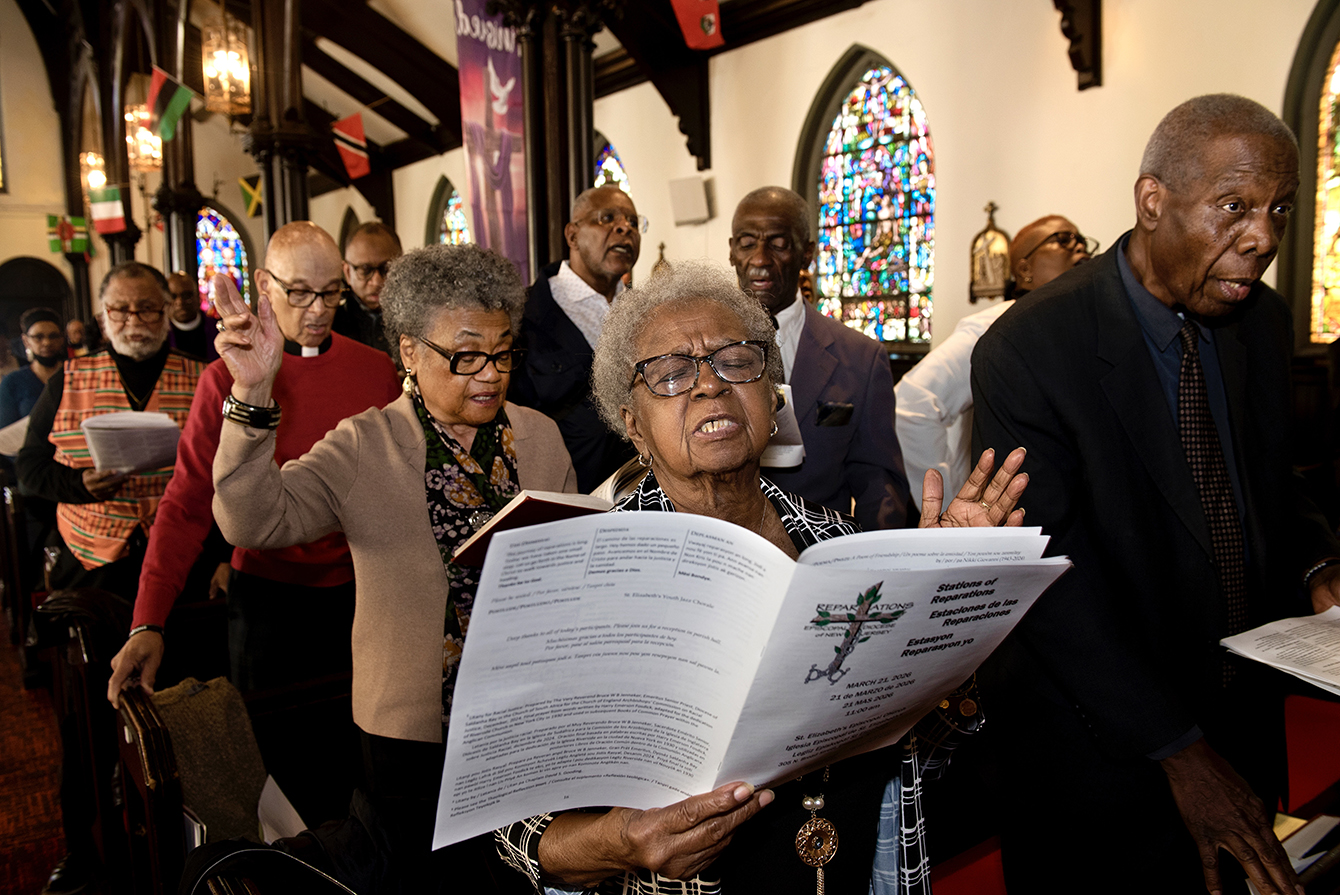
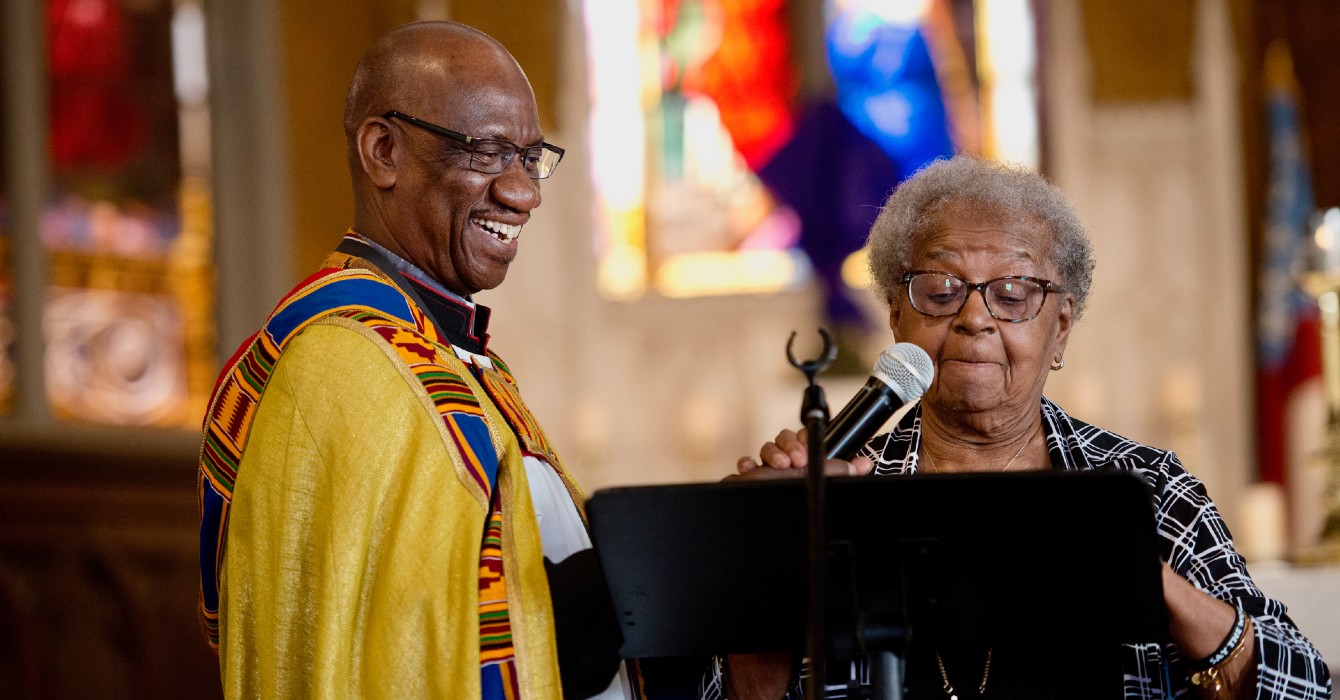
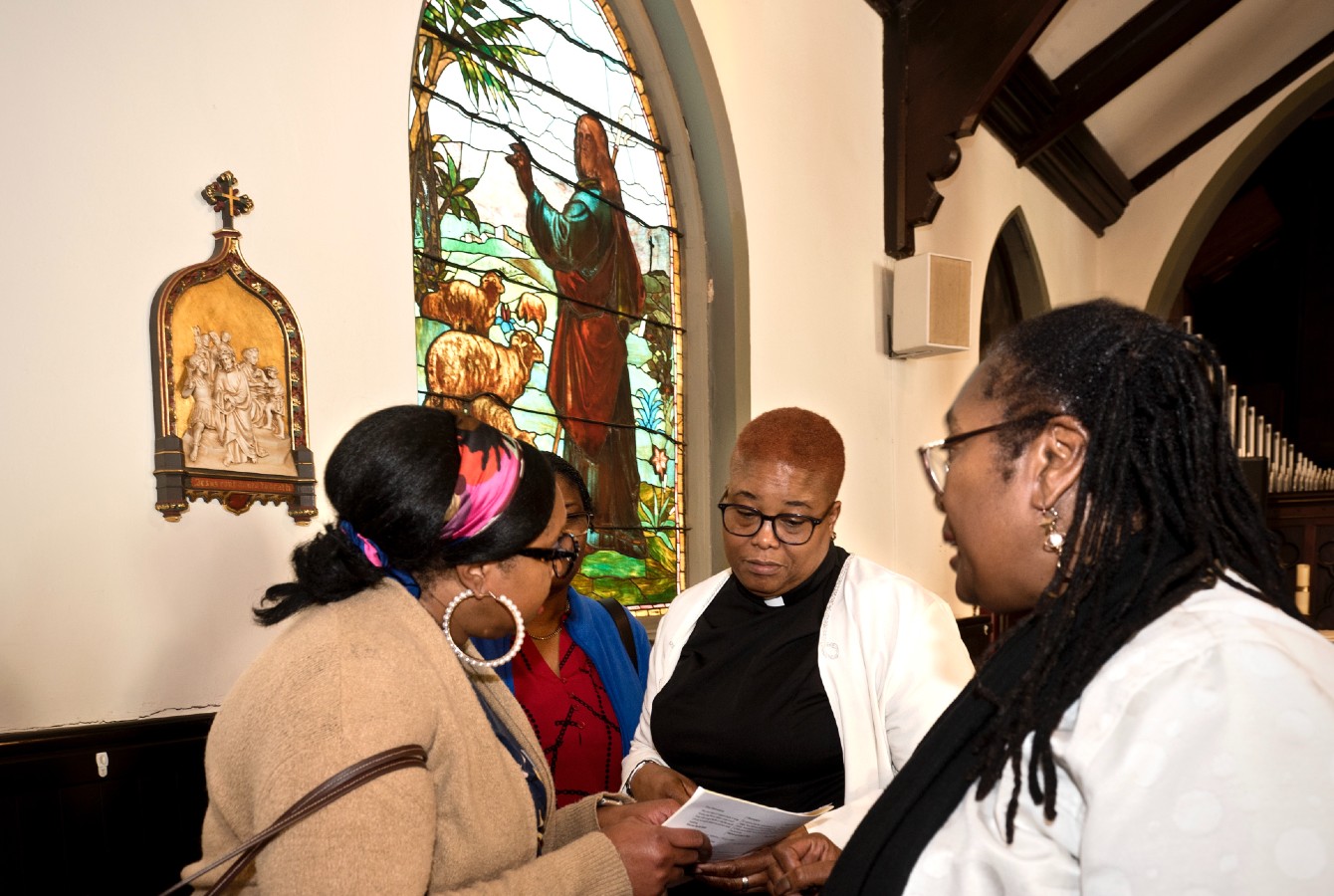
The “Spirit Song” echoed through St. Elizabeth’s Episcopal Church as Eugenia Wilson, 93, strode purposefully to the microphone. Resonant and matter-of-fact, Wilson told the story of how segregation defined what St. Elizabeth’s would be. In 1912, she said, “it was suggested that Negroes needed an Episcopal church for missions.”
That chapel became St. Augustine Episcopal Church. The church was composed of the burgeoning Black middle class of the early 20th century — teachers, lawyers, doctors and managers for the brand new motor car manufacturing companies located nearby.
St. Augustine represented the lofty aspirations of the Black faithful — until it didn’t. Forced to merge with the declining white church, Christ Church, to help with the upkeep, it struggled through years of location changes, name changes and even a fire before white flight took hold. In 1988, it finally settled in its current Elizabeth, New Jersey, location with a new name — St. Elizabeth’s — and a predominantly Black congregation.
What Wilson was too polite to mention, but her priest, the Rev. Canon Andy Moore, made sure the congregation heard, was that the church’s merger split up the old St. Augustine congregation. Many Black parishioners simply refused to worship at the merged church, including Wilson’s husband, Floyd. A vestry member and chairperson of the men’s club of his beloved place of worship, Floyd never became a member of the merged church, although he eventually joined his wife once the parish became St. Elizabeth’s.
“The debilitating effect was generational because even today, some descendants who went off to join other local churches speak about the pain (the merger) brought upon their families. It was nothing short of Black trauma,” Moore said.
O give him all your tears and sadness; give him all your years of pain,
and you’ll enter into life in Jesus' name. Jesus, O Jesus, come and fill your lambs …
On this Saturday in March, Wilson’s personal story recounted just one of the many ways in which racism has played a part in disrupting the lives of Black worshippers in the Episcopal Church. That collective history was the biggest reason the Reparations Commission of the Diocese of New Jersey has for the past three years sponsored a Stations of Reparations service, so that the true story of the diocese’s 10 historically Black churches can be told.
At a moment in the liturgical year when the Stations of the Cross mark the brutality of Jesus’ last day and the approach of Easter, the diocesan practice recognizes a legacy of systemic racism, rooted in New Jersey’s history of state-sanctioned enslavement, while also holding the possibility of a path toward repair.
Sharing the same story
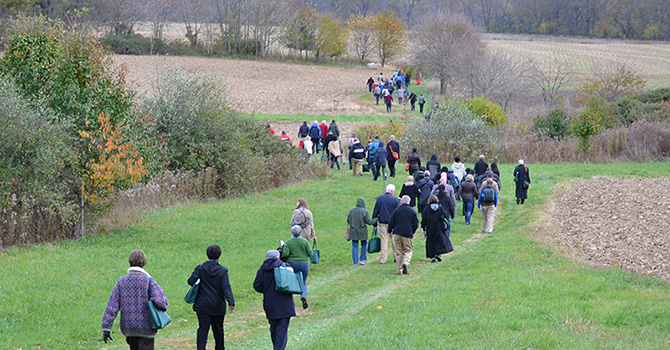
The Stations of Reparations service is modeled after the Stations of the Cross, which traditionally depicts the day of Jesus’ crucifixion through 14 images where worshippers pause to pray and reflect. For the Stations of Reparations service, historically Black congregations are invited to share the origins of their churches and the racial injustice that has undermined them and to talk about their achievements and the faith that has sustained them.
“We share the same story,” Moore said, “a cycle of rejection, welcome, rejection. And to this day, we’re going through this cycle. But today is a day of healing, truth telling and reconciliation, bonded together by love.”
Talk of reparations for the harms that have been inflicted on Black Episcopalians in New Jersey has been a topic of conversation for more than 20 years, when a resolution to put together a reparations task force was first put forth by the New Jersey Coalition of Religious Leaders, an interfaith group from across the state with a mission of social justice.
But the word “reparations” was something people had no appetite for then, said Canon Annette Buchanan, chair of the Reparations Commission. It wasn’t until George Floyd’s murder at the hands of Minneapolis police in 2020 that the resolution was reintroduced at the diocese’s annual convention and passed overwhelmingly, she said.
Does your faith community work with other religious and secular organizations on shared priorities?
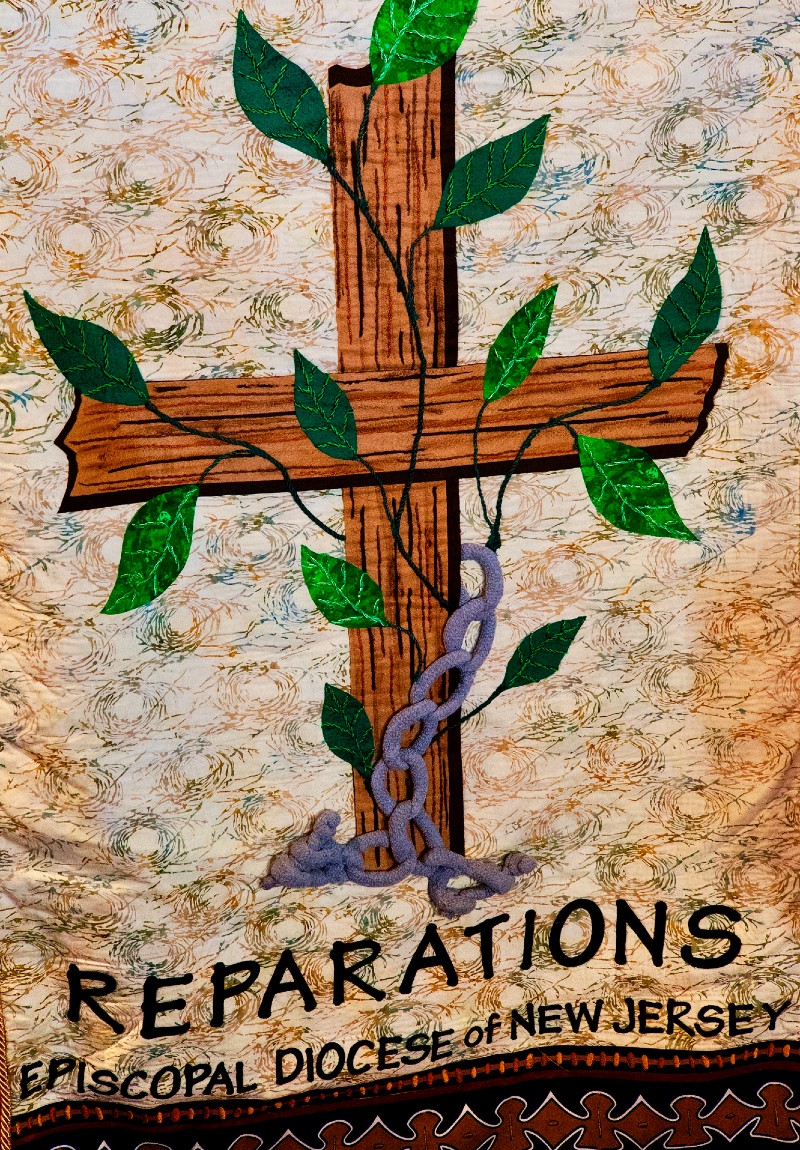
A permanent commission was established, and since then the body has studied what reparations would look like. Would they take the form of an apology? A one-time cash payment? Funds to repair and rebuild historically Black churches?
The commission is in the process of creating a reparative justice trust fund. But for Buchanan, honestly reckoning with the past must come before remedy.
“When you’re asking to repair the harm, people need to first understand what the harm was,” said Buchanan, a member of St. Augustine Episcopal Church, a historically Black congregation in Asbury Park, New Jersey.
The church’s history
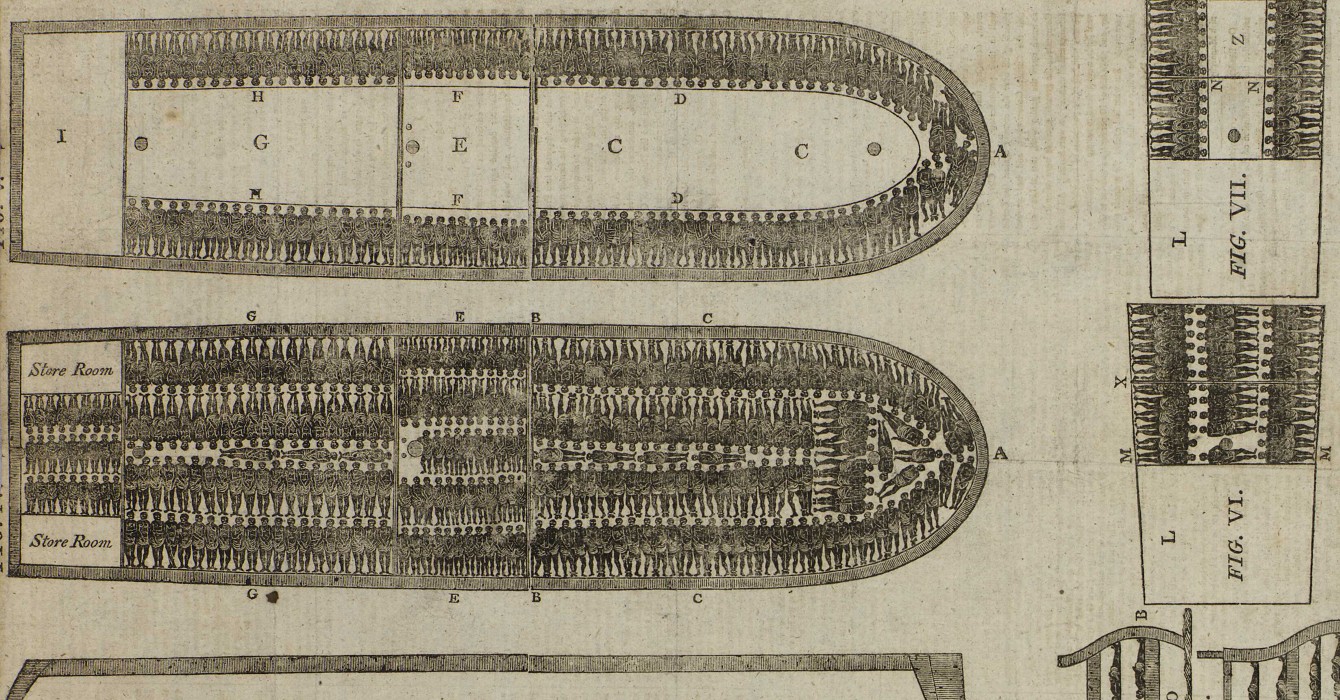
The Episcopal Church’s participation in the enslavement of Black people dates back to its beginning. The church, rather than serving as a beacon of morality and righteousness, instead benefited by inflicting atrocities upon generations of enslaved Black people, as Presiding Bishop Sean Rowe acknowledged in an opinion piece last summer.
“Priests owned plantations and enslaved people themselves, so they were part of the perpetuation and legitimization of the system,” said Jolyon Pruszinski, research historian for the diocesan Reparations Commission and a lecturer in the Department of Religion at Princeton University.
The Diocese of New Jersey’s history is riddled with slave-owning church leaders, lay and clergy, some of whom were rewarded for breaking the law.
One of the most notorious cases involved Jacob Van Wickle, a New Jersey judge and lay leader who, in the 19th century, took advantage of his position to run a slave ring. Van Wickle and his brother-in-law bought groups of enslaved people in New Jersey for cheap prices and sent them to the South, making huge profits.
“Abolitionists found out what he was doing and tried to stop him, but he got a lot of people to vouch for him and say he wasn’t doing anything wrong,” said Pruszinski, whose book “Anglican Slavery in New Jersey: An Initial Accounting” details the stories of Van Wickle and others. “So even breaking laws in ways that would harm the enslaved was not viewed as a deal-breaker for being in leadership in the Episcopal Church in New Jersey.”
Furthermore, the diocese ordained its first Black priest out of necessity rather than a desire to do the right thing.
“The bishop of New Jersey was basically saying, ‘I know that we’re racists and whites do not welcome Blacks into their congregations, but because of the great migration we need to have Black churches and Black clergy.’ It was an explicitly segregationist view,” Pruszinski said.
How has the history of your church been told? Have parts of it been hidden?

Understanding New Jersey’s role
Racism was rife throughout New Jersey. For all of its modern-day liberalism, it was one of the most prolific slave states in the North. It was the last northern state to pass a gradual abolition law in 1804, but it didn’t free a slave for decades.
New Jersey did not support Abraham Lincoln in either of the elections he won. Moreover, it supported the Fugitive Slave Act and adopted the 13th Amendment only after it had been ratified by Congress in 1866.
What’s astounding, said Jean-Pierre Brutus, senior counsel at the New Jersey Institute for Social Justice, is that 56% of New Jerseyans do not know that slavery even happened in the state.
“New Jersey presented itself as this kind of halo of progressivism around race,” Brutus said. “New Jersey historians have said slavery in New Jersey was less violent than slavery in the South — not as significant. Even the government reports looking at conditions of Black people in the 20th century would gloss over slavery and not really investigate the impact of it on Black lives.”
What do you know about your local and state history that affects who you are as a faith community?

But in fact, slavery had a tremendous impact on Black lives in New Jersey, as elsewhere. A direct line can be drawn from 250 years of slavery and 90 years of Jim Crow to the current wealth gaps between Blacks and whites in New Jersey, Brutus said.
According to a 2025 institute analysis, that gap is staggering. Since the pandemic, the median household wealth of white families in New Jersey is $662,500, compared to less than $20,000 for Black and Latino families. Per capita, the median net worth of white individuals is $192,700, compared to only $14,000 for Black individuals.
For one of the nation’s wealthiest states to have such glaring racial disparities across every economic indicator should make anyone pause and ask why, Brutus said.
Working for repair
Buchanan pointed out it wasn’t that long ago that racist policies existed in New Jersey that prevented Black people from getting any kind of a leg up.
“Redlining in housing, not being able to take advantage of the GI Bill, not being able to join the union, not getting educational opportunities. Some people think it was their own initiative that caused them to inherit generational wealth, while the rest of us are lazy,” she said.
Reparations are an obvious way to repair those harms on a large scale and “be bold across a wide range of areas,” Brutus said.
In 2019, a coalition made up of members of the Institute for Social Justice and others rallied at the statehouse in Trenton in support of legislation to establish a task force to study reparations. Introduced by former assemblywoman Shavonda Sumter, the bill received support from multifaith, multiracial and multigenerational coalitions but could not get a hearing on the floor of the legislature.
“There were legislators who asked members of our coalition, ‘Why are you using the word “reparations”?’” Brutus said. “‘Why don’t you call it a racial wealth gap task force?’ They even wanted to call it ‘Black Lives Matter.’ Anything but reparations — that’s how fearful they were of the word.”
But the racial reckoning ignited by Floyd’s murder caused many to look at reparations in a new light and spurred some states to take action. California became the first state in the nation to establish a state reparations task force, and two years later it released a 40-chapter report outlining the state’s involvement in slavery and how it continues to harm Black Americans.
Does your faith community engage in advocacy for issues that matter to you? How could you get started or improve those efforts?
In New Jersey, meanwhile, the bill continued to stall. The lack of progress in the legislature pushed Brutus’ organization to take matters into its own hands. In 2023, the institute launched its own task force called the New Jersey Reparations Council. It was made up of 55 experts — faith leaders, scholars, economists, community advocates — that held nine public sessions over a two-year period. The biggest question at hand: What would reparations have to look like to establish a foundation of racial equity in New Jersey?
In June 2025, the Council released a report that made close to 100 recommendations organized around comprehensive forms of redress: from direct financial payments, to grants for first-generation homebuyers, to universal health insurance. It gave a copy of the report to the New Jersey Legislative Black Caucus, which was already planning to reintroduce its own reparations bill.
Renewed effort
Sponsored by New Jersey Assemblywoman Verlina Reynolds-Jackson and Sen. Angela McKnight, the bill, introduced in January, once again calls for the establishment of a task force to study reparations.
“Having a task force is the best way to start a conversation,” McKnight said. “Some people have no idea how slavery impacted Black people in New Jersey, because it’s not a kitchen table conversation.”
With the election of Gov. Mikie Sherrill last November, McKnight and Brutus are hopeful that there is enough will to get the bill passed before the legislative session ends, despite a political climate that has not been favorable to people of color.
“The current governor was able to win her seat because 94% of Black people voted for her,” Brutus said. She has an obligation to her constituents.
Within the New Jersey diocese, churches have hosted various speakers, webinars and worship experiences, such as the Stations of Reparations service, to share the history of slavery in New Jersey “so people can understand the harm that was done,” Buchanan said.
When systemic harm has been done, what does repair look like for your faith community?
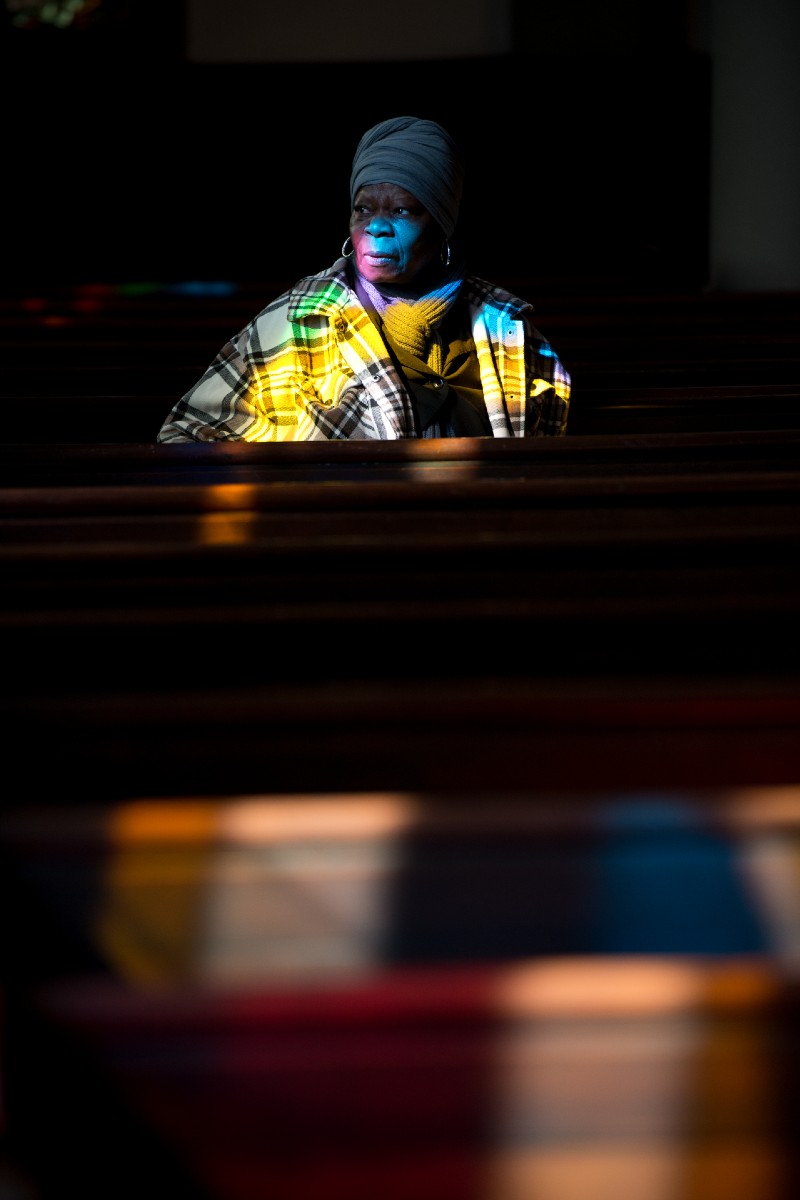
Though the diocesan commission hasn’t yet set up the criteria for distribution of its reparation justice fund, Buchanan believes that the 10 historically Black churches, which have suffered from years of neglect, should receive first priority.
“White folks did not want us worshipping with them, so they gave us a little bit of money and said, ‘Go build a chapel,’ and we did,” Buchanan said. “My church is 135 years old and existed all these years under its own devices, and now we’re in decline. We deserve the money.”
Moore, who has been rector of St. Elizabeth’s since 2009, has witnessed a similar decay of his building, located in a city struggling with significant poverty.
“White flight left us these huge edifices for us to maintain, but at the same time not allowing us the freedom to repair and upgrade without (diocesan) approval,” he said.
But the renewed conversation around reparations has given him renewed hope.
“My hope is that this seed that we have rediscovered will continue to grow and transform society,” he said. “It may seem dark now, but seeds grow in the dark.”
Questions to consider
- Does your faith community work with other religious and secular organizations on shared priorities?
- How has the history of your church been told? Have parts of it been hidden?
- What do you know about your local and state history that affects who you are as a faith community?
- Does your faith community engage in advocacy for issues that matter to you? How could you get started or improve those efforts?
- When systemic harm has been done, what does repair look like for your faith community?