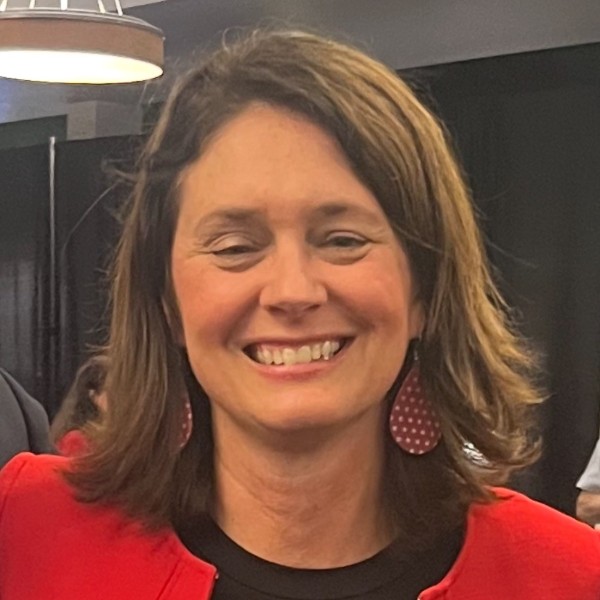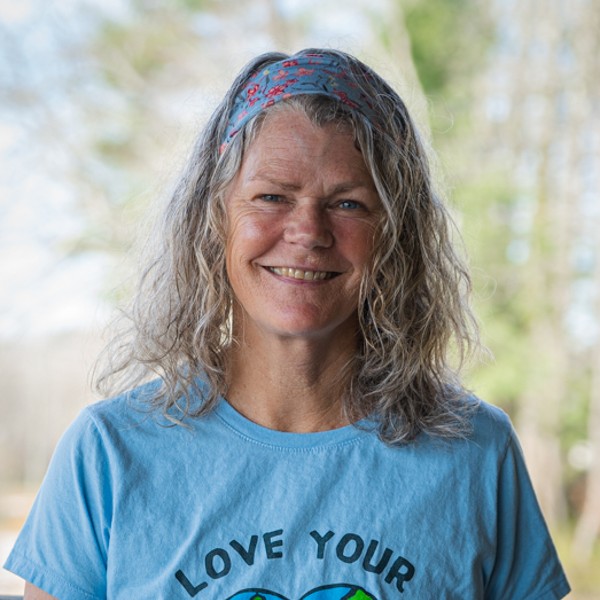

For the last two months, the Rev. Jenny McDevitt, senior pastor of Shandon Presbyterian Church in Columbia, South Carolina, has had a full inbox. Most of the emails she has received thank her for speaking out at rallies about ICE abuses and publicly supporting immigrant communities in Columbia as an expression of her faith.
Others have contained insults and thinly veiled threats, along the familiar lines of, “You’re lucky we don’t know where you live,” and “It would be a shame if something happened to you.” Some emails said she had no knowledge of the Bible and shouldn’t be a minister. And several said that church and state should not mix.
The question of mixing politics and religion is fraught, and for many leaders the answer is simply to avoid doing it — to keep Sundays free of conflict and, in effect, tone down the gospel. But it is difficult to read of Jesus’ life, teachings and work, and conclude that we are called to avoid the hard conversations.
When Thomas Jefferson wrote that there must be a “wall of separation between church and state” in 1802, coining the phrase, his audience was the Danbury Baptist Association. The letter was intended to assure them that their free practice of religion would not be constrained by the federal government, in keeping with the First Amendment. He was clearly not calling for the silence of religious people on political issues.
Even when in 1954 Sen. Lyndon B. Johnson introduced an amendment restricting nonprofits, including houses of worship, from engaging in politics, the “Johnson Amendment,” as it has come to be known, only prohibited endorsing or opposing a particular candidate. It did not restrict advocating for particular paths or policies.
A faith community’s nonprofit status is only one of the very real costs faith leaders must weigh as they consider public activism. Congregations can splinter and dissolve if the people in the pews disagree with the pastor’s analysis. Not only could that make a church financially untenable, but it could also break relationships that have potential for healing and increased understanding over time.
Leaders must navigate the tension between moral urgency and relational harm. But the potential costs do not absolve us of responsibility, and people who are suffering and dying because of government action or inaction may have little sympathy for the dilemma leaders face.
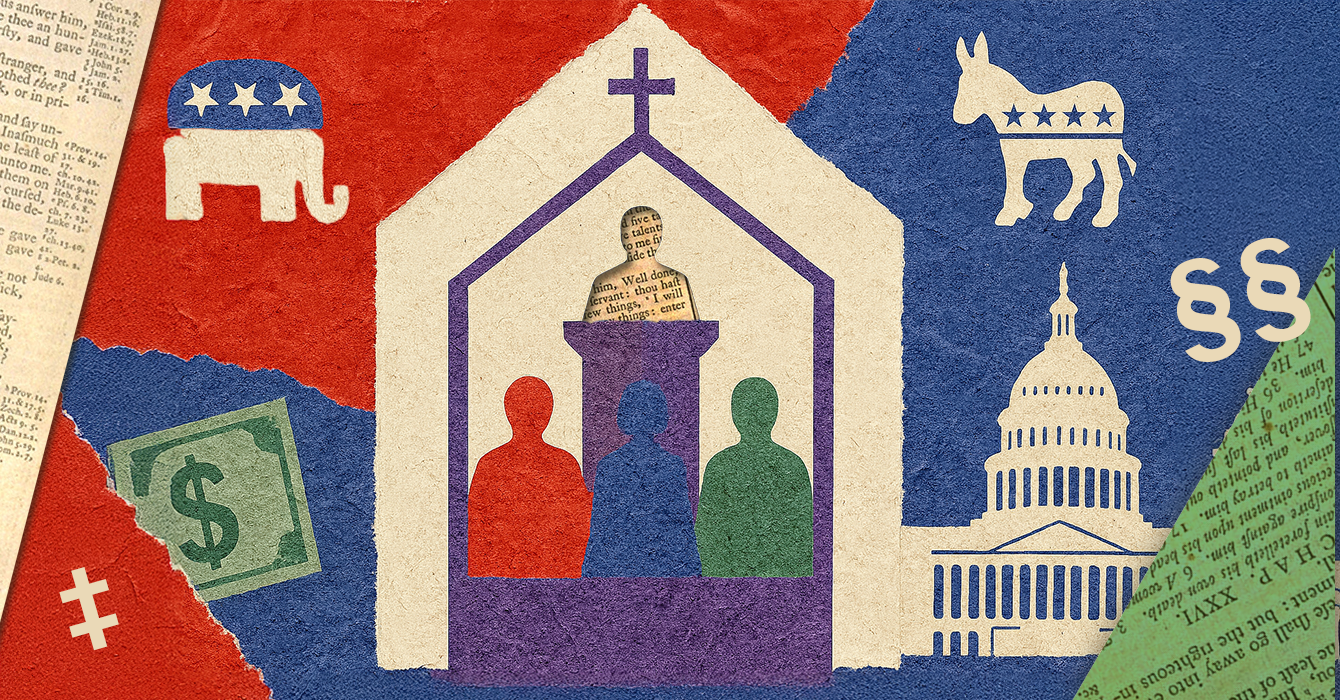
One of the reasons engaging in this conversation is so hard is that there are two definitions for the word “politics” in common usage today. The first, and perhaps most common, indicates the partisan mud fight between political parties, in which your side losing sometimes feels more important than what my side can win.
In the second and deeper definition, politics refers to any process by which a group of people decide what matters, who matters and how we are going to distribute power and resources.
Conversations often veer between the two definitions without speakers noting — or noticing — that they have shifted from one to the other, and this makes conversations about religion and politics particularly challenging.
Prioritizing partisan loyalty over values taught by our faith is a form of idolatry. Failing to advocate for the poor and the immigrant, about which there is very little ambiguity in Scripture, is a prime example of faith without works.
My own wrestling with these questions has left me in a perplexing place, at least at first glance: I have come to believe that in order to be faithful, church leaders must avoid being political according to the first definition. And it is simultaneously true that in order to faithful, churches must be boldly political according to the second.
If we fail to engage in the struggle for justice for people who are marginalized, we are certainly failing to heed the gospel. Jesus was intimately and daily involved in questions of what matters, who matters and the distribution of power and resources. It is most of what he talked about.
The central question is not whether we are saying what we want to say but whether we are articulating what Jesus was trying to say to us all. In the Gospel of Matthew, Jesus gives us a profoundly powerful tool for discernment when he speaks of the two greatest commandments, to love God and to love our neighbor, and then says, “All the Law and all the Prophets hang on these two” (Matthew 22:40 NIV). Everything else we have ever learned or been taught must pass through that filter. And if it doesn’t make it through the filter, it falls short of what is of greatest importance — according to Jesus.
What does love require of you and your community in this moment? Having a better question does not make the answer easy.
We are certainly called to be repairers of the breach, to build bridges across the divides. We are also called to defend the oppressed, and when that oppression is happening in real time with our own tax dollars, we must exert ourselves with, as the Rev. Dr. Martin Luther King Jr. described it, “the fierce urgency of now.”
It is our particular challenge to do both simultaneously. To love the oppressors while interrupting their plans, and to love the oppressed and stand with them. And, as always, to recognize where we, ourselves, are complicit in oppression, and interrupt our own complicity.
Civil rights hero and former congressman John Lewis wrote that “when faced with a hateful, angry, aggressive, even despicable person, [he would] imagine that person — actually visualize him or her — as an infant, as a baby… as the pure, innocent child that he or she once was.”
This was an effort to keep himself from dehumanizing them, even in the very moment that they were dehumanizing and brutalizing him. He didn’t stop interrupting their systems, but he refused to become that which he opposed, and actively cultivated compassion for oppressors. That’s a tall order, but Jesus asks a great deal of us.
When I spoke with McDevitt about the pushback on her public witness, she expressed disappointment that not one of the many critical emails she received presented another angle to consider, only emotional responses. And not one included any kind of invitation to dialogue. Still, she hopes more and more clergy will find their way to standing up and speaking out.
Micah set a high bar when he exhorted us to seek justice, love kindness and walk humbly with God — all at the same time. At a moment of so much misunderstanding, and so much willful misinformation, people of faith need to pay close attention to the line between the two politics. We must not be deterred from engaging in deep politics simply by being accused of engaging in cheap politics. It is what is required of us.
Prioritizing partisan loyalty over values taught by our faith is a form of idolatry.