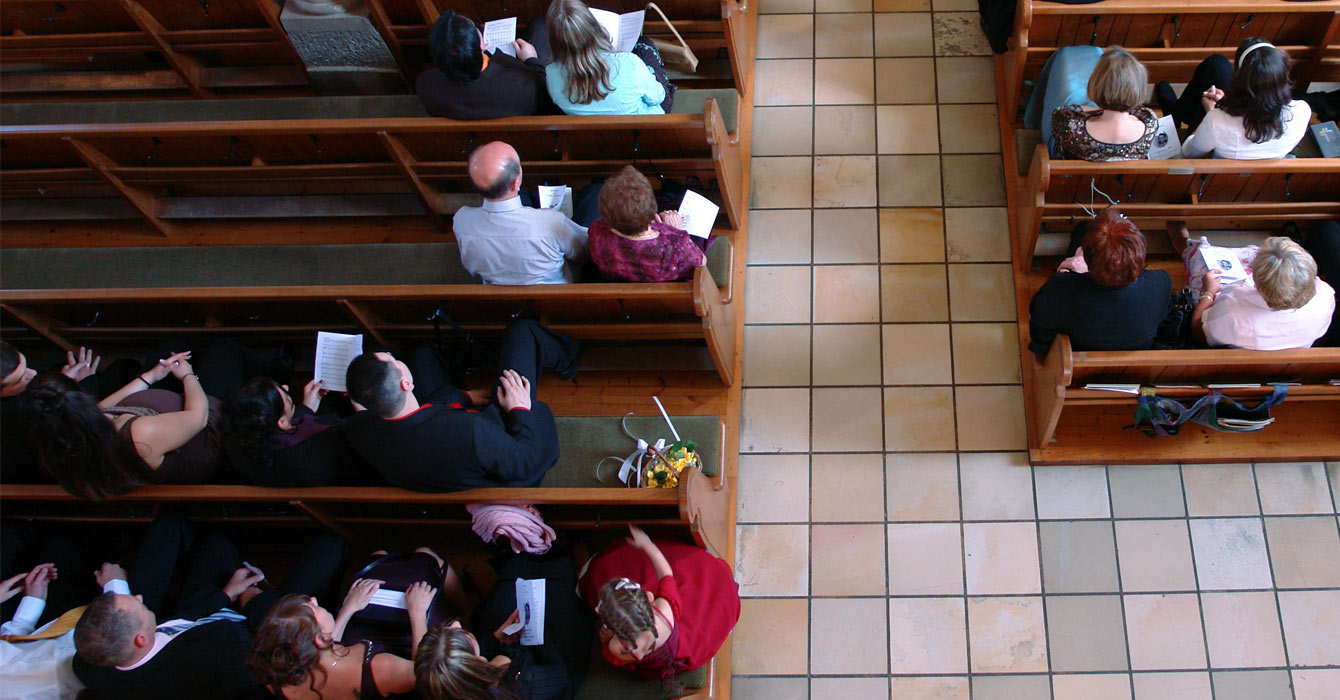

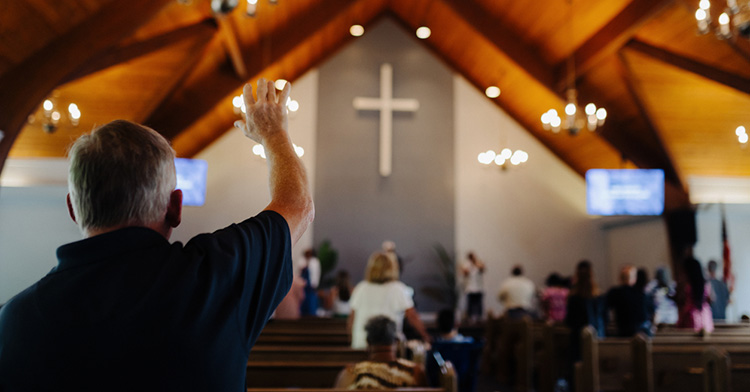
That finding, published in a new report from the Exploring the Pandemic Impact on Congregations (EPIC) project at Hartford Institute for Religion Research, caught even the researchers off guard. After decades of steady decline, the median in-person worship attendance rose from 65 people before the pandemic to 70 in 2025. This represents the first recorded increase since tracking began in 2000.
“We had to spend more time with the data just to make sure that was the case,” said Scott Thumma, director of the Hartford Institute for Religion Research and lead researcher on the project, which culminated in the most recent report, “Signs of Rebound Amid Uneven Recovery: The Changing Congregational Landscape.”
“That was by far the most shocking finding,” he said.
The caution was warranted. A study released in England roughly six months earlier had claimed young people were returning to church in significant numbers — a finding that was later retracted as a data error. Thumma said he was not going to make the same mistake.
After verifying the numbers, though, the picture held. And it wasn’t just attendance. Across a range of indicators — financial giving, volunteer engagement, clarity of mission, openness to change and clergy well-being — congregations are in measurably better shape than they were in 2020 or 2023, the report reveals.
Still, Thumma and his colleagues were careful with their language. The report describes the moment as a recalibration, not a revival.
“We didn’t want people to jump to the conclusion that this is going to save religious life in the United States,” Thumma said. “If you look at the 2000 data, the median attendance then was almost 140. It’s still half of what it was before, and nearly 50 percent of congregations are still in decline.”
Scott McConnell, executive director of Lifeway Research, echoed that measured optimism. His organization tracks data within the Southern Baptist Convention and has observed similar patterns.
“Any upward movement is notable just because the longer-term trend line has been down,” McConnell said. “After a couple of years of very discouraging numbers coming out of COVID, to see it bouncing back — even to a still-not-great number — is an encouraging story year after year in many congregations.”
Within the Southern Baptist Convention specifically, McConnell noted, 2025 data showed a rebound in both attendance and baptisms — the denomination’s primary indicator of conversions — with baptisms now above pre-COVID trend lines.
Inconsistent attendance patterns
The recovery, however, is not uniform. The report makes clear that the gains are concentrated among larger congregations. Churches with more than 250 weekly attendees are significantly more likely to report growth, while the smallest congregations — those with 50 or fewer — continue to decline, with 40 percent reporting losses of 25 percent or more.

Interested in more research relevant to Christian leaders?

Thumma points to a consolidation that has been underway for more than a century but has accelerated in recent years. Larger churches offer more programming, more flexible worship times and more intentional systems for welcoming newcomers. Many also stayed open longer during the pandemic. The data shows that congregations that did not close had a median attendance growth rate of 9 percent, compared to a 4 percent decline for congregations that suspended in-person worship.
McConnell sees the same trend in his research. When adults who have attended more than one church as an adult are asked to describe their church movement, they tend to report migrating toward a larger congregation, often without having set out to do so.
“It raises a lot of questions around being able to pay clergy, having a viable community, having enough people to minister to each other in the different ways a local congregation normally does,” McConnell said.
Both researchers point to something beyond the numbers, though, as perhaps the most significant development. Across traditions and sizes, congregations are reporting a renewed sense of purpose and optimism, an energy that had been largely absent for years, they said.
Thumma saw it firsthand the same week the report was released, at a gathering of younger clergy in New England, which is among the U.S. regions to have experienced the greatest declines in church attendance. One by one, pastors from small, struggling churches described an upbeat atmosphere in their congregations.
“I’m thinking, ‘Did they read our report?’” Thumma said. “It was great confirmation that what we saw in the data was actually playing out.”
For McConnell, that shift in attitude is directly connected to something churches can control: the intentional work of community building, outreach and clearly communicating why gathering together matters.
“After COVID, I think we were shocked at how much work it is,” he said. “But as churches did the work of explaining and sharing and getting back into serving their community, those elements have brought people back together.”
Thumma, who has spent 25 years tracking the health of American congregations, said that what stays with him most isn’t the attendance figure. It’s the hope.
“The thing that has bothered me for a couple of decades is this story of ‘Woe is us. We’re the chosen few, and we’re getting fewer each year,’” he said. “To see that sense of hope, that energy — no matter what level they’re at — that they can do more. That has been absent from a lot of churches. To see that shift is a very positive thing.”