

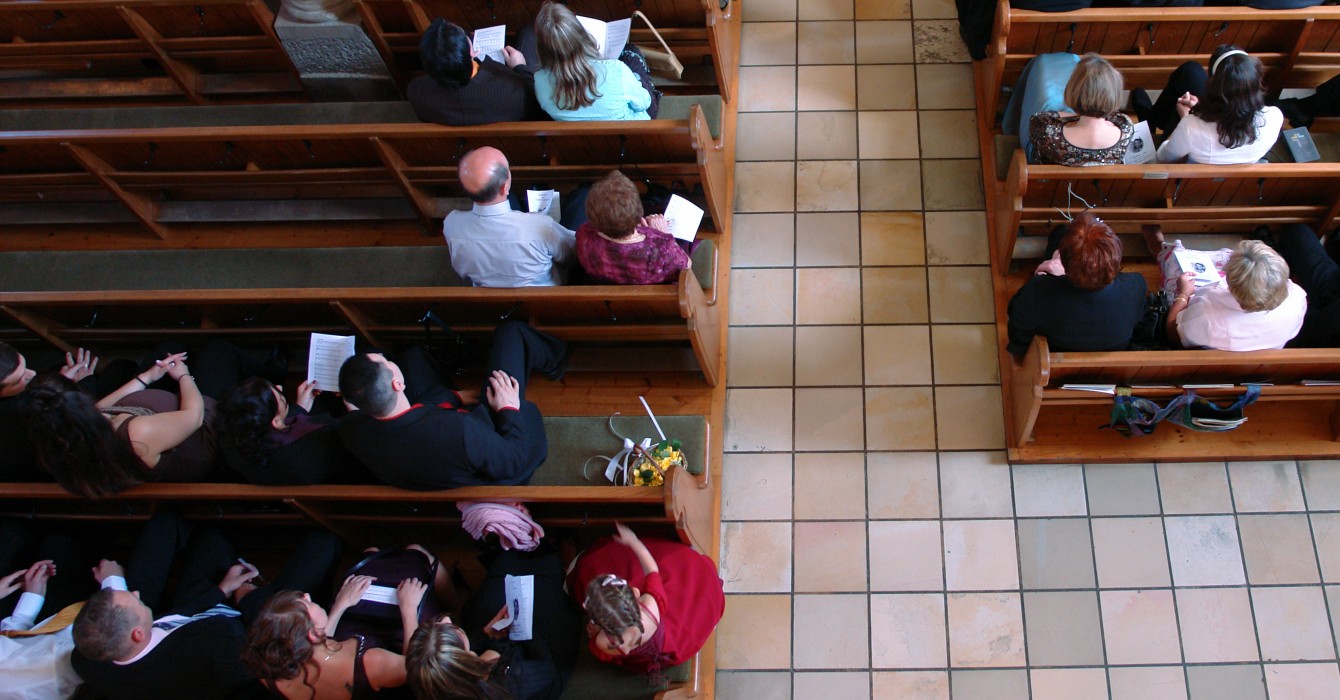
We believe congregations are important, both to those involved in them and to their neighbors, and we want people to know that about our work. It is part of the reason we changed the name of our ministry from Leadership Education to Forum for Congregational Life.
With that new emphasis and in a season of rapid societal change, we are also considering the impact of AI, cultural polarization and numerous other factors on the work and meaning of congregations.
When Dave started in ministry more than four decades ago, many denominations acted as if one of the primary roles of a congregation was to be an outpost of denominationally developed programs. Today, the activities of a congregation are often determined by its people and shaped by the opportunities and challenges in its particular context.
Given all that is shifting, Alaina believed that our team needed to consider why congregations matter both historically and in our day. We needed to speak the questions on our minds as we launch the Forum.
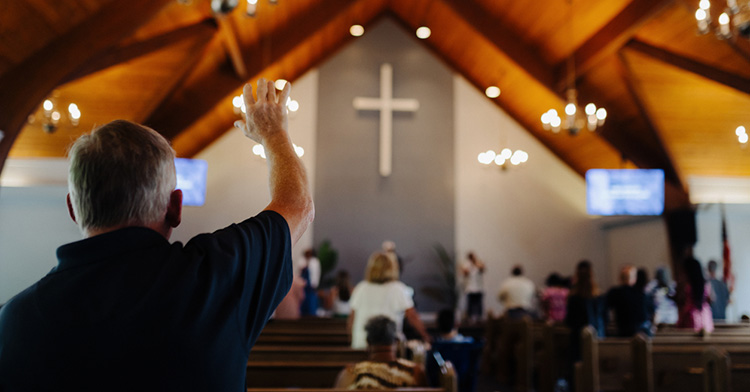
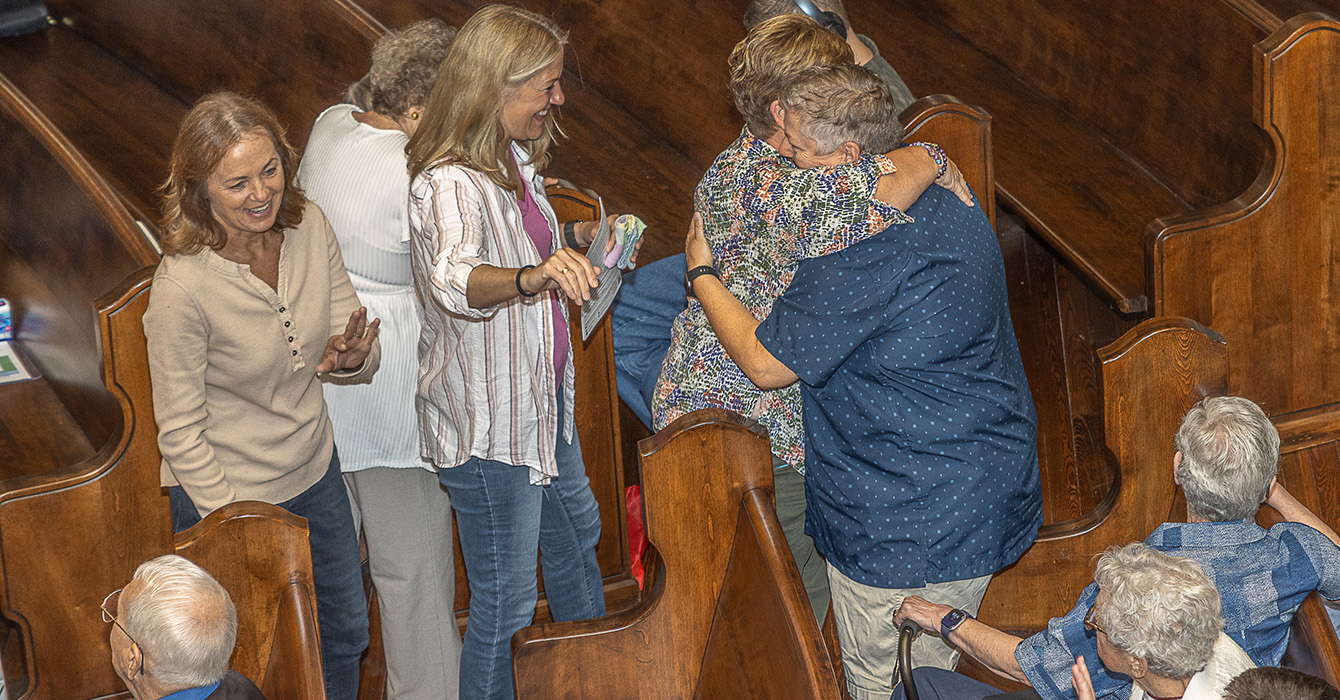
Christian congregations are the primary social and institutional manifestation of Christian faith today. In Christian congregations, individuals and families gather to receive, affirm and celebrate the transformation they have experienced through faith in the Triune God. In congregations, persons of all ages are formed together in seeking God’s purpose for their shared lives across many years.
This communal expression and experience of faith grounds individuals in God’s redemptive story. The shared work of communal worship gives congregation members renewed imaginations to see God at work in their homes, neighborhoods, workplaces and beyond.
A thriving congregation is firmly grounded in the story of God, continually retold through communal, family and individual practices such as worship, study of Scripture, prayer and discernment. A thriving congregation has integrated its sense of mission and calling into all aspects of its organizational life, including its formational programming and decision-making processes. A thriving congregation is deeply rooted in its place — invested in the culture and history of its neighborhood, faithfully interpreting its theological tradition and commitments within the life of the community beyond the congregation.
Finally, a thriving congregation has a thoroughly Christ-shaped and Spirit-led life, sharing an inextricable connection to the Triune God while remaining fully present to the needs, joys, sorrows and opportunities of the community. Healthy congregational leadership is not limited to pastoral and professional leadership; it includes laity and clergy working collectively to live as Christ lives.
Over the years, we have witnessed many congregations develop a mission or vision statement. In the end, those statements are remarkably alike. Often, the gift of such a process is for the participants to go back to the fundamentals of the faith life and the role of the congregation in that life.
It can be difficult to hold onto these foundational ideals in this season of rapid social and cultural change. All of us are trying to adapt to this environment. Technological advances have made remote work, virtual health care and online education possible. Artificial intelligence is transforming almost every sector of life. Geopolitical and environmental instability raise anxieties and fears for many.
It is not surprising that people may feel overwhelmed. Some attempt to turn back the clock, while others choose to trust in the latest innovation. Some may be paralyzed by the situation. In the midst of these changes, trust in institutions of all types is eroding.
Congregations, naturally, need to adapt to the changing circumstances. In a 2024 survey for the Exploring the Pandemic Impact on Congregations (EPIC) project conducted by the Hartford Institute for Religion Research, 46% of respondents reported that they regularly participate — in-person or virtually — in congregations beyond their primary one, and 7% identified as having more than one “home church.” What does this information mean in terms of church membership? What should any of these respondents’ congregations expect in terms of participation?
Leaders of congregations are considering a host of distinct and interrelated questions: How do we lead others to live a life of faith that matters? What is the role of technology in facilitating worship? How do we support Christian discipleship for families who seldom attend services and frequently access content on their phones? How do we measure the impact of our engagement with the community?
These shifts raise basic organizational questions about what a church staff and building should do: How do we determine the adequate size of a church staff? What is the role of a church building? What does it mean if a church is in a neighborhood? Some leaders are not sure where to find information and ideas beyond their friends, colleagues, peers and perhaps their denomination.
One way to see the new situation for congregations is to remember the effectiveness of the mid-20th century’s most commonly used metric for church life: average weekly worship attendance. Lyle Schaller, a highly regarded church consultant of that era, considered a congregation’s size to be the most crucial variable in predicting its culture and work. This measure helped gauge adequate programs, staffing, location, buildings and land use. Attendance still matters today, but it does not predict revenue or requests for support in the way it once did.
We can see another shift in expressions of congregational life through programming. In Schaller’s time, congregations offered a host of programs, ranging from youth groups to Bible studies. Even worship services were often planned like program events. The program-planning model has been slowly shifting, but these changes became much more widespread during the stay-at-home phase of the pandemic. Programs were generally shut down for months or longer. Worship, prayer and fellowship, however, continued in new and old ways that are still evolving.
Another shift is away from the congregation as a “voluntary association.” Since the same period when programing became central, congregations have generally been organized like civic organizations, such as women’s clubs or Lions Clubs. But all of these associational forms are shifting as we approach the mid-21st century. At the moment, few groups of this kind are attracting younger adults, who often connect instead through social media and are more likely to affiliate with a movement than a formal association. Yet the bonds of a movement are often not as long-lasting or consistent as those created in many voluntary associations, particularly congregations.
These shifts and changes invite us to wonder: How should congregations evolve to offer their gifts in new ways? The mission of congregations is not changing, but the expressions of congregational life are evolving. This transition can be difficult to track and notice across various Christian traditions. There are places for a congregation to go for help — like a denomination, a school or a consulting firm — but those places may not have the time and energy to develop networks so congregations can learn from each other.
We want the Forum for Congregational Life to be a place that supports the exploration of today’s pressing questions and any new questions that may emerge for congregations. We believe that the variety of Christian traditions and their congregations will likely respond to the times in many different ways, and we aspire to facilitate ways to learn from each other.
Participation in congregational life has been significant to Christian persons and families throughout the church’s history. In different seasons, congregational life has evolved to include many expressions: house churches, small rural congregations, megachurches, cathedrals and more. Alongside all who care about congregations, we are excited to discover how these forms are evolving and the impact congregations are having in this age.
It can be difficult to hold onto these foundational ideals in this season of rapid social and cultural change.