I landed at Dallas-Fort Worth in February 2005, 48 hours after an intense firefight in Mosul in the days following Iraq’s general election. The airport was covered in banners. A complete stranger hugged me in the concourse.
On the connecting flight home, someone started clapping, and the cabin followed. I was moved up to first class, but I couldn’t indulge in the free booze because I was still in my combat-soiled uniform.
I didn’t know what they were thanking me for. Forty-eight hours earlier I had been in the kind of situation where you don’t stop to think about whether what you’re doing is good — you just try to keep your (little comm)unit(y) alive.
Gratitude assigns positive moral value to an action. In my mind, what I’d done in the previous two days wasn’t good. It was, at best, necessary. Nobody was clapping for that distinction. And the applause has continued to this day.
I tell this story not to make civilians feel bad for welcoming us soldiers home. The applause was well intentioned, but acclaim is not always the proper response. I tell this story because it illustrates the problem many congregations face when they try to minister to veterans: We are working with a moral framework that doesn’t fit the situation.
Many churches today operate within a paradigm I call “civilian theology” — interpretation of an experience from outside by people who haven’t shared the burden of the experience at its heart.
Churches tend to focus on moral injury, a term that describes what happens when you witness or perpetrate acts that violate your deepest moral convictions. That’s real. I’ve carried it. And I’ve worked with organizations trying to repair the harm done by it.
The church’s instinct to name it, tend to it, create space for it — all of this is right and good. But moral injury is a clinical diagnosis designed by therapists to help therapists. When congregations adopt it wholesale, they slip into civilian theology.
This theology isn’t malicious. It’s usually more like trained incapacity, a bad habit. The church has done this before with other communities it claimed to serve. It had the right scripts; it lacked the hermeneutic.
What’s needed isn’t just care for veterans experiencing moral injury or physical wounds. What’s missing is a willingness to let veterans care for the congregation in return. To let them be the shepherd through uniquely stressful times, like these. If I gained anything from my military service, it would be my remarkably high tolerance for stress.
I believe congregations can benefit from what I call a martial hermeneutic. It isn’t a claim that veterans know better than everyone else. It’s a recognition that combat experience generates constructive interpretive practices and a social ethic that can accommodate genuine moral complexity, rather than reducing diversity to predictable binaries. Veterans have learned to read everything from Scripture, culture and traditions from a position most congregational leaders haven’t occupied.
That position has something to offer the whole body of Christ, not just the veteran members.
I’ve been developing these ideas for about a dozen years now, and here is what surfaces when I apply a martial hermeneutic to the church’s lexicon:
Moral formation is the braid that weaves individual conviction together with communal faith and civic identity. When a young person deploys from your congregation, they carry your formation with them — the oaths, the traditions, the blessing you gave. Or withheld. You are already in this; own it. Adapt it if necessary, but don’t pretend it’s neutral.
Moral fragmentation is what happens when that braid frays. It’s not only trauma in the clinical sense, but something more specific: the collision between what a person has been formed in community to believe and what they have actually been asked to do or witness. The church has a name for this buried in its own tradition. It’s not moral injury; it’s guilt. When a mistake has been made, guilt is the name we give to a cracked conscience. Shame is what happens when you and your mistake are rendered indistinguishable from each other by the community that formed you.
Moral reintegration is the congregation’s work. Not therapy referrals, not Veterans Day recognition. Reintegration is the slow, ordinary, liturgical work of helping someone reconstruct a coherent moral identity in community. It looks like dinner. It looks like a Bible study where the person who has read Psalm 23 from inside a firefight gets to speak first. It looks like inviting a veteran to preach on a regular Sunday, with an ordinary text, from an extraordinary vantage point.
One practical note, for what it’s worth: Consider refraining from asking veterans to stand up and be recognized in worship. The instinct is kind, but the effect is to single out people who are often there precisely because they want to belong to something larger than their service.
If you want to find the veterans in your congregation, invite folks to dinner with you. Military training and combat service may come up in conversation. Let it. You’d be surprised how much veterans have to share when you train both your words and your body to communicate receptivity rather than apprehension.
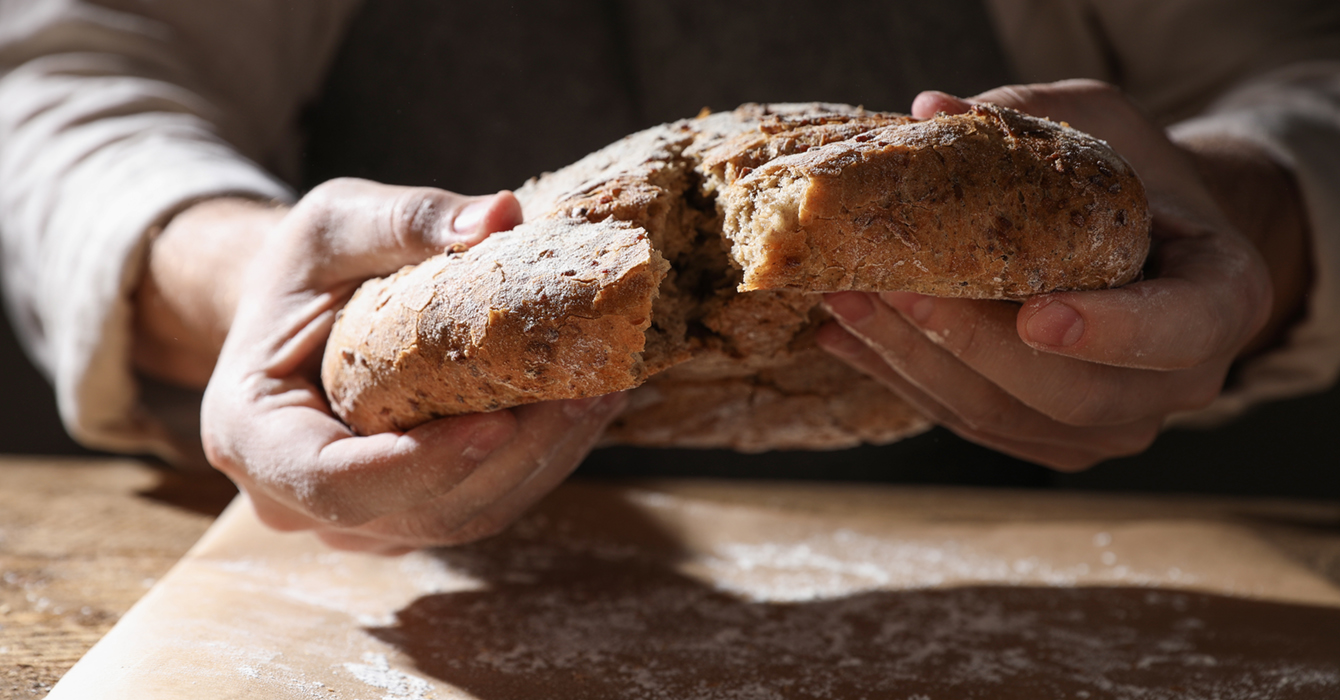
Earlier this year, I preached on the Road to Emmaus. It ends not with a sermon but with a meal. Cleopas and his companion had walked with the stranger for hours; he’d given them the full sweep of Torah and the prophets. Their eyes didn’t open during the lecture. They opened when he broke the bread, when the cracking wheat crust made all the preceding “ministry” make sense.
Translation work — the systematic interpretative lens, the newly absorbed martial perspective — opens up brittle spaces. The table is where recognition happens, because that’s where we let our guard down long enough to share the spoils of the hunt as well as the stories of heated contest.
Your veterans don’t need a stand-up moment on Nov. 11. They don’t need a story in which their diagnosis is the headline and someone else controls the microphone. What they need, and what the church is uniquely equipped to offer, is a congregation willing to walk beside them until something opens. To break bread with them. To ask not “How are you healing?” but to say, as Stanley Hauerwas said to me, “We want to be present to you, and when you want to tell us what is hard to tell, we want to listen.”
That gesture is a hermeneutical act. And it is work the church has been postponing for too many generations. It’s never too late to start, and that’s where I would encourage congregational leaders to begin. Not with clinical language or applause, but with radical curiosity and a loaf of sourdough.
What’s missing is a willingness to let veterans care for the congregation in return.