
Fifteen-minute read. A shorter version of this interview is also available.
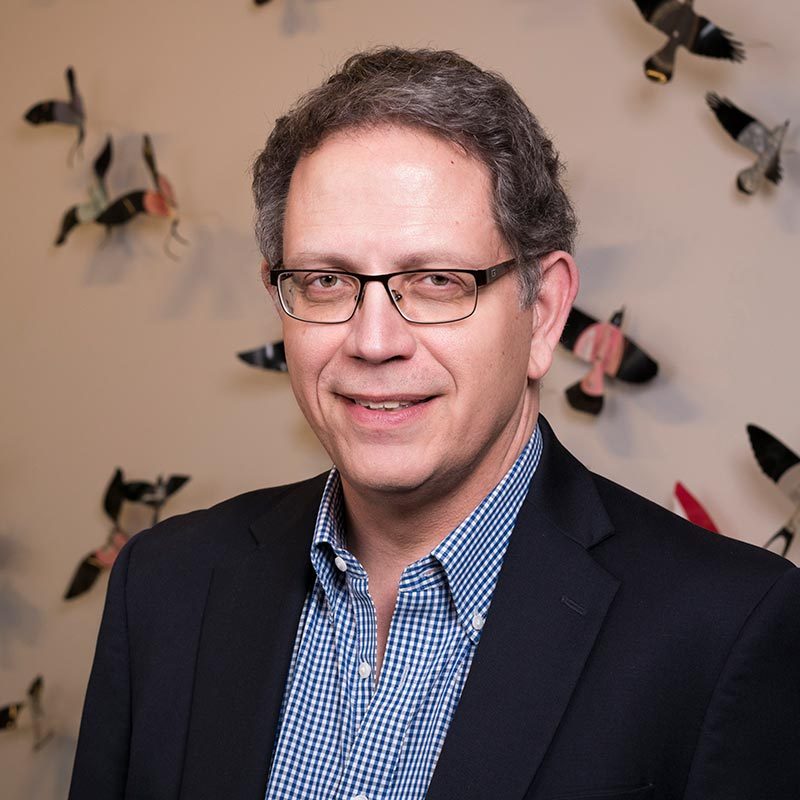
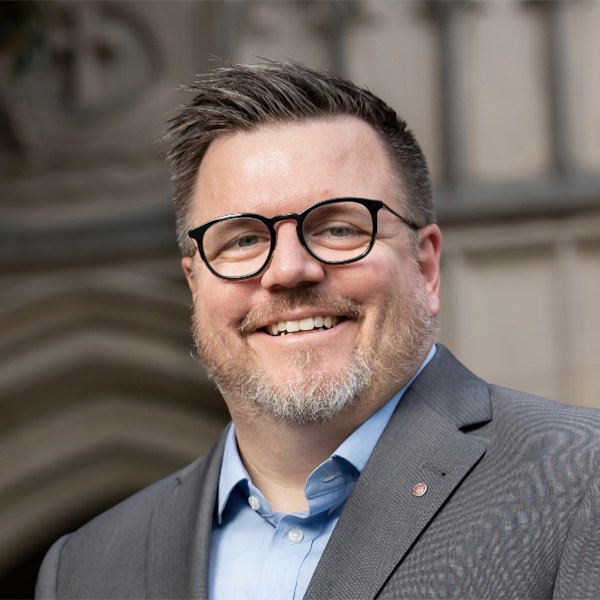
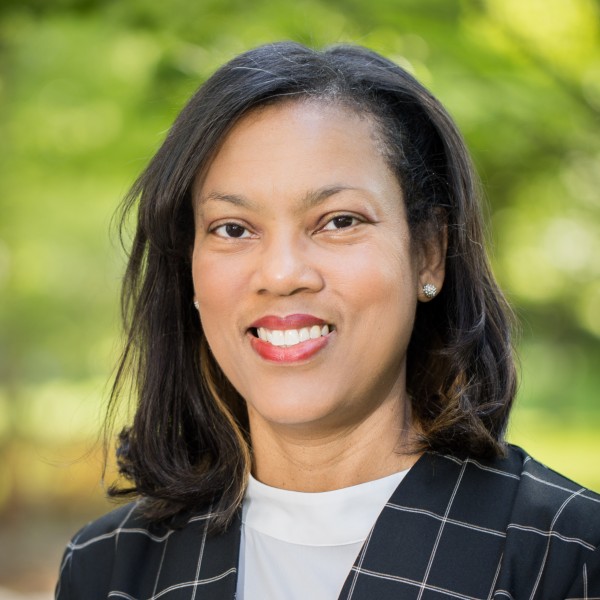
As an 11-year-old in Barbados, Deon K. Johnson — now the Rt. Rev. Deon K. Johnson — felt drawn to a sacramental life.
“Our parish church was always open, and it was just down the street from my school, so I was that kid after school who would find myself in the church standing behind the altar and acting what I saw on Sunday morning, so it kind of began there,” Johnson said.
A sense of call solidified during the process of confirmation, but Johnson still resisted for years, only to be encouraged forward by a village of advisers.
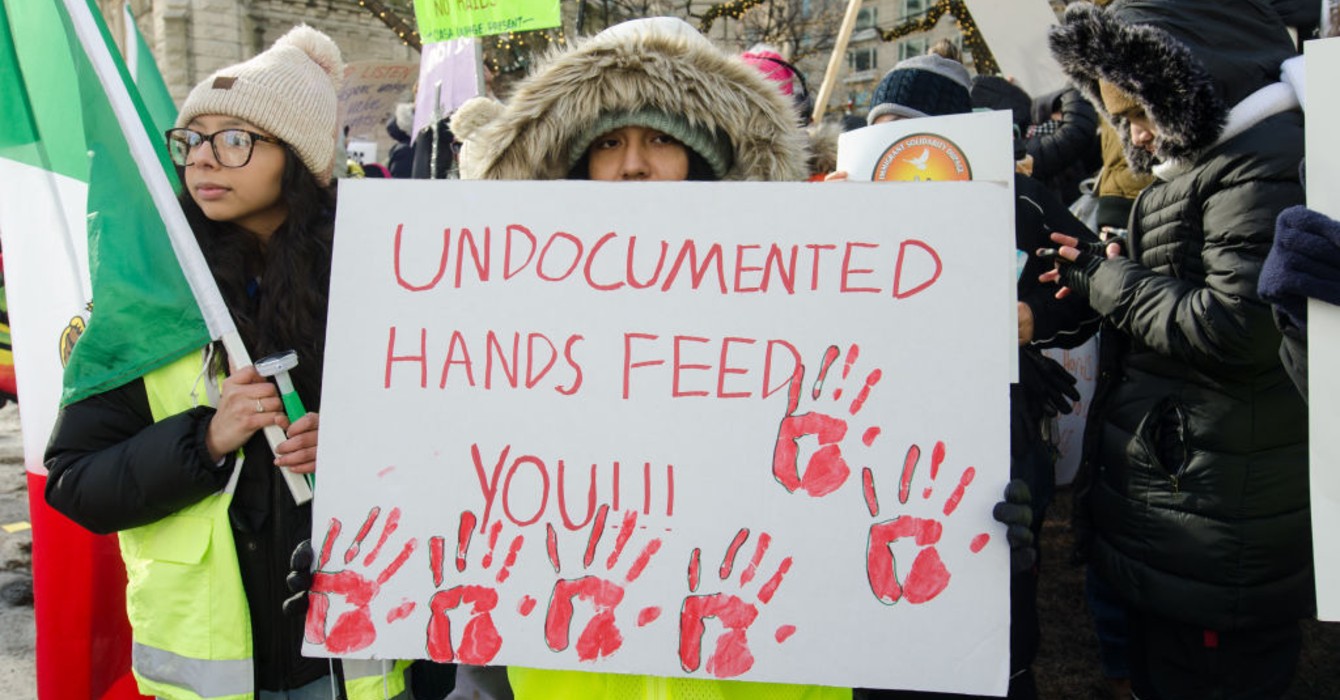
Since becoming the bishop of the Episcopal Diocese of Missouri during COVID, Johnson’s ministry has come to include a practice of writing daily prayers that he shares through social media. And, as the diocese’s first bishop who is Black, openly gay and an immigrant, he has recently spoken publicly, including with NPR, about a traumatic year for his family. In 2024, his husband, who was born in Mexico but came to the U.S. as a young child, was separated from Johnson and their son and daughter as part of the federal immigration crackdown.
Johnson spoke with Faith & Leadership’s Aleta Payne about his ministry, life and family, as well as the crucial role the church can play as America’s 250th birthday is observed. The following is an edited transcript.
Faith & Leadership: Would you tell us about your call story?
Deon K. Johnson: Confirmation in Barbados takes about a year, because what they really want you to do is to make sure that this is what you’re committing yourself to but [also] to find out what your place in ministry looks like.
The priest at the time insisted that we had to go and be engaged in every single ministry of the church, because he really wanted us to figure out, Where’s your place in this faith community? I was an impetuous child that looked at them and said, “I want your job.” But in many ways, I also resisted answering this call.
It’s biblical in some ways. God calls, we say, “Yeah, yeah, not me,” and God wins.
That’s what’s happened in my life. I immigrated to the United States when I was about 14 and continued to just say, “Hey, church is important to me, but I’ll go get a job out in the world, and at some point I will think about this whole ordination thing.”
I went off to college, and it was there that I finally began to come out to myself. At that time in the late ’90s, early 2000s, we had controversy going on around banning gay marriage and everything, and the church was also continuing to wrestle with all of that.
I said to myself, “Surely this church does not want me.” Yet my priest at the time kept saying to me, “You need to consider going to seminary. I think that God’s calling you to something.” And I kept saying to her, “Thank you, but if God wants me to do this, God will figure it out.”
Her way of letting God figure it out is that she talked to the bishop, and she set up an appointment for me and told me, “Oh, by the way, you’re meeting with the bishop next Wednesday.”
In the back of my mind, I thought, “He’s going to say no, and I’ll just continue with how things are going.”
Strangely enough, I get to that meeting, and he said, “I see a calling.”
I’m like, “What are you talking about?”
F&L: Still trying to talk yourself out of this.
DKJ: I kept trying to talk myself out of it, every step, and at every step someone showed up and said to me, “No, this is what you need to be doing.”
I developed this practice that if people say the same thing to me independently three times, I need to pay closer attention to it. That has served me well throughout my ministry and throughout my life.
When it came time for ordination, I kept going, “OK, God, what do you want? You tell me.” And at every step people have stepped in and said to me, “We really see this in you.” Even when I fight it, they’re able to see it sometimes.
The same thing is true when I became a bishop. There’s a really funny story about allowing my name to go forward to be bishop. I had been in a previous search, and I had said to myself, “Yeah, no, I don’t want to go through that process ever again.”
[Then] one of my friends called me up and said, “Have you seen the profile for the diocese in Missouri?” Another calls me up and says, “Have you looked at Missouri?” I said, “I looked at it. The deadline is too soon. I do not have time to write the essays and fill out the application, because it’s a tedious process. Maybe if they extend the deadline.”
The next week she calls me up and says, “I’m holding you to what you said. Look online. They just extended the deadline until the end of the month.”
I filled out the application, sent all the things in, and this is how it ended. The gift is I’ve had people who at every step have said to me, “You need to respond to this.” It was ironic, coming from a village [in Barbados]; in the village, you think of what’s best for the community rather than what’s just best for me. It really is a community who discerns. It takes a community — it takes a village — to help us actually discern our call, especially when we’re trying, like Jonah, to run away from our call.
F&L: Your family has a history of immigration. You are from Barbados; your husband is from Mexico. You all have gone through a time of trial in this moment of a crackdown on people who have come here as immigrants. Can you talk about your family’s experience?
DKJ: This is a very difficult season no matter where you come from. It is focused on folks coming from the Latin American, Spanish-speaking countries, but it’s affecting everybody.
I am an immigrant, my parents are immigrants, I’m married to an immigrant, and this is our lived reality. With my husband, I have to repeat this often: We were doing everything right. He was brought here as a child, he was approved for DACA, was working, doing all the things, aspiring to that American dream.
We got married, and we filled out all the paperwork. I have advanced degrees, and I can barely get through figuring out the paperwork in English. We’ve done all the paperwork, and everything was filed, and we got a letter saying that we needed to go to Juárez in Mexico for our interview at the U.S. Consulate.
We went to the interview, and the interviewer said to my husband, “You’ve not lived in Mexico for a very long time. I think you need to spend some time there. You may not be going to the United States for a year.”
[Previously] everything had been approved. All of his background checks and everything said, “Here is a model person with children, family, trying to do all the right things.”
The response was, “You’re going to have to stay here for a year.”
We had to quickly figure out going from two incomes to one, [from] having one household to two, taking care of kids, distance. We had to try to figure out how to navigate all of that.
I recognized the privilege that I had in being able to afford to do two households, to be able to get on a plane and all that. A lot of our immigrant siblings don’t have that privilege. There was a lady behind us [at the consulate] from Oklahoma who had driven through a snowstorm to go for her interview, had just had a baby months earlier, and who was told, “You have to stay in Mexico for three years.” Can you imagine having a newborn that you’re not going to see until that baby is three years old? This is how our system is working.
It was a very difficult year for both of us, him being in a place where he had never lived for a significant portion of his life and us on the other side trying to navigate.
At the end of the year, he had to do all of the things [at the consulate] over again. The person who interviewed him said, “Why did you take a year to come for your interview?” He said, “Your colleague told me that I had to stay in the country for a year.” She looked at all of this paperwork and said, “That makes no sense.”
I have to keep emphasizing, I recognize the privilege that I have in being able to do what we did. I think often of folks who don’t have that privilege, whose spouse or son, daughter, brother, sister is in a country where a lot of them have no connection. What’s worse is the family that’s left behind isn’t able to actually go and spend time with those people who have been detained or deported. It was and continues to be something that I’ve been passionate and feel strongly about, just because this isn’t who we should be as a nation.

F&L: You had shared this story within the diocese as it was happening, but it was not widely known.
DKJ: I shared with the clergy. I had to go visit all the congregations of the diocese, and I still have to live out my vocation. I can’t stop being bishop for a year. I shared it with the clergy and with the instructions, “I ask you to pray for us. Please do not share this publicly.”
I didn’t want to put my husband in jeopardy of any kind during that time, and I also didn’t want to show up [and] the whole congregation to be, “Oh, we’re so sorry,” to kind of reignite the whole thing. It was helpful to me to have the clergy know but not share with everybody else. It was quasi-public, but not quite [public].
F&L: Since it has become more public, what has been the response?
DKJ: I’ve had people who reached out to both of us, sharing similar stories, or saying, “I didn’t quite understand that this is how the system works.”
I had somebody send me a message on social media saying, “If you all had just followed the process, none of this would have happened.” I had to respond by saying, “Do you honestly think that as a bishop I’m going to break the law to try to make this happen? Think about what you’re saying.”
I unfortunately read some of the comments on the NPR story, and some people [said], “They were just trying to game the system.” It’s kind of like I get the narrative that you want this to be, but the reality is very different than what you expect, not only the financial cost to families having to go through green card processes but the emotional toll that it takes.
We are still living with, if he is out driving somewhere, the possibility that he could just be picked up for no other reason than having a broken taillight or a flat tire or something. Who knows? That’s just the reality of living in this season in the life of this nation.

F&L: The way I became aware of your ministry is the daily prayers you write and share on social media. Could you talk about those?
DKJ: I became a bishop in the middle of COVID. I decided, “Let me just put out a prayer in the morning,” and I would pull a hymn or something that was meaningful to me or gave me comfort, just as a way of saying to people, “Look, this is happening, but we can still be deeply grounded.”
Every morning I’d start off finding a prayer from somewhere and just putting it out. Then I said, “This isn’t too bad. Let’s see if I can write a prayer occasionally.” So, I started writing. Occasionally, I would put out one or two among the others, and people were responding to the ones that I wrote more than the ones I was finding and sharing.
It continued to evolve, and I thought, “I’m just going to do this through COVID. I will just continue to write a prayer.” Once COVID is behind us, I would stop and continue doing the things that I was doing.
COVID came to an end, and I stopped for about a month. My inbox got flooded by people, “We didn’t get any prayer. We’re looking forward to your prayer.”
It now has become a part of my daily spiritual practice. A lot of the times the prayer that I’m writing is the prayer that I need to hear or the prayer that I need to be praying.
People will say to me, “Do you sit down and plan out a month’s worth of prayers or something like that?” Nope. Part of my routine has been getting up in the morning to get our son out to school. In the quiet between waking him up and him going to get dressed, I would sit, read the news, and something — like a word, a phrase, an image, something [while] reading the news or staring outside, looking out the window — would spark a prayer. That just continued.
I was on vacation last week, for instance, and we decided to go on a cruise, so I suspect that this week’s set of prayers is going to have a lot of water imagery. The prayer this morning was about a lighthouse because we sailed past a lighthouse. They’re whatever’s happening, sometimes what I’m feeling in response to what’s going on.
I love to write, so it’s a way for me to continue to write, to do something creative, because a lot of my time as a bishop is so challenging. [This is] some time to have a creative outlet. It has become now a foundational part of my own spirituality to write these prayers in the morning. It feels odd when I don’t.
There are seasons when the prayer is literally “Oh God, get me through this day.” And I recognize sometimes that if I’m praying that, it’s giving other people permission to pray the same thing.
Or — we’re seeing some terrible things happen. Being able to name those things in prayer and to live in that space of not knowing how to respond is prayer unto itself. I’m hoping that, because my prayers feel real in many ways, that they give people permission to be just real with God.

F&L: We are in a fraught season as the nation marks 250 years. As you consider past, present, future, the experiences of so many, what would your message be to the church in the most expansive sense?
DKJ: I think the message for the church is that we have to be the keepers of the story. In a season where we’re attempting to erase stories or to tell the stories, as the old people say, “from a slant,” I think the church’s role, especially as we look at 250 years of the American experiment, is to be the keeper of the stories, to tell the parts of the story that are not being told.
We hear of all the things that have happened in the last 250 years, going all the way from, even earlier, the Pilgrims at Plymouth Rock to yesterday. There’s a lot that has happened, and unless we are able to reckon with both the past and the present, it dims the light for the future. I think the church is called into telling the story but also into naming.
In the 1928 Book of Common Prayer for the Episcopal Church, the priest or the layperson, whoever was getting ready to baptize a baby, would lean into the godparents and say, “Name this child.”
It wasn’t just about getting the name; it was about God naming and claiming that child by name, saying, “This person belongs to God.”
In some sense, I think that is part of the role of the church right now; we have to name and claim the stories of those who are being pushed to the side. We have to be the keepers of those stories, of our Native American siblings who were displaced through genocide in our nation. We have to tell the stories of slavery and its atrocity and Reconstruction and Jim Crow and segregation. We have to tell those full stories and not just the cleaned-up versions that make it into textbooks.
I’m a firm believer that those individual stories really do make a difference in getting people to recognize that this isn’t about some event that happened. These are real people’s lives.
I’ve been doing some research on my ancestors, which, for most people of African descent who came to this country or to the Caribbean islands, etc., through enslavement, there is very little [documentation]. But the church records tell stories.
One of the stories that I found is I have a sixth-generation great-grandmother whose name was Eliza Hutchinson, who was enslaved. She went to the church to have her daughter baptized. Mind you, there was no father listed on the certificate; maybe that was the master, but she went to have her daughter baptized.
It’s the vital statistics; you’ve got the name, age, occupation, all the things, but in the margins the priest wrote, “Beautiful singing voice.” I know nothing of Eliza Hutchinson except that she had a beautiful voice to sing, but just that little snippet of my history, knowing that that’s the legacy that she had left fills out the story of what slavery was. That’s why I said that I think that the church is called to name and tell the story, especially in this season.
I think it’s the one place where we can help move this society closer to the dream of God. Unless we tell the truth about our past, we will always be entering into the future without having a full vision.
We have to name and know the trauma that slavery had both on the slaves and the enslaver. Name the trauma that our Native American siblings endured genocide. Call it genocide. When we say, “the displacement or the removal” — let’s name the thing. Let’s stop trying to make this sound as though it was, “Oh, they came and just simply moved a tent community.” There was intentional destruction and death, but until we actually are able as a nation to name those places, to recognize that the good pieces — and the bad pieces — of our history are what make us who we are, we will always be telling and living out only a part of the American dream.

F&L: Do you have any idea what your prayer on the Fourth of July will be?
DKJ: No. That was one I have been thinking about. I try to do a little bit of a reflection on the big High Holy Days. I have some little threads, but I have not woven them together yet. But I think it’s going to center something around the lines of what divides us does not define us.
I’ve been seeing the 250th anniversary all over the place, and I keep hearing about the division. I keep reminding myself, “The things that divide us really don’t define us.” If we look past our division, we are all compassionate. We all want mercy. We all want caring. We want to be seen. We want to know that our lives matter.
I think that those folks who just ... Democrats that hate Republicans and Republicans who hate Democrats and independents who hate whoever they want, then we are letting the things that divide us define us, and it doesn’t need to be that way.
Someone said America is a dream, and we get to shape what that dream looks like, if we can get back to the basics of recognizing [that] the things that keep us apart really do not define who we are as a people or as a nation. So, look for that line in one of the prayers.
The last piece that I would add to all of what we’ve talked about today, as someone who came to this country from another culture, [is] a recognition that we all come from someplace else. In God’s creative diversity, we make it work, if we can see past our own shortsightedness.