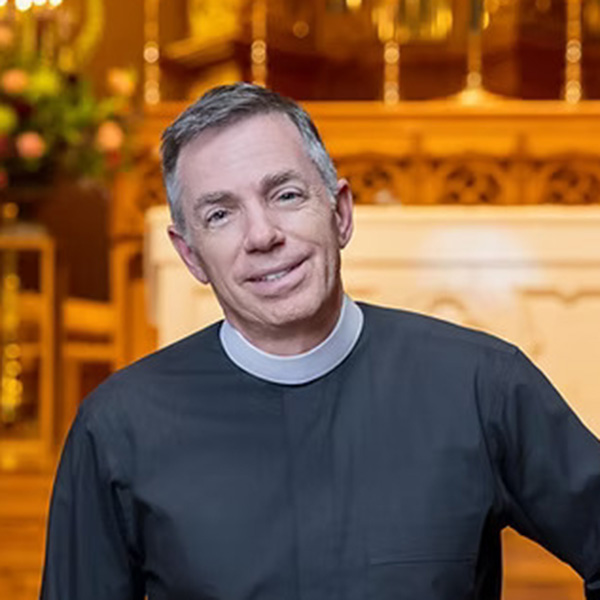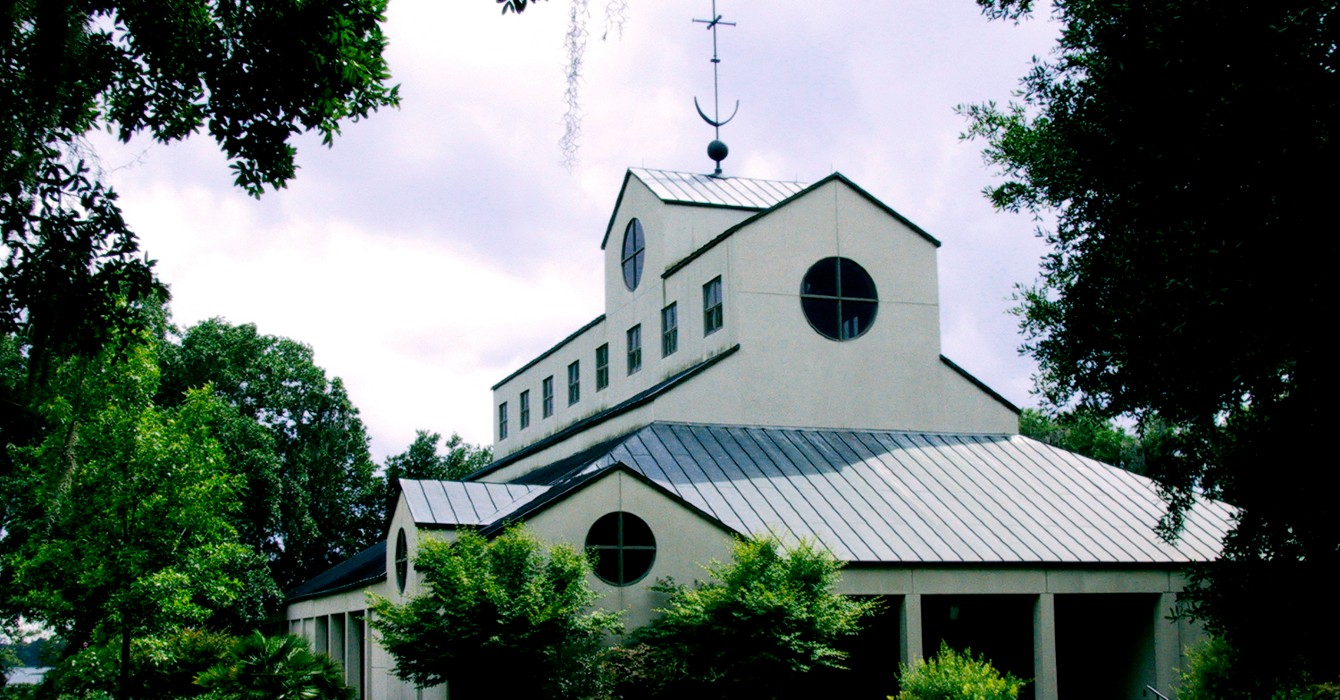


Right now, living and working as the senior pastor of Capitol Hill United Methodist Church in Washington, D.C., feels like being caught in a brutal version of the game Whac-A-Mole. Sometimes it feels like the mole is winning as it pops up here and there, undermining our institutions, the rule of law and our humanity.
As followers of Jesus, how we respond to this moment is central to our faith. We are called by our baptismal vows to persist in working with God to dismantle systems that oppress and violate our neighbors and creation.
I am grateful for Capitol Hill UMC’s partnership with Migrant Solidarity Mutual Aid Network (MSMA) because we have learned important lessons about how to keep showing up with Christ in this moment:
- Be willing to pivot again and again as you center the needs of those being harmed.
- Co-create solutions by collaborating with organizations that are already doing the work.
- Realize that showing up in solidarity and offering what you can is more important than perfection.
- Do not wait for a savior to fix it; have faith that when you act collectively you can stop harm.
The history of Capitol Hill UMC’s partnership with MSMA is rooted in biblical principles of care and compassion for those in need. In April 2022, Gov. Greg Abbott of Texas began busing legal migrant asylum seekers to Washington, D.C., as part of a racist and cruel stunt.
Soon after that, Gov. Doug Ducey of Arizona also began sending buses, intentionally timed to arrive in the dead of night. The migrants were exhausted and hungry, with nothing but the clothes on their backs and cheap flip flops on their feet. They were forced to give up their belongings, shoes and medicine when they boarded the buses.
In response to this humanitarian crisis, and in the absence of action by local government or established nonprofits, the D.C. mutual aid community formed MSMA, an informal coalition of organizations and volunteers dedicated to welcoming migrants.
As the buses arrived with little notice at all hours, MSMA volunteers showed up to offer welcome and provide food, emergency medical care, a change of clothes, diapers, baby formula and other necessities. MSMA approached Capitol Hill UMC for assistance in receiving the migrants, who were being tended to in the food court of Union Station, across the street from the U.S. Capitol. Our church said “yes” and partnered with MSMA in receiving migrants, feeding them, and providing temporary shelter.
We pivoted rapidly. Church members appeared in the dead of night with frozen pizzas. Clothes donations and health kit supplies poured in, not only from Capitol Hill UMC members but also from United Methodist churches across the region in Maryland and Virginia.
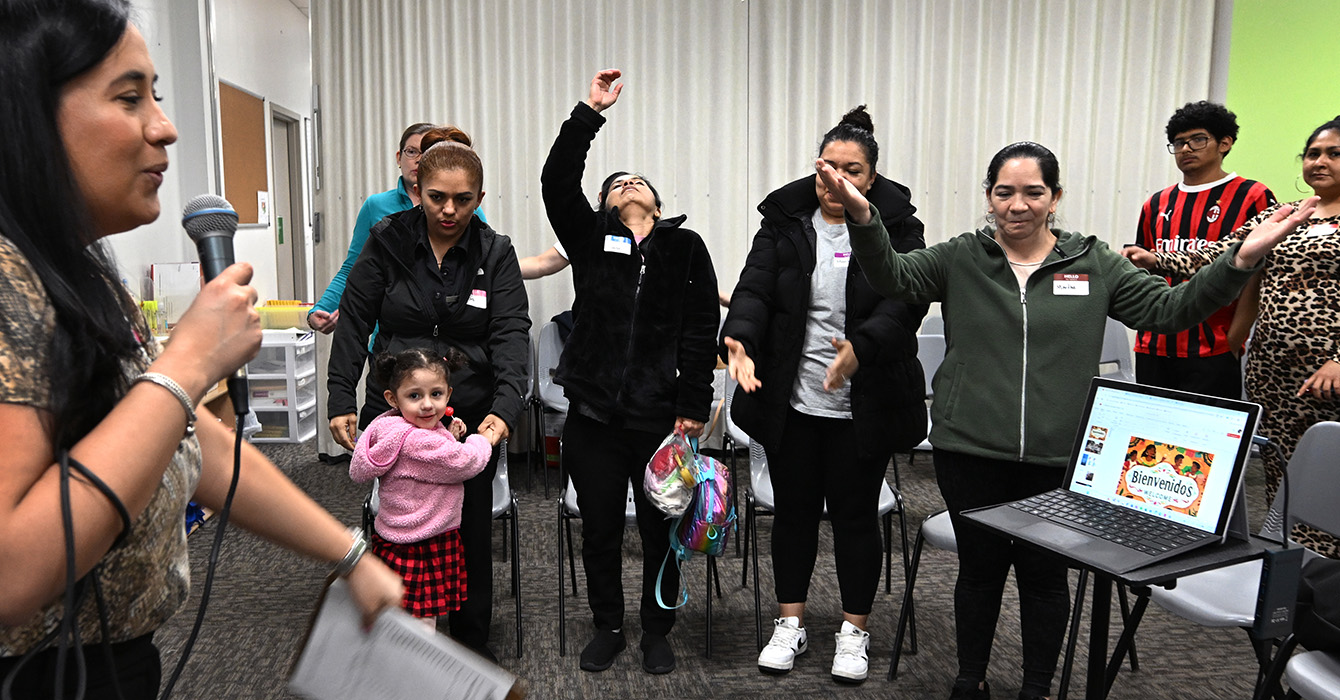
Our fellowship hall was soon transformed into a tienda, a store that has provided free clothing, shoes, toiletries, diapers and basic medicine to over 12,000 migrants. The Network’s volunteers helped arrange and pay for transportation to cities throughout the U.S. where migrants had family or friends, and helped others find housing locally. Overnight, Capitol Hill UMC became an important way station and a place of respite where the love of Jesus was constantly on display.
What is mutual aid? According to the Solidarity Economy Association, “Mutual aid is where people in an area, or a community, come together to support one another, collectively meeting each other’s needs without the help of official bodies like the state or NGOs. It often arises due to neglect of government provision for certain classes of people.”
The modern concept of mutual aid is rooted in an ancient human understanding that everyone has something to offer. This is different from charity, which is often perceived as people with excess helping people in need. Mutual aid is about listening to what people say they need rather than donating or volunteering according to the philosophy of the giver.
One of the slogans of mutual aid is “solidarity, not charity.” Mutual aid projects are participatory, solving problems through collective actions rather than waiting for saviors like the government or nonprofit organizations. It is rooted in the knowledge that we cannot wait for systemic change — we must work together to co-create solutions.
At Capitol Hill UMC, centering the needs of the migrants rather than of the volunteers was not easy. It meant finding a pool of volunteers who would consistently pivot from the things on their own to-do lists to show up at any hour, day or night.
Centering the needs of the migrants meant taking leaps of faith without a long-term plan or even the expectation of success. It meant not giving in to our fears: Will enough volunteers show up? Will we have enough food? Will we get emergency medical care for those who need it? Will we be able to communicate? (Google Translate helped alleviate that fear — it is an amazing tool!) Most importantly, What will happen to these beloved humans?
What my church community and I continue to learn from our work with mutual aid is the practice of pivoting from our planned life to show up, again and again, when our neighbors are being harmed. Not to show up as saviors or with an agenda about what we can offer, but to show up and listen to those who are being harmed tell us what they need.
We must show up and offer what we can, having faith that other neighbors will also show up, and all of our imperfect offerings will be sufficient. That is what mutual aid is about.
In the Gospels, we see that Jesus practices fearless pivoting, listening and mutual aid. He constantly centers the needs of those who are being harmed, much to the consternation of his disciples.
Jesus is often on his way somewhere when he stops and pivots to listen to people living with mental illness, disability or poverty. Jesus has faith in mutual aid when he rejects the disciples’ suggestion to send away crowds of thousands to find food, instead gathering what is available, which suffices in the end.
A prayer invites, “Lord, break my heart so completely that the whole world falls in.” When we adopt the practice of pivoting to show up, listen and participate in mutual aid, we will find that the number of people we identify with and feel responsible for keeps expanding. We learn that what matters is not the perfect program but faithful presence and offering what we can. We practice the sublime grace of pivoting and improvising again and again to rescue and care for each other. That is what it means to love our neighbors.
In the Gospels, we see that Jesus practices fearless pivoting, listening and mutual aid. He constantly centers the needs of those who are being harmed, much to the consternation of his disciples.