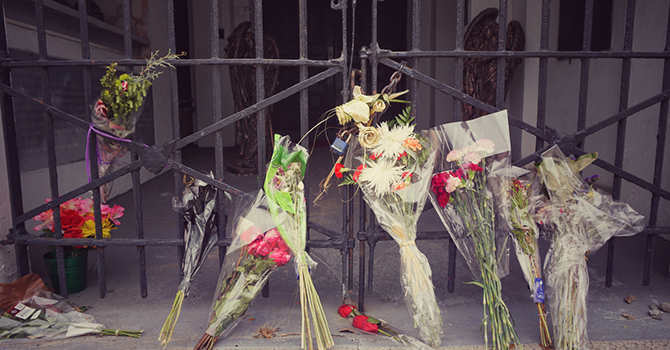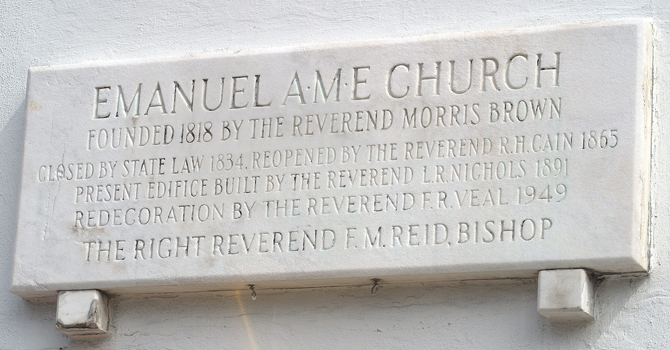

On June 17, 2015, a white supremacist named Dylann Roof sat for nearly an hour in a Wednesday evening Bible study at Emanuel African Methodist Episcopal Church in Charleston, South Carolina. He was welcomed in, prayed with and treated as a guest. Then he opened fire, murdering nine members of that congregation, including its senior pastor, the Rev. Clementa C. Pinckney, a South Carolina state senator. Roof later said he hoped to ignite a race war and intentionally chose this church, known as Mother Emanuel, because of its history and symbolism — and because of who worshipped within its sacred walls.
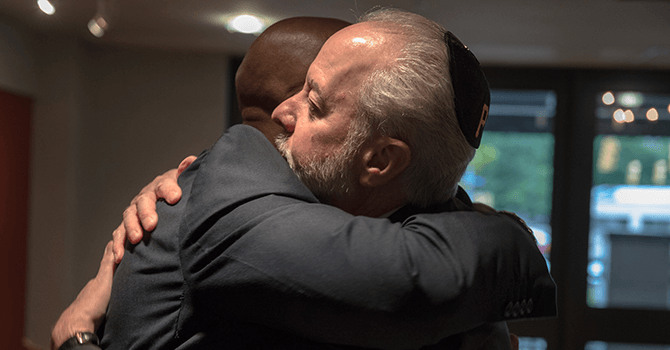
Days later, during Roof’s bond hearing, several family members of the victims publicly expressed words of forgiveness. This moment quickly gained widespread attention and was praised by various media outlets, politicians and pundits. Charleston, a city historically known as the cradle of the Confederacy and a port of entry for more than 40% of America’s enslaved West Africans, was swiftly and widely portrayed as “the city of forgiveness.”
This narrative served to soothe a nation that appeared more comfortable with Black grace than with honest discussions about white supremacy. For many, their focus simply moved on. But not everyone was soothed. A protestor snatched the Confederate flag from its prominent position at the South Carolina statehouse as Roof’s embrace of the symbol made its meaning undeniable.
More than a decade later, some loved ones of the Emanuel Nine and members of the larger Charleston community are still living through the long, painful process of healing. They continue to grapple with what it truly means to forgive in a country that has historically used Black forgiveness as an excuse to avoid the tough work of repentance, accountability and repair.
When forgiveness is seized by those in power and used for their own comfort, it stops helping the wounded and instead serves the system that caused their pain. That is the essence of the phrase “politics of forgiveness.”
Defining the politics of forgiveness
At the most fundamental level, forgiveness is a personal act. It is the internal process of relinquishing resentment, anger and the desire for revenge directed toward individuals who have caused harm. In its pure form, forgiveness is not inherently political. It is personal and spiritual. It belongs to the individual who has been wounded.
Forgiveness becomes political the moment it is removed from the private sphere and pressed into the service of public power. It becomes political when employed within systems of history, legacy and memory to shape narratives, evade accountability and shield perpetrators from consequences.
The politics of forgiveness revolve around a series of pertinent questions that expose the underlying power dynamics: ·
- Who is being asked to forgive? By whom? Under what circumstances and for whose benefit?
- Is justice regarded as an essential element of the healing process or as an unnecessary and burdensome barrier?
- Who gets to define what constitutes healing? What are the implications when forgiveness is expected, or even mandated, without any accompanying accountability or reparations?
When these questions are not addressed, forgiveness can be weaponized. What ideally should be a voluntary and profoundly personal act of healing often becomes a means for those in power to perpetuate oppression, suppress legitimate calls for justice, sidestep repentance and uphold the status quo at the expense of those still suffering.
Respectability politics and the grieving Black body
Understanding how forgiveness is weaponized requires us to examine a framework within which it functions: respectability politics. Respectability politics is the deeply rooted belief in American culture that marginalized individuals must conform to the norms, aesthetics and values of the dominant culture to attain rights, safety or dignity. A person’s speech, appearance, style of worship, grief and other expressions must adhere to what those in power deem “acceptable” or risk being ignored, discredited or demonized.
Respectability politics influence how Black and brown communities are permitted to respond to tragedy. Expressions of grief must be palatable, and expressions of outrage must be polite. Mourning must conform to the boundaries established by a culture that prioritizes its own comfort over the genuine suffering of those in pain.
When some members of the Emanuel AME community offered words of forgiveness, these remarks were promptly seized and amplified. The alternative would have necessitated the nation to confront its horror directly, to honestly evaluate the ideology that engenders such violence, and to acknowledge that this evil is not an anomaly but an integral thread woven into the fabric of American culture. It would have required an accounting for a counterfeit, colonized interpretation of Jesus that has historically been employed to spiritualize compliance, sanctify silence and render the suffering of Black people theologically convenient for broader cultural acceptance.
When comfort outweighs justice
American history is filled with examples of dominant culture’s comfort taking precedence over justice owed to the oppressed. The Indian Removal Act of 1830 prioritized white settler expansion over the lives of Indigenous peoples. The Compromise of 1877 effectively ended Reconstruction. It meant the withdrawal of federal troops from the South and abandonment of Black citizens to violence, voter suppression and a century of Jim Crow laws. The comfort and political stability of the white majority superseded the repair owed to the formerly enslaved.
In each instance, the healing of marginalized groups was contingent upon the comfort of those in authority, a mechanism aligned precisely with the contemporary practices of the politics of forgiveness. If and when a community of color is persuaded or coerced into publicly articulating forgiveness, the individuals responsible for the harm and the systems that facilitated it may feel freed from the arduous tasks of accountability and repair.
The Rev. Dr. Martin Luther King Jr. identified this dynamic with prophetic precision when he described the “white moderate” who preferred “a negative peace which is the absence of tension to a positive peace which is the presence of justice.” The politics of forgiveness permits individuals involved in causing harm to neither acknowledge nor respond to it.
Reclaiming forgiveness from its distorted framing
Given this reality, it is critical for Christian pulpits to reclaim the concept of forgiveness from its colonized, distorted reinterpretations and restore it to the person who was harmed.
Scripture provides multiple clear examples of forgiveness. Internal forgiveness involves releasing bitterness and surrendering vengeance to God; relational forgiveness involves restoring trust and reconciliation and is conditional.
Luke 17:3 makes relational forgiveness explicit: Repentance is necessary before reconciliation can occur. Forgiveness does not deny justice or require contact with the offender. It simply means, “I am personally releasing the hurt and overwhelming emotional pain associated with this wound so I can pursue my own healing.” This sacred act does not negate the need for atonement.
The families of the Emanuel Nine were not wrong to forgive. Their faith is their own, and their words at that bond hearing were a testimony to a spiritual depth that many will never fully understand. However, the culture that seized those words and used them to shift the subject away from white supremacy, gun violence and systemic racism must bear responsibility for a particular kind of harm.
When forgiveness is transformed from a personal act of healing into a political tool for the comfort of the powerful, it places an excessive and unjust burden on those who have already been harmed. That is neither grace nor justice, and it is certainly not the gospel of Jesus Christ.
It is, however, entirely consistent with a society that reshapes Jesus to protect the powerful, demands peace from the wounded and calls that demand holy. The work of the church and all those who take the call to justice seriously is to insist that healing cannot be rushed for the convenience of the powerful, and that no act of grace, however genuine, releases those who have caused harm from the obligation to repair what they have broken.