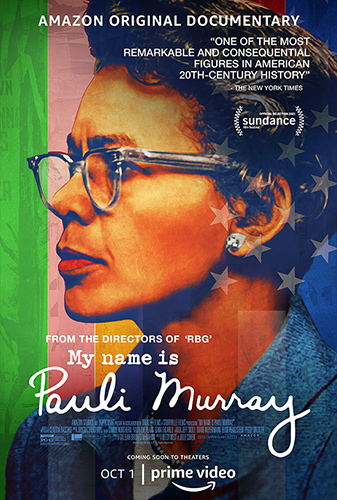
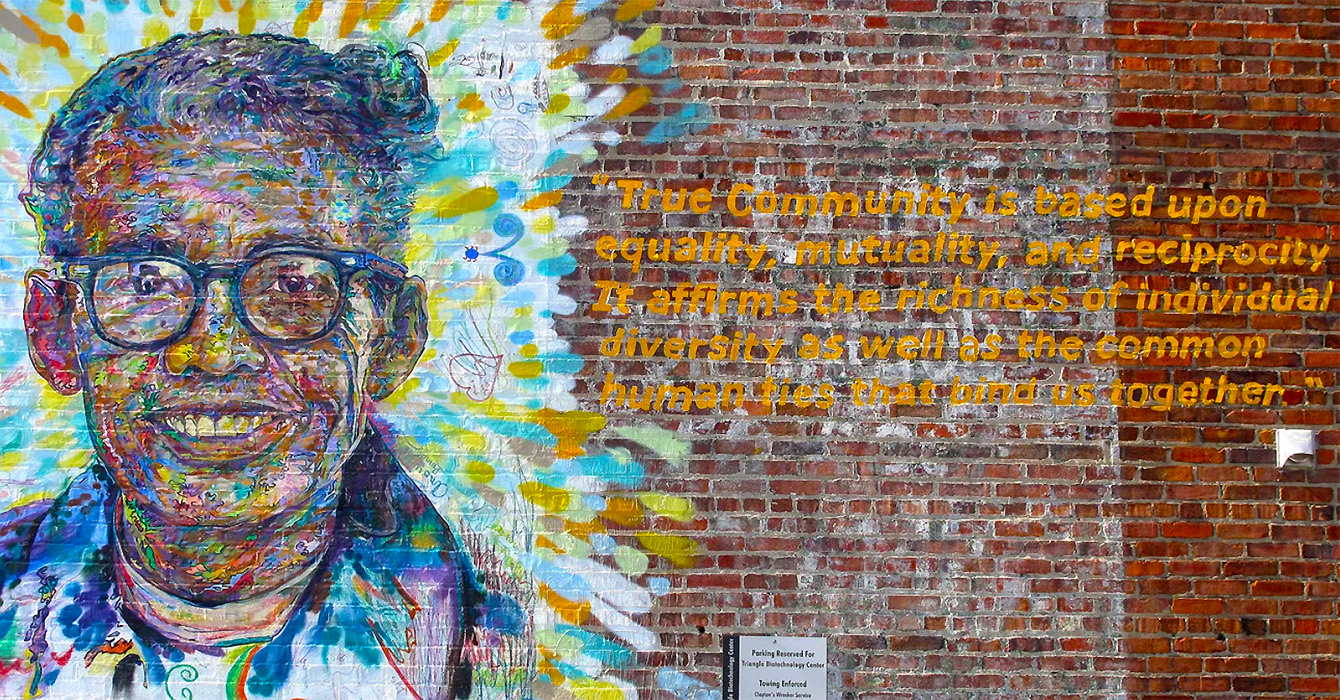

The Rev. Dr. Pauli Murray (1910–1985) reminds us that liberation is impossible without community.
But what is community, and what does it mean to “be in” community? Perhaps more importantly once we’ve defined it, what does community require of us?
Murray defines community expansively in her writings, including as a space that is inviting and affirmational. In this space, we (re)define who we are, hope and heal. In this space, we feel whole and supported.
Yet Murray complicates the notion that being in community is designed solely to foster reciprocal support and joyful connection. The wholeness we feel through community is for all, and we must leverage our coming together to create a humane society in which every person can live into their wholeness of being. Ultimately, being in community is a strategy for transformation that requires our active engagement. Which is why we must consider what community requires of us.
When we gather in community, Murray expects that we will actively strive toward radical social transformation. To achieve this transformation, she challenges us to be committed not only to those in our community but to all oppressed people and to the deep work of dismantling oppressive systems.
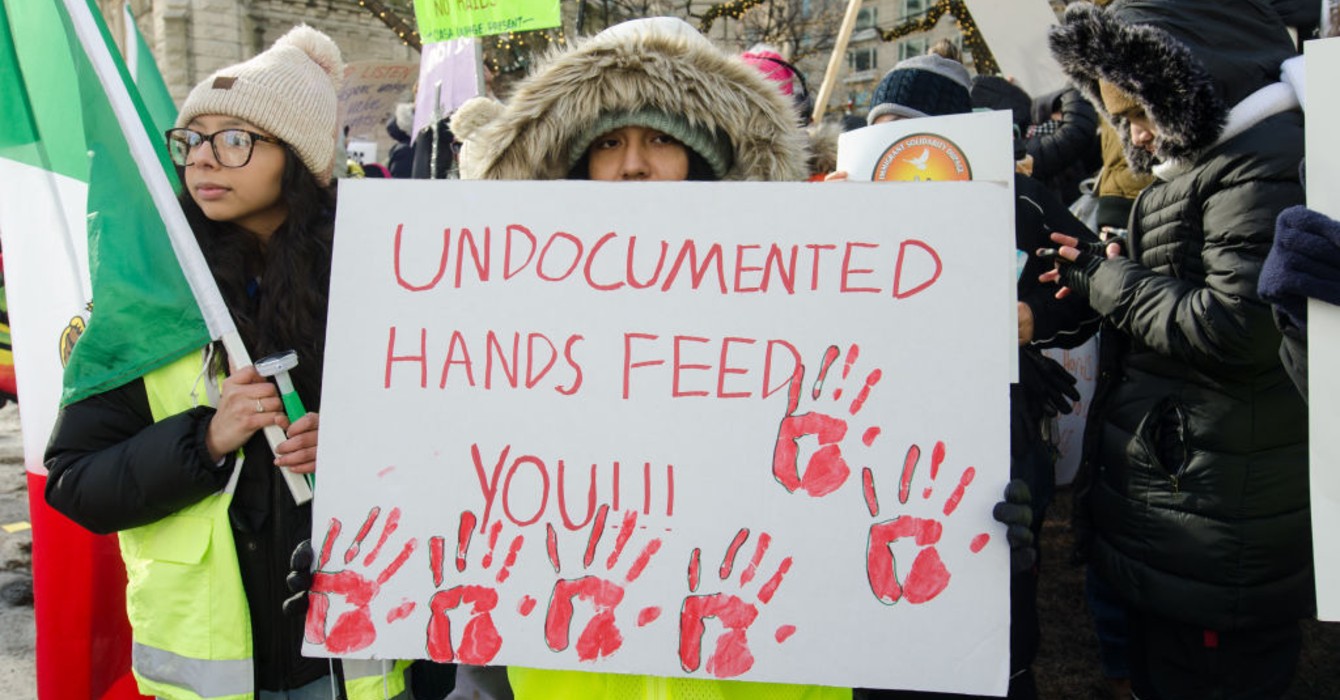
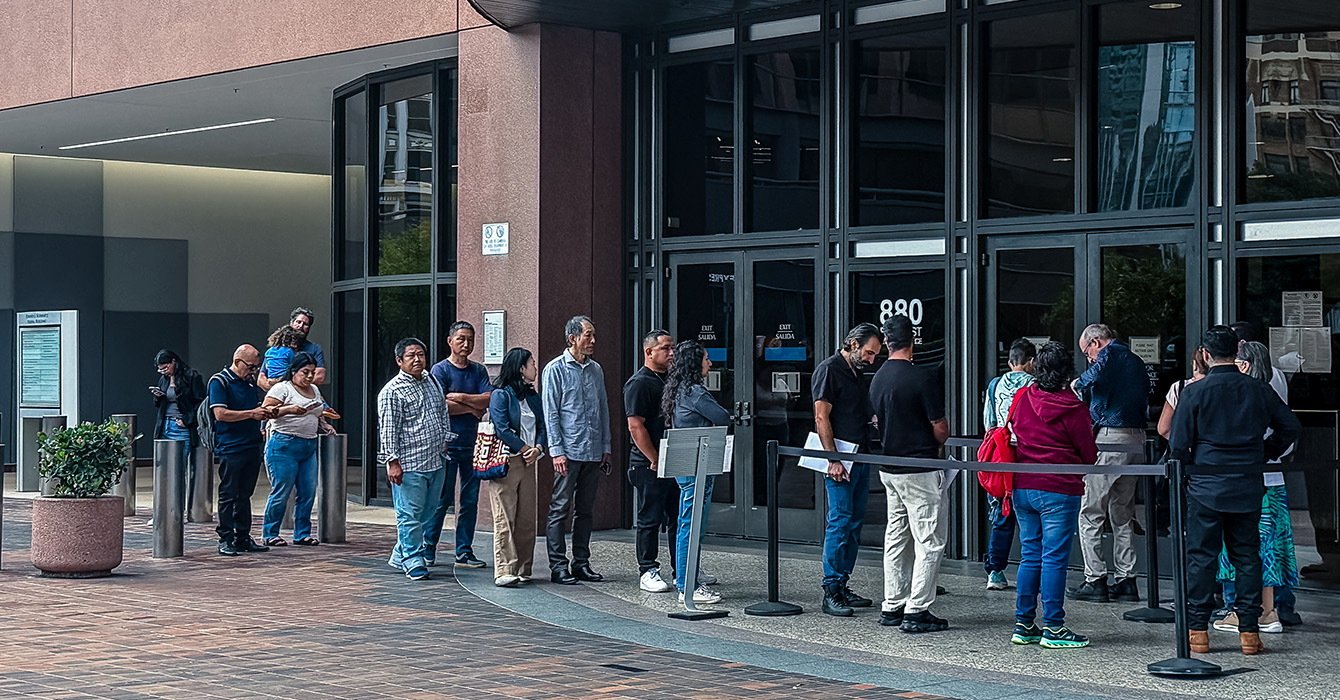
In both Murray’s day and ours, it can be enticing to blame the ideals, behaviors and transgressions of certain individuals for the subjugation we navigate daily. When immigration raids terrorize our communities, when voting rights are compromised, when working people fail to make a living wage, we look for someone to blame. That is a familiar — and understandable — response.
However, Murray’s vision of community challenges our instinct to point the finger at any single lawmaker, decision-maker or person in power. Instead, she reminds us that individual evil is only one way that systemic and institutional oppression takes shape.
In her sermon “Challenge of Nurturing the Christian Community in Its Diversity,” included in “To Speak a Defiant Word,” a collection of Murray’s sermons and speeches, she suggests that we must instead examine and dismantle “institutional structures.” This work includes recognizing our complicity in these structures, refusing to cooperate with them and strategically dismantling them — together. Murray lived into her own charge.
Consider Murray’s feminism. Her refusal to cooperate with the deep-seated sexism within the Civil Rights Movement sparked a feminist consciousness that would have outsized impact on second-wave feminism. Murray worked toward dismantling sex-based discrimination strategically, expansively and with others. In partnership with leaders like Dorothy Height, she criticized Black women’s marginalization in the work for civil rights.
She used her exceptional legal gifts and strong network to successfully advocate for the inclusion of “sex” in the 1964 Civil Rights Act. She gathered with transformative leaders to found the National Organization for Women to promote and protect equal rights for women. She later condemned this same group for neglecting Black women’s needs. In her twilight years, Murray worked alongside a pioneering group, including her life partner Irene Barlow, to advocate for broad inclusion of women’s leadership in the Episcopal Church.
Perhaps the most uncomfortable piece of Murray’s charge is recognizing our complicity in oppressive structures. An ever-brilliant architect, she gives us a blueprint for this dismantling-and-rebuilding project too.
First, we must “re-educate” ourselves. This process includes growing our awareness of political and social issues and systemic oppression. We must evaluate our role in these issues and systems while concurrently exploring how we have been shaped by them. (Presently, trainings offered by the Racial Equity Institute are a fantastic starting point for this work).
Next is what Murray defines in her essay “Minority Women and Feminist Spirituality” as “self-criticism.” We must move through an evaluation process that audits our shortcomings and limitations. This process should ready us for growth, which is something we must be open to.
Finally, we must connect. Murray encourages us to gather in person to share personal experiences and feelings that have been unearthed as part of the “re-education” experience. This, Murray argues, is how we achieve understanding and reconciliation in order to strengthen our impact and ability to dismantle systems as a community.
Murray navigated this process herself, as she recounts in her memoir “Song in a Weary Throat.” While pursuing a master of laws during World War II at the University of California, Berkeley, School of Law, Murray lived at International House. Here, her community included over 150 people of more than 30 nationalities who spoke more than a dozen languages.
“Over coffee and cigarettes” Murray listened to people share their resentment over the United States’ “‘superman complex.’” She heard a Black veteran’s all-consuming hostility toward white people, a consequence of his Jim Crow-era military service; the anguish of her Japanese roommate responding to the bombing of Nagasaki, mere months after she herself had been released from an internment camp; the lengths a fifth-generation Mexican-descended American was forced to go to prove her “Americanness.”
At International House, Murray found a community with whom she built a “bond of kinship” and where she expanded her awareness of global oppression, as well as issues that affected other marginalized communities in the U.S. She confronted her limitations and grew exponentially. She gathered with people to share and be vulnerable. This experience, Murray writes, was “a significant step in my own growth; I was learning to see the civil rights struggle within the wider context of all human rights.”
In her adult life, Murray took her place among the long line of champions of justice, working toward dismantling racism and sexism to foster transformation. Yet these and other oppressive systems are larger than any one person or era. The work to upend them is “endless,” Murray reminds us in her personal manifesto, “An American Credo,” originally published in Common Ground magazine.
With this understanding, we must courageously accept the baton that has been passed to us today. If we are to be in community with one another, we must actively participate on the continuum of liberatory justice work in some way.
As Murray offers in “Nurturing the Christian Community:”
We cannot endure.
We cannot withdraw.
We must accept the challenge of continued struggle for transformation.
And we must be future-oriented.
Hope is what must fuel us as we stretch toward a liberatory future with one another.
Ultimately, being in community is a strategy for transformation that requires our active engagement.