This summer I spent six weeks with United Methodist clergy and seminarians, teaching them about the basics of public health — a class aptly called Public Health 101 for Clergy.
I wasn’t trying to turn pastors into epidemiologists, public health professionals or at-home health providers. Instead, the course focused on a more practical question: What does a faith leader need to know to respond wisely when public health issues arise in their ministry?
I created this course because I occupy two worlds that are too often treated as separate: I’m a scientific researcher working at the intersection of public health and religion, and I’m also a candidate for ordination in the United Methodist Church.
Clergy are routinely asked to respond to situations that are, in part, public health concerns. A congregant struggling with depression or suicidal thoughts. A family navigating addiction or an overdose. A church member wanting guidance about vaccines, reproductive health or a confusing medical claim circulating online. A community grieving the loss of a loved one after an unexpected medical emergency.
These may not be the situations students imagine when they enroll in seminary. But they are common parts of ministry. And too often, clergy are expected to navigate them with little or no preparation.
In our classes this summer, participants brought health-related situations they had already encountered in ministry, and together we considered what a better response might have looked like and what resources could have supported it.
We practiced comparing sensationalized headlines and social media claims with the relevant research, whose findings were often far more limited or nuanced. We learned how to distinguish reputable sources from misinformation and how to recognize when a person’s physical or mental health needs exceeded a pastor’s training and merited referral.
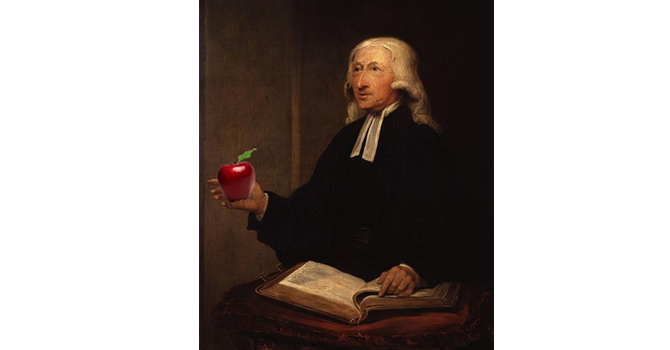
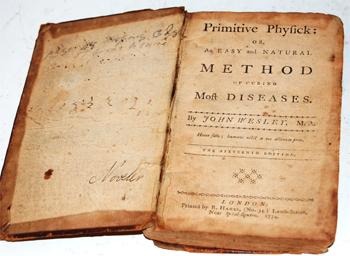
Because the course was designed for United Methodist clergy, we looked backward as well as forward. John Wesley’s writings on health provided a reminder that care for bodies, care for communities and care for spiritual lives have not always been neatly divided into separate disciplines. Moreover, the supposed opposition between religion and science is neither inevitable nor particularly useful for ministry, and it is certainly not historically accurate for the early Wesleyan and Christian movements.
Early in the course, I asked participants what preparation they had previously received in science communication, trauma-informed care and responding to health concerns. Most reported little or none. A few had encountered trauma-informed training through another profession or a one-off workshop, often because they were bivocational leaders. Their preparation was largely incidental, even though the health concerns they encountered in ministry were not.
This opportunity affirmed my concern over the gap in how we prepare faith leaders for the realities of congregational ministry.
Recent history has shown us just how consequential it can be. During the COVID-19 pandemic, Americans faced an overwhelming mix of changing scientific information, political rhetoric, misinformation and fear. Many people turned to trusted local leaders to make sense of what they were hearing. For some communities, that trusted leader was a pastor.
Yet we were asking clergy to help people navigate an unprecedented public health crisis without necessarily giving them the tools to evaluate scientific claims, communicate uncertainty or know when to refer someone to a health professional.
COVID-19 was an unusually visible example, but it was not an isolated one. Mental illness, substance misuse, chronic disease, maternal health, aging, gun violence and health misinformation are all a part of our congregations. And a growing anti-science movement is harbored in some religious spaces. Public health does not stop at the church door.
The answer is not to turn pastors into physicians, therapists or public health educators. In fact, one of the most important lessons clergy can learn is where their expertise ends. Good ministry includes understanding scope of practice, building relationships with health professionals and knowing when a person’s needs require care that a pastor cannot provide.
There are joint programs in divinity and public health or social work that offer valuable, intensive cross-disciplinary training. But getting another degree isn’t a realistic solution for everyone.
We can’t expect all seminarians to pursue additional graduate education. It’s even less realistic for bivocational pastors, part-time clergy and lay leaders, many of whom already carry enormous responsibilities with limited time and resources.
There are models in other professions for addressing similar gaps without requiring practitioners to become specialists in every adjacent field. Medical, nursing, public health and legal education increasingly incorporate focused training in areas such as cultural humility, ethics, communication and trauma-informed practice.
It’s important to know that the goal is not mastery. It’s enough to recognize what matters, to ask better questions and to know when collaboration is necessary.
That distinction shaped my course. Participants investigated health concerns in the communities they serve and mapped the resources available around them. For their final project, they developed sermons that addressed a health issue while integrating evidence-based information with biblical and theological language appropriate for their congregations.
The goal was not simply to help pastors communicate scientific facts. It was to help them think theologically and scientifically at the same time.
That matters, because health decisions are rarely based on information alone. People interpret illness through stories, relationships, values, and beliefs about what bodies mean, why suffering happens and whom they can trust. Religious communities are among the places where those questions are formed and answered.
These challenges repeatedly appear in the everyday lives of congregations of all types, which is why I think public health literacy belongs in theological education.
It could take many forms: a required course, an elective, continuing education, denominational training or partnerships between theological schools and schools of public health. Schools can be intentional about hiring faculty that feel comfortable teaching at these intersections. Ultimately, the precise model matters less than acknowledging the reality before us.
Clergy are already participating in the health of their communities. They shape conversations about suffering and healing. They accompany people through illness and grief. They influence trust. They help communities interpret crises. And in many places, particularly where other institutions are distant or difficult to access, churches remain among the first places people turn for help.
We know faith leaders will encounter these moments, and I think preparing clergy for the realities of ministry in the 21st century should include public health education. This will help them understand the public health challenges already present in their pews — and equip them to respond with theological wisdom, scientific humility and the confidence to know when to speak and when to call upon others.