

For many of us, summer can be a time that invites a slower, easier pace. Kids are out of school, and the grill is fired up as days lengthen, weather warms and vacations take shape.
But this year, it seems that there is so much going wrong. Earth’s climate is changing in scary ways, the political climate is tense, the economy is challenging and our communication with each other seems ever more contentious and polarized. What does it mean for a season of ease to be upon us when it feels like the world is crashing down?
Here we sit in the reality that two things can be true. This is a hard time to be human, and we can hold space for some of the simple joys that are often reserved for summer.
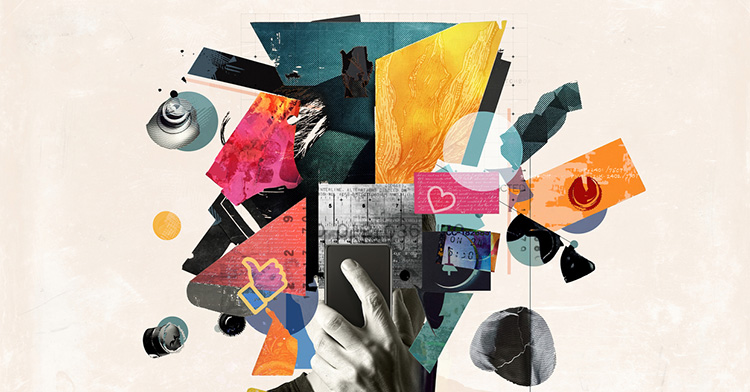
A 24-hour news cycle, social media that invites doom scrolling, and algorithms that thrive on tragedy can lead us to believe that we must always be aware and alert, that we must constantly ruminate on all the things that require our action.
However, the shifting of the seasons is a reminder of God’s constancy in our lives and an invitation to a rhythm that incorporates all of reality: “As long as the earth remains, there will be planting and harvest, cold and heat, summer and winter, day and night.” (Genesis 8:22 NLT)
This God-ordained rhythm is an admonition that constant work is neither desirable nor productive. From the commandment to remember the Sabbath in Exodus to Jesus’ actions throughout his ministry, the invitation has always been to rest from our work.
We lose our power and effectiveness when we don’t honor this rhythm with our minds, bodies and spirits. Whatever work you are called to in the world, the long game requires strategy. And an effective strategy must include rest.
So, this summer, you can still go slower. You have a decision to make about whether you buy into the myth of urgency that is doled out by a capitalist society. You can instead stand with Audre Lorde, who in “A Burst of Light” famously writes, “Caring for myself is not self-indulgence, it is self-preservation, and that is an act of political warfare.”
What if a part of the way you fight for the world that you envision is to honor the parts of you that need a reprieve? What if a form of resistance is being fully present with people whom you love and who bring you joy? What if the way you sustain yourself for the journey is a day in nature, soaking in sun and being screen-free?
These practices are vital for all of us, but especially for those who experience marginalization in our society, including people of color, women and LGBTQ+ folks, who often face demands to perform, provide free labor and bear the burdens of the communities they inhabit.
To affirm that we are made in the image of God is to rest in the truth that our being is not defined by our work or what we produce. As Chanequa Walker-Barnes notes in her book “Sacred Self-Care,” “Many of us have been taught that productivity is a sign of blessedness.” A commitment to doing less is a way to combat this falsehood.
In addition to stillness and a slower pace, summer offers open opportunities for play — not just for kids, but for adults too, if we would only give ourselves permission. When we are feeling fearful, unsure and worried about the state of the world, it is a courageous act to be playful.
In “Doing Theological Double Dutch: A Womanist Pedagogy of Play,” Lakisha R. Lockhart-Rusch offers this call to action: “Play empowers people in the face of oppression, interrupts and allows for reflection, teaches skills needed for living, and provides space for a creative and imaginative outlet to express, explore, and try things out.”
In other words, play is not idle time. Play trains us for the world, even when that world doesn’t operate in ways that encourage our thriving. Play is not a diversion from the rhythm; it’s a part of it. Play is preparation. Play is a way of being present to self and others that restores and rejuvenates.
A final benefit of a slower pace is that, simply put, our nervous systems need a break. Living and interacting in a chaotic world can leave us feeling stressed, overwhelmed and disconnected. A 2025 survey on stress conducted by the American Psychological Association found that 62% of American adults feel stress due to societal division in the U.S., with more than 75% reporting worry about the future of the country.
Add to this the realities of working, caregiving and just living. Chronic stress over time wears down our bodies, impacts our emotional well-being and increases our risk for chronic illness. In other words, when we have an opportunity to reset or downshift, we should take it.
For those who are even moderately aware, it’s probably impossible to block out all the noise and enjoy perpetual bliss until Labor Day. You don’t have to do that to let summer be summer. But you do have choices about how much energy you give to things and how you prioritize your time.
Every battle is not yours to fight. Giving yourself the opportunity for stillness, rest and play can also provide you with the clarity you need to discern the work that is yours to do.
Perhaps a slower pace will equip us with fuel for the fight, bestow us with marching orders and connect us with comrades on the journey. As we sit with the duality that this moment brings, its invitation is to choose what fills you.
We lose our power and effectiveness when we don’t honor this rhythm with our minds, bodies and spirits.