“Love your enemies and pray for those who persecute you, so that you may be children of your Father in heaven.” Matthew 5:44-45 (NRSVue)
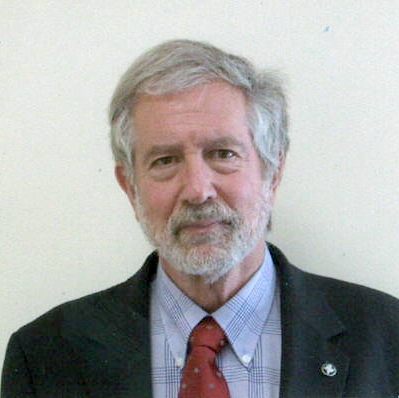
When I graduated from Eastern Mennonite College in 1966, during the Vietnam War, American men became draft-eligible upon leaving university. I come from a long line of Mennonites and can safely say none of my direct ancestors has participated in a war for 500 years. I was not going to be the first.
Instead I became a conscientious objector and chose to do my alternative service with the Mennonite Central Committee in their relief program in Vietnam during the height of the war.
I grew up in a Mennonite community in Harrisonburg, Virginia. Mennonites take literally the command of Jesus to “love your enemy.” We believe that all are created in the image of God and try to help create a world where we recognize everyone to be a part of God’s family.
Mennonites refuse the soft, sentimental “love and prayers” approach and insist that God’s love needs to be lived out in concrete terms in the real world. So we are encouraged to do service work, usually two or three years of voluntary service after college with a Mennonite agency. (In the late 1960s, when I served in Vietnam, the stipend was $50/month plus room and board.)
What I learned during that time shaped my idea of what it means to love your enemy. As that enemy shifted over the decades from the Vietnamese to Iranians, I and others have continued to work for peace.
I was sent by the MCC as the first service worker to the small Vietnamese town of Tam Kỳ, in the middle of the war zone, south of the Demilitarized Zone. I was told to ask the refugees what they needed and then use MCC resources to try to help them.
To my surprise, what refugees most wanted was for their children to learn to read and write. I taught English in the three local high schools and recruited my students to volunteer to teach the refugee children how to read and write Vietnamese. The program eventually had 90 high school teachers instructing 4,000 children to read and write their own language.
What I found surprised me in other ways as well. As a Mennonite, I had assumed that soldiers would be mean, like the bullies sometimes found (even) in Mennonite schoolyards. I was astounded to see that the soldiers I met in Vietnam were nice young men from mostly rural backgrounds with Southern accents who had been taught by their mothers to “Be kind and don’t hit.”
When later I got to know many of the Vietnamese who were fighting the Americans, I was similarly surprised to learn that they also were nice boys raised in good families where they too were taught “Be nice and don’t hit.”
How was it that nice boys from good homes could come together to fight and kill each other?
Wars are fostered by prejudice and stereotypes of the enemy; the prevailing ideas of the time were that the Americans were not fighting Vietnamese patriots but Communists. Everyone knows that Communists destroy religion and freedom. You can’t talk or reason with a Communist. The only thing that a Communist understands is the power of the gun.
The Vietnamese were not fighting American allies of the Saigon government; they were fighting imperialism. Everyone knows that imperialists control the governments of poor countries and steal their resources. You can’t reason or talk with an imperialist. They only understand the power of the gun.
What I learned from this experience was that the foundation of peacebuilding is human relations. If you allow yourself to get close enough to the enemy, you can dissolve the stereotypes and discover that your “enemy” also is created in the image of God and is very much like you.
Since the Iranian revolution of 1979, the U.S. has considered Iran to be one of our most hated enemies. After a major earthquake in 1990, MCC offered to provide 15 health clinics in Iran. The Iranian Red Crescent welcomed Mennonite assistance, but after years of collaborative work, the Red Crescent suggested that Iran needed friendship and understanding more than it needed health clinics.
After discussion with Iranian colleagues, MCC suggested an exchange program where a Mennonite couple would live in Iran for three years to learn Farsi and study Islam and the Iranian revolution, and two Iranian couples would live in Canada for six years (we couldn’t get them into the U.S.) to learn English and study Mennonite peace theology and Western democracy.
The idea was that the participants would then return to their own countries to help build understanding between our peoples. The program was successful for 16 years.
Four Mennonite couples were hosted by the Imam Khomeini Research and Education Institute in Qom, Iran, and two Iranian couples were hosted by the Mennonite community in Ontario while the husbands completed Ph.D. programs in the philosophy of religion at the University of Toronto. After years of pressure from the U.S. Treasury Department, MCC ended the exchange in 2013.
But there continued to be ways we could reach out. During the COVID-19 pandemic, U.S. sanctions on Iranian funds kept Iran from purchasing the personal protective equipment and medicines they needed. Several Mennonites who had previously worked with MCC in Iran reached out to other Christians.
We established an ecumenical organization, LUKE 10 (for the parable of the good Samaritan), with a commitment to “love God and our neighbor, nearby and across the globe, as we would love ourselves.” We collected about $100,000 from American Christians to provide medicines and PPE to the Iranians during COVID.
We also have held 10 webinars with Iranian universities to encourage interfaith dialogue and peacebuilding between American Christians (and occasionally Jewish leaders) and Iranian Muslim religious leaders and scholars.
After our last webinar with the University of Iran in October 2025, it felt like war between our countries was likely. Iranian colleagues suggested that we draft a joint letter from religious leaders in both countries, calling on our governments to follow the best of our religious traditions and pursue peace.
We agreed to work together — Muslim leaders in Iran, and Christian, Jewish and Muslim leaders in the U.S. — on a letter to our governments calling on them to turn from animosity and hatred to take concrete steps toward reconciliation.
By late January 2026 we had written “A Time for Peace”” and asked 21 prominent Iranian and American religious leaders to sign it. On Feb. 5, we delivered “A Time for Peace” to the White House, the U.S. State Department, the Iranian Mission to the United Nations and the Iranian Foreign Ministry.
About three weeks later, the U.S. and Israel launched a surprise attack on Iran, killing the Iranian Supreme Leader and hundreds of Iranians.
The LUKE 10 board was devastated. It was difficult to reestablish contact in Iran after the Feb. 28 attack, but when we reached our colleagues, they agreed that “A Time for Peace” was still valid. We opened the signing to anyone around the world who wishes to join our plea for peace to both governments. As signers, “We stand ready to partner with governments, other faith communities, and civil society organizations to prepare the ground for genuine peace and cooperation.”
This effort might seem small, given that the conflict continues into its sixth month and has resulted in thousands of deaths and tens of thousands of injuries. Yet it’s another step as we continue the slow work of peacebuilding.
Living one’s faith is always difficult, but being faithful in a time of war is especially challenging. As followers of Jesus our “weapons” are limited to love, compassion and truth. Creativity is required when confronting hatred, prejudice and war, but as Christians we have the promise of Easter — love can overcome hatred, truth is stronger than a lie, and the forces of life are stronger than death. This is our faith.
What I learned from this experience was that the foundation of peacebuilding is human relations.