
On a cloudy Sunday in late July, retired attorney and U.S. Air Force veteran Delbert Frieze parks his truck at the top of Spring Creek Pass and steps out. Across the street, six weary backpackers on a bench rise to their feet.
“Anybody need a ride to Lake City?” Frieze shouts.
The backpackers smile and excitedly cross the street. Frieze’s truck fits four, backpacks and all, while another vehicle takes the other two. The hikers had just met each other, either on the bench or on top of nearby Snow Mesa; all are in the middle of a long thru-hike on the Continental Divide Trail or the Colorado Trail. Most had been hiking for weeks; some for a month. They were now in the 4 p.m. shuttle to a legendary free hiker dinner in Lake City, Colorado — a tiny town in the remote San Juan range of the Colorado Rockies, which sits near an intersection of the two trails where they overlap for 300 miles.

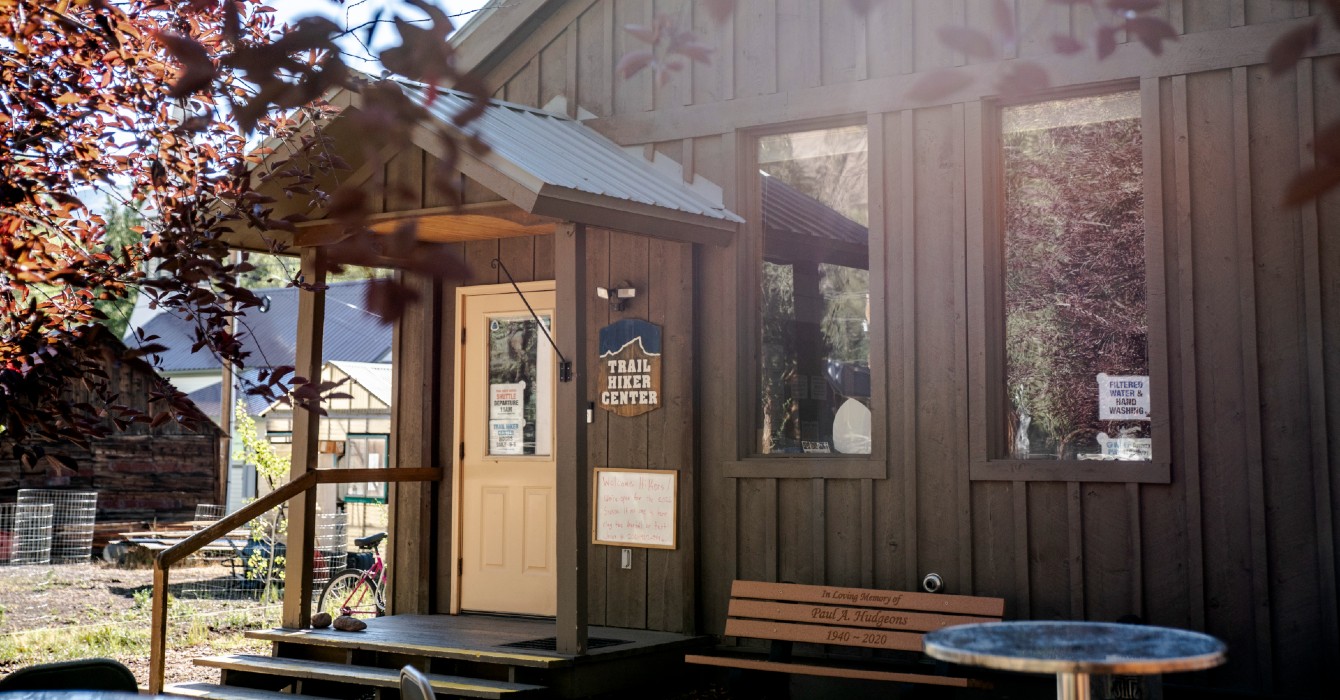
Frieze drives them down the pass to the Trail Hiker Center, a service ministry organized by the 34-member Community Presbyterian Church. The congregation has hosted free Sunday dinners for hikers since 2021. The ministry stacks the efforts of about 100 volunteers during peak thru-hiker season (when church attendance swells to 180 or so) to staff the center seven days a week, shuttle hikers to and from Spring Creek Pass daily, wash up to 600 loads of hiker laundry in their own homes (the town has no laundromat), and prepare a free dinner for dozens of hikers on eight summer Sundays, complete with a potluck-style cornucopia of side dishes.
It’s a monumental effort for a small church in a tiny town with a permanent population of 432. It’s the only town in all 1,123 square miles of Hinsdale County. The first dinner served tacos to two hikers. At present, the center is open seven days a week during the summer, serving nearly 1,000 hikers annually.
In addition to the Sunday dinners, hikers can come any day during business hours to grab snacks, drink cold water and hot pour-over coffee, charge electronics, have laundry done, make watercolor art, collect resupply packages mailed to the center, and even get a foot spa treatment. Donations are not accepted from active hikers; any money they leave behind is redistributed directly to other hikers.
Word of the ministry’s radical hospitality has spread across both trails — hikers call it “trail magic” — and the sense of community that sprouted around it seems to do as much for the volunteers as it does for the hikers.
What unique needs in your community could your congregation respond to?

“This is your ministry.”
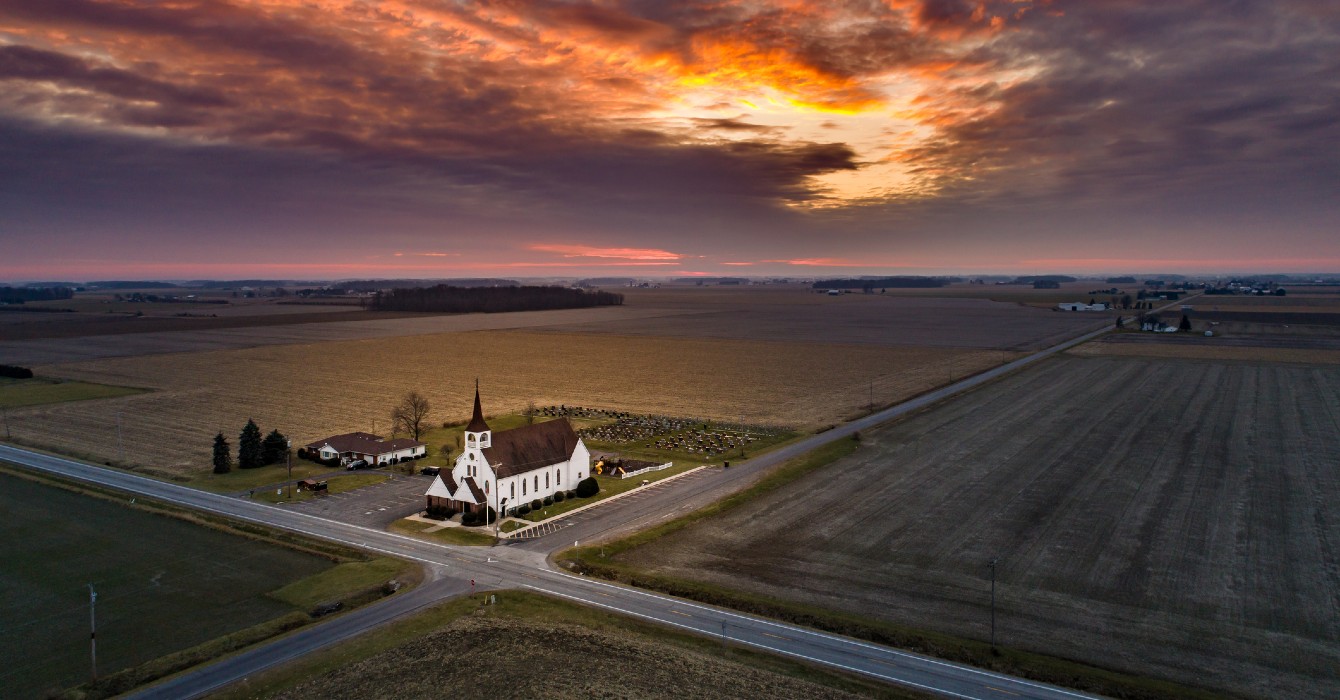
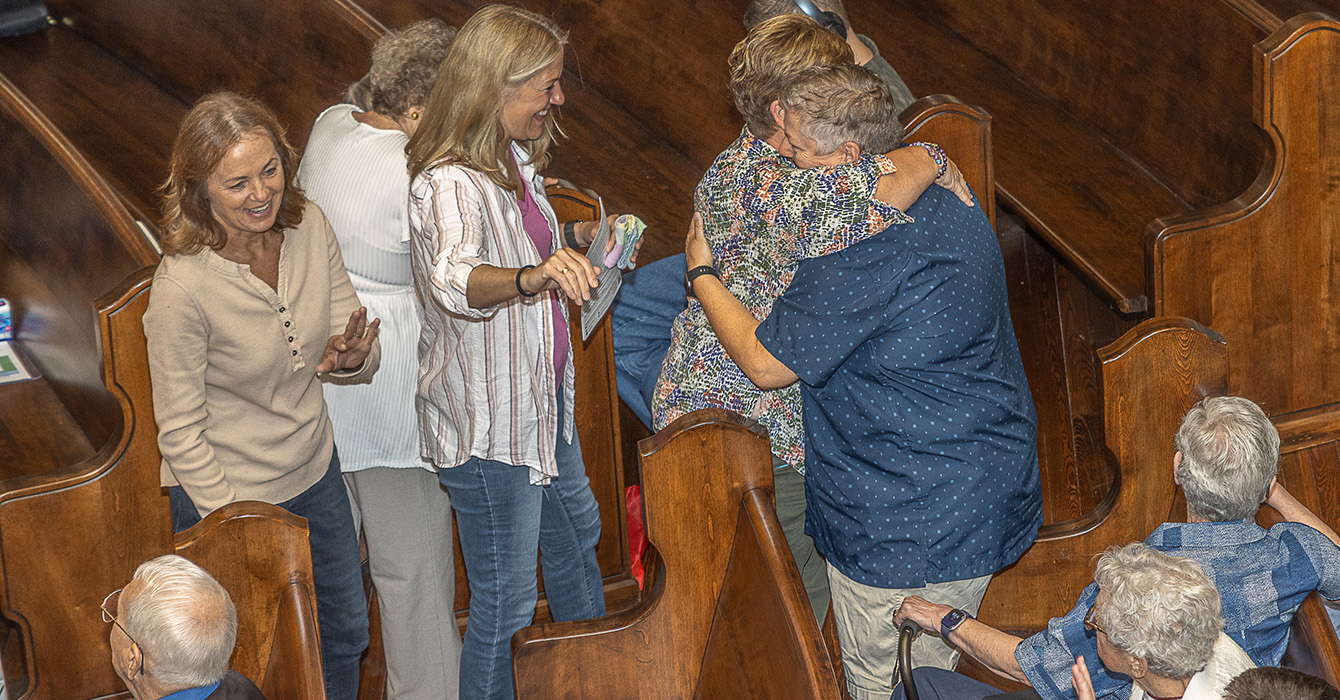
Community Presbyterian’s weekly worship service begins at 10 a.m. on this July Sunday. The Rev. Dr. Jason Santos passes around a clipboard, urging the congregation to volunteer for shuttle shifts. A recent wildfire nearby prompted many residents to voluntarily evacuate, leaving some gaps in shuttle coverage. Despite having fewer volunteers than usual, the church is filled beyond its capacity — it’s the beginning of a weeks-long 150th anniversary celebration.
“This church is your ministry, and it has been recognized both nationally and internationally,” Santos says from the pulpit as the clipboard makes its way around. “This isn’t my ministry. This is your ministry. We need you to fill these slots.”
Santos is the architect of the center’s ministry. He’s not a trail hiker himself — “I like to shower every day,” he said — but that matters little. To Santos, the hikers are pilgrims on a journey. In some key ways, they’re not so different from the pilgrims who flock to Taizé, a well-known French ecumenical community he studied extensively for his doctoral thesis at Princeton Theological Seminary.

In his book, “A Community Called Taizé,” Santos describes four roles that make the community work: The brothers keep the community going; the sisters rotate support from outside and drop in when needed; the permanents help with daily tasks; the pilgrims show up looking for an experience. He calls it a convergence, where the intersection of the four distinct groups benefits everyone.
“The same dynamic is true here,” he said.
In Lake City, Santos said the brothers are the church community, the town comprises the sisters, the permanents are the volunteers, and the pilgrims are, of course, the hikers. By working together to offer hikers radical hospitality, all four groups benefit.
This is not Santos’ first experience with a hiker ministry. Early in his career, while he was an associate pastor in western Pennsylvania, he partnered with a small church along the Appalachian Trail in Duncannon with a hiker ministry that was struggling. He was working with a youth group at his church and thought they could help. Over two summers, the young people refurbished the facility and revitalized the ministry.
“I didn’t want to do the traditional youth ministry trip because I think it’s objectifying to the people it’s often done to,” Santos said, “and we all pat ourselves on the back as we go to an amusement park or something on the way home to treat ourselves. It’s gross.”
When he took over as pastor in Lake City in 2020, Santos wasn’t even aware that two major trails ran nearby.
“I have no desire to do a thru-hike,” Santos said, “but I ascribe to missional theology, which says when you look out the doors of your church, whoever is before you is who you’re called to minister to.”
Outside the old wooden doors of Community Presbyterian were hikers — from across the United States, Canada, Belgium, England, Denmark, Germany, Australia and more. Other than an existing shuttle, nothing was set up specifically to serve the hikers. Having seen the ministry in Duncannon, Santos began asking, “What can we do for them?”
What role or roles does your congregation play in your larger community?

“When you feed people, they show up.”
When Santos first proposed the idea of cooking a meal for hikers in 2021, the church elders didn’t want to do it. They didn’t think anyone would come, for starters. Santos continued to press the idea.
“It was a ministry hunch,” Santos said with a laugh. “I’m a youth minister at heart, and with college ministry, when you feed people, they show up.”
The church eventually agreed to provide an initial $1,000 for eight Sunday meals, served in the annex building across the alley from the church. Santos jumped on Facebook and posted to trail hiker groups to make people aware of the offering.
As the news spread in the earlier days, other churches in Lake City alternated hosting the dinners at the annex. A few years later, the ministry won the Al Ruth Award from the Presbytery of Western Colorado, providing over $8,000, and PCUSA granted the ministry a $10,000 New Worshipping Communities Seed Grant.
Today, Community Presbyterian sets an annual budget of $2,000 for the hiker ministry. The local tourism board granted $4,000 to the program, and a nearby women’s club also supports it financially. The rest of the funding comes from donors.
From the start, Santos made it clear that the church would not accept donations from hikers. It’s central to his theological philosophy of radical hospitality and giving without expectation of return.
“We so often want to say, ‘Hey, if you invite me over for dinner, we'll invite you over next time, so then it becomes an exchange. It’s not just grace then, right? It’s not just freely given,” Santos said. “Fundamentally, I want hikers not to feel like they are paying for something — but that we are only here to bless them. We just made that a rigid standard.”
Yet money continues to arrive. Beyond the occasional grant, Santos said the church gets donations from individuals averaging about $5,000 annually, from local residents, hikers who have finished their hikes, and even parents of hikers. Santos recalled one parent who sent a check when their daughter came home with a restored faith in the church after a Sunday dinner at the Trail Hiker Center.
Despite the ministry’s lack of direct evangelistic outreach, it sometimes evangelizes anyway.
If your church had an innovative idea, how could you fund it? What partners could help?
The work
The volunteer meal prep crew gathers in the Darley Fellowship Hall kitchen around 3 p.m. on Sundays. Today, six volunteers are washing, peeling, and chopping vegetables to make salmon poké bowls for about 80 people, complete with carrot ribbons, lettuce, cucumbers, edamame, celery, scallions, rice and canned salmon. Laura Fox, a regular kitchen volunteer, prepares the rice. Santos opens cans of salmon — he made sure to get wild-caught — and arranges a large tray of condiments while instructing his son, Silas, on the correct mandoline angle for the carrots.
Each dinner has a central theme set by the main dish, and the congregation brings home-cooked sides and desserts that complement the theme. This year, the team has already served pulled pork street tacos and croque monsieur. Next, it’s roasted turkey for a Thanksgiving theme. Later menus include chicken tikka masala, fried rice, chicken and waffles, and Oktoberfest bratwurst.

The volunteer team goes all-out for the ministry, both for the Sunday dinners and for the center’s daily operations. Patsie DeHuff, a volunteer host for the center, said Santos brings in something novel every season: a shaved ice machine with toppings including pickle juice, a cappuccino machine, a donut maker, and pour-over coffees.
“This year, Jason brought in a foot spa where hikers can soak their feet,” she said.
Patsie and her husband, Mike, have been coming to Community Presbyterian for over 20 years, and she has seen how these new acts of service have changed the community. She points at the bulletin board full of volunteer sign-up sheets.
“These people are all blessed; they get to volunteer for something that matters,” she said. “This gives our church the ability to serve. Like I always tell people, when someone wants to … do something for you, do not deny that person the ability to serve. To serve is a gift.”
The dinner gong
By 5 p.m., the center is full of volunteers, hikers, conversation and homemade side dishes. The meal isn’t ready yet, but everyone is already filling up with something nourishing. The vaulted ceiling is decorated with market lights and strips of sheer purple fabric strung horizontally where a flat ceiling would otherwise be, and a bulletin board near the door displays art made by hikers.

At the entrance, a hiker bangs the brass gong to announce his arrival; the room erupts with a chant of “Hiker!” along with cheers and applause. The honored guests are celebrated in the details.
Volunteers assemble the poké in colorful plastic bowls. A commitment to sustainability means that everything is reusable – even napkins – and also requires an enormous cleanup effort by volunteers at the end of the night.
Santos proudly pours two pitchers of a creamy, spicy sauce into a silver fondue fountain on the bar. He prepares a different homemade sauce for the fountain every Sunday.
When the poké bowls are assembled and 40-something Hawaiian-themed side dishes have been placed on the fold-out tables lining the room’s perimeter, Santos welcomes everyone, says a prayer, and invites hikers to go first in line. He requests that they sit in groups of two or three to eat so that volunteers have room to share the meal and hear their stories.
Hikers typically eat dehydrated meals and things like peanut butter and tortillas in the weeks before they arrive in Lake City; they are mentally and physically depleted. For many, this is the first real meal they’ve eaten with other people in a long time.

They slowly make their way through the buffet line — the dessert table is a hit — and some go for seconds. The hikers can eat as much as they like, and what’s left over will be offered to any hikers who show up the next day.
Santos figures that there are about 20 active hikers on a given section of the trail, but the average thru-hiker won’t come across many people during the hike itself — especially on the more remote segments, like Salida to Lake City. This dinner allows them an opportunity to sit down with other hikers and to meet volunteers with vastly different life experiences. There is no altar call; rather, the hikers are invited to speak their own tales to ears eager to listen.
After chatting with a few hikers, it’s easy to see how this ministry works in practice. Between forkfuls of salmon, Mia – from Denmark, trail name “Doctor Slayer” – says she would never find a community like this where she’s from.
Another hiker heard from a friend that the Lake City Sunday dinner was the most special experience on the Colorado Trail, and timing the hike to land here on a Sunday was well worth the logistics. One woman said, “I’m just happy to be talking to other people.”
Joshua Selling — trail name “Noodle” — had been hiking for three weeks (with breaks, he notes) before he hopped into Frieze’s shuttle that day. With over a decade of backpacking and thru-hiking experience behind him, Selling says he was shocked by how the community came together for hikers.
“The Trail Hiker Center, by far, [is] the most supportive and genuinely welcoming hiking-related accommodations I have ever experienced in a town,” he said.
How does your faith community make sure that visitors are welcomed and heard?

Back in the church kitchen, the cleanup crew is already hard at work, scraping plates and running dishes through the commercial dishwasher. They’re short a few hands, so Santos runs back to the center to grab a few more people from the cooking crew. This is the hardest job of the evening — they’ll be at it for another hour at least — but everyone is still smiling.
At the end of the night, Santos takes out the trash himself. It was an easy job: The low-waste operation yielded three bags, and two were only half-full.
Impact
Over the five years of Trail Hiker Center Sunday dinners, Santos claims the ministry has changed the algorithm of the two trails, and it’s clear that many more hikers now end up in Lake City than before.
The Hangout Hostel opened in town in 2025, and owner Dominika Plencnerova appreciates the traffic — over 1,000 hikers stayed at the hostel last summer. She calls the center when people need rides to the pass, and she’ll often get a call from them when a hiker needs last-minute accommodations.
The church has befriended the major nonprofit organizations that support the two trails — the Colorado Trail Foundation and the Continental Divide Trail Coalition.
“We say all the time that we’re a community-building organization,” said Paul Talley, executive director of the Colorado Trail Foundation. “I believe really strongly that the community that they’re building through the [Trail] Hiker Center is what people are looking for when they do the trail.”
What are some partnerships you might build to deepen your congregation’s ministries?

The Rev. Dr. Ray Jones III, director of Theology, Formation and Evangelism for the PCUSA, recently visited Lake City to present a certificate recognizing the historic church’s 150th anniversary. Throughout his visit, Jones observed and participated in the church’s hiker ministry. He recalled Santos’ application for a PCUSA 1001 New Worshiping Communities grant and explained that ministries like the Trail Hiker Center are exactly what the program was hoping to fund.
“These are my words — stop whining because no one’s coming and start figuring out how you can serve your community,” Jones said. “I feel like this small church has done that. It’s making a huge difference in the lives of people they’re serving, but also in the life of the community of Lake City. Communities who are serving others will always find their way in God’s future. Don’t be afraid.”
Questions to consider
- What unique needs in your community could your congregation respond to?
- What role or roles does your congregation play in your larger community?
- If your church had an innovative idea, how could you fund it? What partners could help?
- How does your faith community make sure that visitors are welcomed and heard?
- What are some partnerships you might build to deepen your congregation’s ministries?