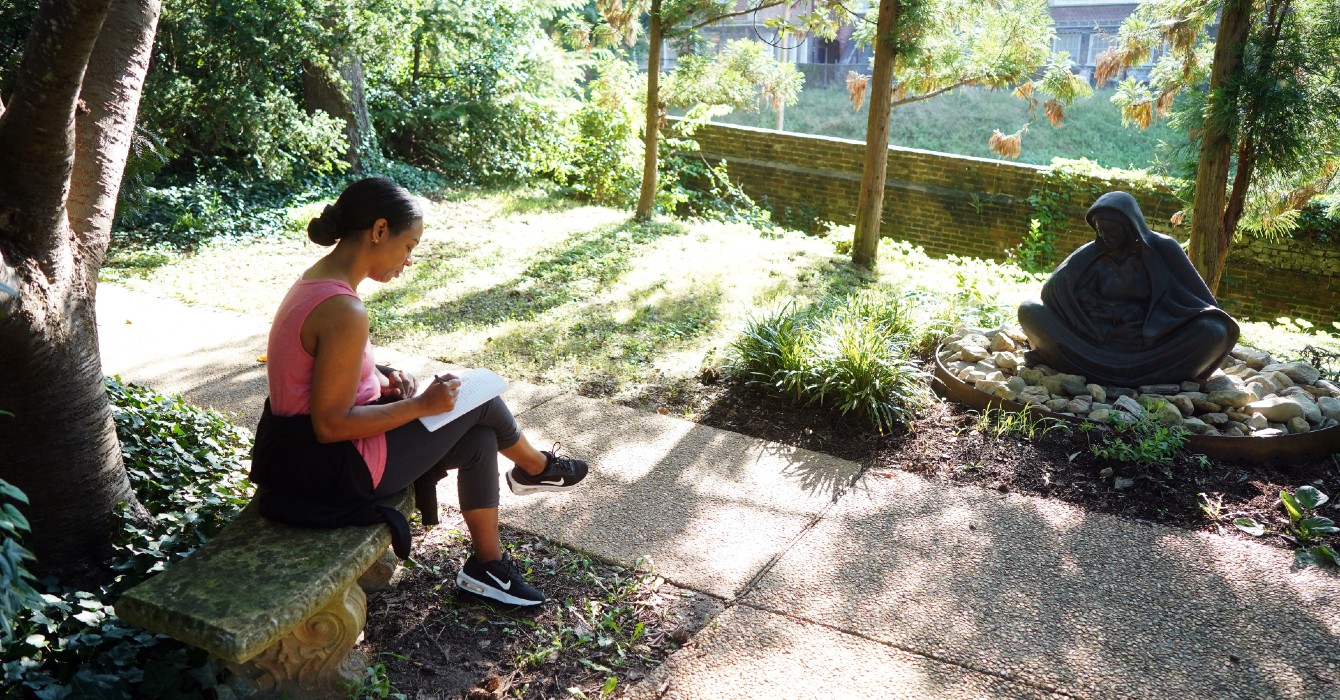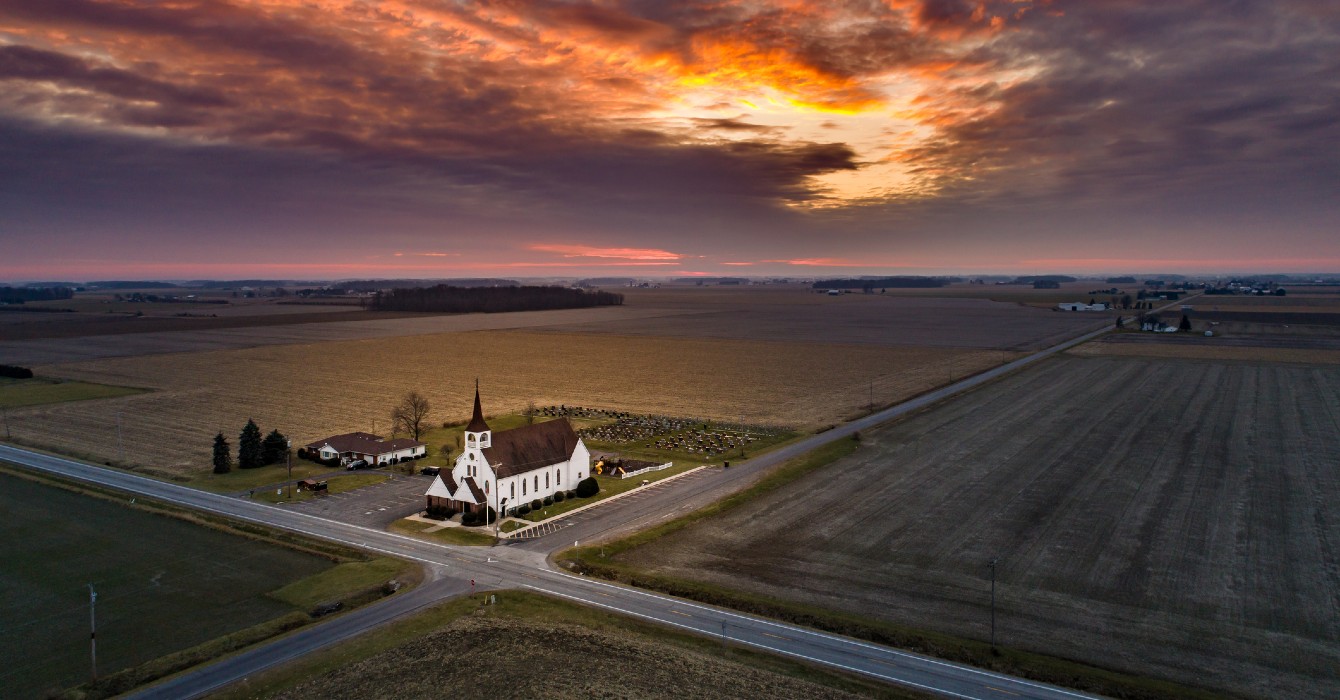

The grass is high and wet on the walk toward the labyrinth behind The Grove Presbyterian Church in East Charlotte. Raindrops from a summer shower sparkle like tiny sequins on the tangle of milkweed, goldenrod, black-eyed Susans and who-knows-what that form the natural walls embracing the half-mile serpentine path.
“Feel how spongy the ground is — there’s a spring under here. It still bubbles up,” Stephanie Vander Lugt said at the entrance to the labyrinth, sweeping her arm over a broad swath of land that used to be a spring-fed pond.
A swan named Gilbert was once its elegantly feathered resident, delighting and occasionally harassing kids after church. This was before the pond was filled with construction debris from the expansion of E. W.T. Harris Boulevard, in front of the church, transforming it from a two-lane road in the late 1950s to a bustling five-lane thoroughfare today.
“This land, this little piece of urban forest right on the middle of Charlotte, has a deep history. It's a wounded land, like so much urban land is,” said Vander Lugt, co-founder and co-director of Kinship Plot, a nonprofit with big plans for this land’s future. That includes new affordable housing on the 9 ½ acres, a permaculture garden, and places and activities for gathering.
Step one is to honor the past.
“We’re taking the time to listen to what the land is telling us,” she said.
What would healing the land look like in the space your faith community occupies?
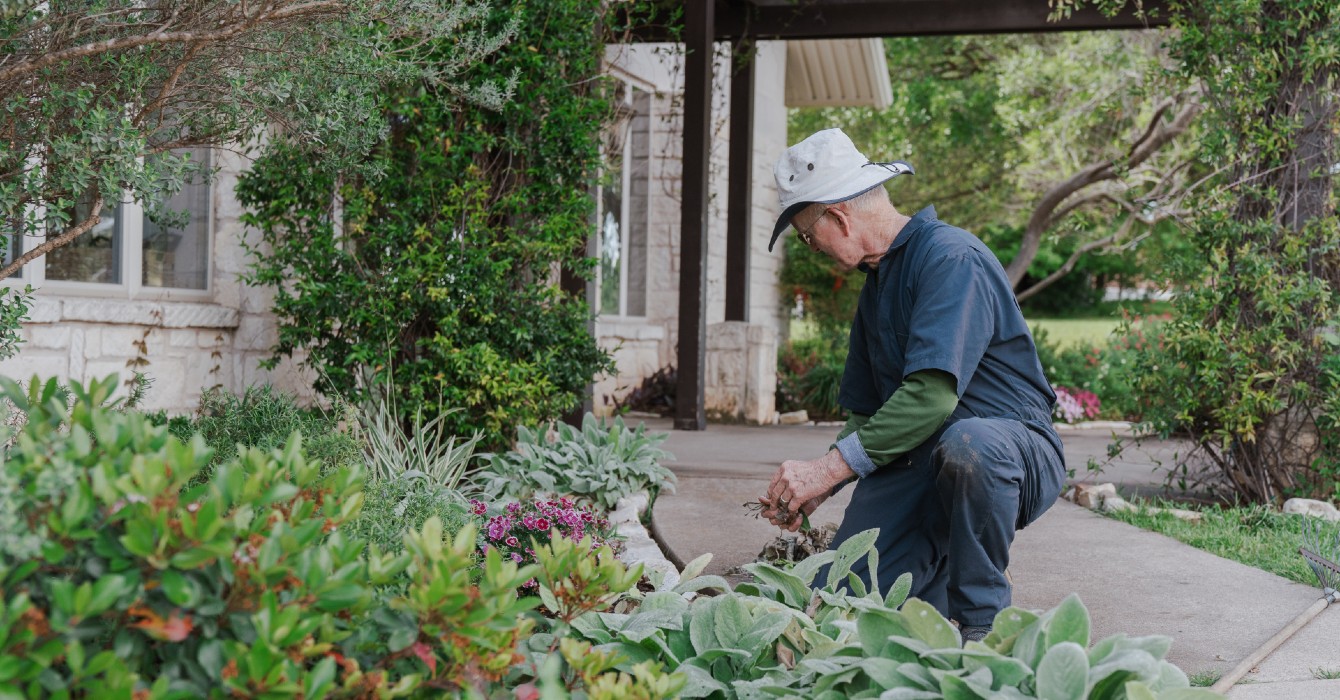
The spring isn’t all that’s bubbling up on the church’s property. Sixteen clusters have been planted around the labyrinth, each featuring a fruit tree surrounded by complementary native plants. Pawpaws and persimmons are fruiting for the first time, and figs thrive alongside feverfew and coneflowers.

Past the labyrinth and next to an exuberantly painted tool shed, space is prepped for fall planting. This is Kinship Plot’s Food Forest, the first phase of the developing holistic community that offers integrated solutions to Charlotte’s overlapping challenges of housing unaffordability, food insecurity, environmental degradation and social disconnection.
This southern banking and arts metropolis is experiencing rapid growth, “with developer after developer clear-cutting land, even as people are raising concerns about tree canopy loss,” Vander Lugt said, but Charlotte’s wealth and “new city in the South” sheen is just one facade. Beneath it, the city grapples with its fraught racial history and gentrification.
“We’re asking, ‘What does it mean to be in relationship to a place in every way? To the people, the land, the history?’ We believe people can flourish when they have a real place to belong. Stable housing, shared land, a creative life together and relationships with deep resonance.”

From burnout to butterflies
Stephanie’s husband, Wes Vander Lugt, is Kinship Plot’s other co-founder and co-director. Their idea sparked on a walk during the COVID lockdown, spurred by a question posed by their spiritual director: “What would you do if there were no boundaries or roadblocks?”
The couple, both graduates of Covenant Theological Seminary, moved to Charlotte in 2013, after Wes earned his Ph.D. in Theology, Imagination and the Arts at the University of St. Andrews in Scotland.
He’d pastored in West Charlotte for eight years but was experiencing burnout. Stephanie, meanwhile, was ready for a change after working with women re-entering the community and workplace after incarceration. The walk was an inflection point.
“Within like 30 seconds on that walk, we sketched out a vision for Kinship Plot, pretty much true to what it is today, complete with a labyrinth, homes, gardens, places for gathering and art-making,” Stephanie said. Despite having three children to care for, now 14, 12 and 8, they decided to leave their jobs and give it a go.
Start with what you have
They launched the 501(c)(3) in 2021 out of their home.
“We started with where we were and with what we had,” Stephanie said. They planted the first garden beds by their home and hosted the first Kinship Dinners, now called Oddkin Unite dinners, in their backyard.
The idea of working with the land, “of putting down roots in a place, with all its imperfections and its gifts,” appealed to them. Wes hailed from a 160-acre family farm in northern Minnesota, while Stephanie moved frequently with missionary parents, growing up mostly in Cameroon.
Wes was the resident horticulture pro, but his Minnesota gardening knowledge didn’t exactly translate to the North Carolina context.
“We made a lot of mistakes,” Stephanie said. “It was a slow repenting toward being formed by a place. Being curious and learning what grows here. We’re self-taught, by the land, really.”
Before long, there was ample fresh produce for Kinship Plot’s community dinners and to give away, plus butterflies and pollinators aplenty.

Meanwhile they were looking for a land partner where their fuller vision of a housing community of rooted belonging might become a reality. The Vander Lugts knew of the Rev. Kate Murphy at The Grove, having read her columns in The Charlotte Observer. They began worshipping at the church, in part because they were drawn to its public transit access and prime location in Charlotte’s growing and heavily immigrant east side.
The Grove had already been considering ways to use their land to address the city’s housing crisis. Reports place the need for additional affordable housing in Charlotte from close to 30,000 units to more than 40,000.
“The Grove had discerned that this was a major need of our community, and one we could help address given that we had been entrusted with significant land on our campus. We had been praying and looking and waiting for the right partner,” Murphy said.
The church, which Murphy has pastored since 2008, had met with other potential developers before the Vander Lugts became part of their community. Those earlier efforts failed because of funding roadblocks and neighborhood pushback.
The Vander Lugts’ fresh approach was radically different from more formulaic affordable housing models. Kinship Plot was theologically grounded, innovative, comprehensive, beautiful. And The Grove even already had a labyrinth that had been part of its initial dream.
How do you identify potential partners for projects?
“It felt like an answer to prayer,” Murphy said. “It’s been such a gift — and a rollercoaster ride — to walk through this prayerfully and have the experience of watching and waiting on the Lord. We saw the [housing] need and the potential, but knew that this wasn’t something our church could pull off on our own.”
Partnering with Kinship Plot felt like a perfect match for the social-justice-oriented, diverse congregation, which voted overwhelmingly (97% in favor) to support the nonprofit’s housing initiative with a $1.5 million land-value contribution.

Multiple plots
“We love the layers within that word ‘plot,’” Wes said. “Plot is a story — we’re weaving together stories of belonging and kinship, which is also where the arts come into play.”
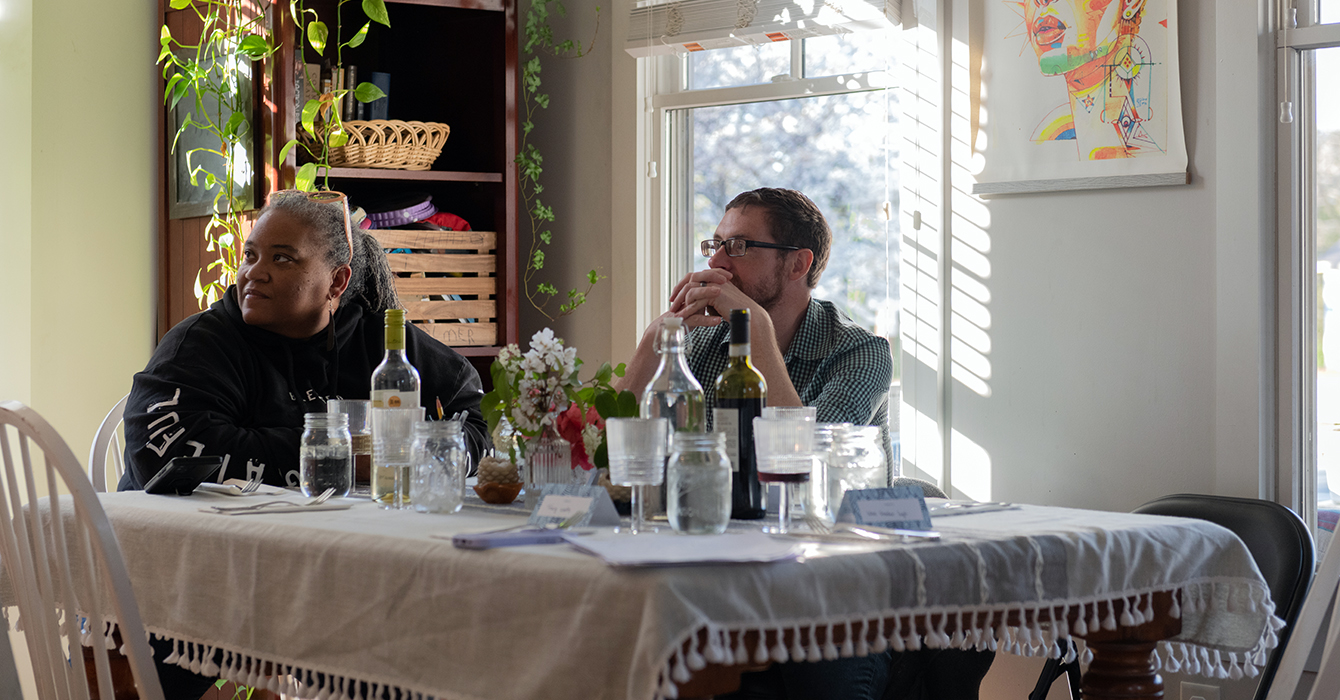
Each Oddkin Unite dinner is open to the broader community and centered around a commissioned new work of art — dance, visual art, photography, drama — that inspires a guided conversation. The artists are paid well, and meals are curated by local chefs.
“Whether it’s over dinner or working side-by-side in the gardens, we're sharing each other's lives and learning each other's stories,” Wes said. “And, of course, plot is place, the actual plot of land with Kinship Plot — all the gardening, the cultivation, the permaculture, the place-based housing work.”
To plot is also to scheme, which may be Wes’s favorite interpretation of the word, judging by his enthusiasm as he describes their plotting.
“Our commitment to not assuming the way things typically happen is the way we should do them, and scheming about subversive ways of doing things, beautiful ways of doing things, countercultural ways of doing things, including our emphasis on collaboration and our shared leadership model.”
Which “typical” ways might be helpful to let go of?
Such plotting can be plodding, which the Vander Lugts anticipated. They were prepared for their venture to “take the time it was going to take,” Wes said.
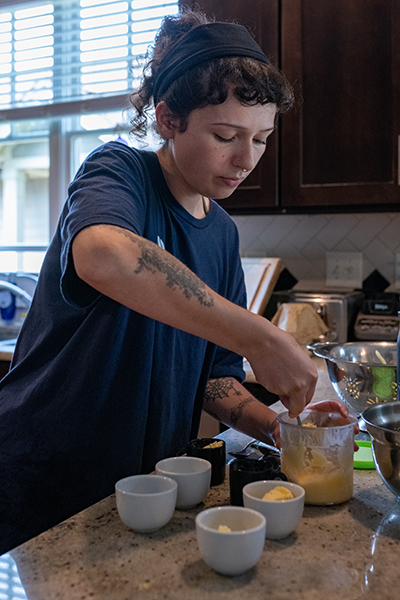
Five years in, Kinship Plot’s Food Forest and gardening initiatives, including a paid apprenticeship program led by Cultivation Manager Rebecca Hart, are well established and thriving. So too are the bimonthly dinners, facilitated by trained “conversation curator” Ranika Chaney.
Meanwhile, planning for the supportive housing is well underway, with months of the design phase complete and the funding and permitting phases in process. But when they might break ground remains uncertain.
“We’re embracing slowness in the best sense of that word,” Wes said. “There’s a theology to this. It’s about letting things develop at the speed of relationship and delight. The moment that Kinship Plot fails to delight us, we’re doing something wrong.”
Both Stephanie and Wes now have other jobs that support their family as they continue to build the nonprofit.
“We want this to be our heart work, without the pressure of fundraising for our salaries,” said Stephanie, a licensed clinical social worker. Wes teaches at Gordon-Conwell Theological Seminary, where he is launching a program in theology and the arts. He sees these dual roles as informing each other.
“I love the academic work, but it’s essential for me to have a significant and costly expression of my faith in this community,” Wes said. “I’m sharing Kinship Plot examples all the time in my classroom; meanwhile, my teaching and research is feeding and motivating what I’m doing out in the field.”
Case in point: Before drawing up blueprints, Wes gathered a working group of Christian designers — architects, landscape architects, interior designers, urban designers, and industrial designers — to explore design principles for spaces that embody shalom. They compiled their work in a guidebook.
“Every space we shape tells a story about what we value, who we welcome, and how we understand our relationship to the divine, to one another, and to the more-than-human world,” the guidebook says.
Seeing beauty as a theological imperative, for example, translates architecturally into “offering a variety of house plans that use proportion, rhythm and light to shape space and express unity-in-diversity through materials and forms.”
The Kinship Plot architect, Nicole Perri, was part of that “Designing for Shalom” working group. Her plan takes inspiration from the dragonfly — a cross-cultural symbol of transformation, adaptability and spiritual awakening — by presenting a grouping of 24 energy-efficient homes paired as dyads, with sloping roofs that evoke dragonfly wings. The design features sustainable materials, ample natural light, outdoor porches, louvers for privacy and a large common building for community gatherings.
“These are not cinderblock boxes,” Stephanie said.
How does your faith community convey its story beyond words?

Flourishing for all
They’ve met detractors. Some potential funders, after the Vander Lugts have approached them, have suggested that their proposed plan is “too costly, too nice,” Stephanie said.
People have suggested tearing down the church and building hundreds of affordable housing units along Harris Boulevard, with a new church in the back.
“They argue that’s the only way it makes financial sense. I get that. But for us, that’s a hard ‘no’ in every way,” she said.
Instead of going big and maximizing quantity with cookie-cutter units, they’re opting for quality, with a small-scale design customized to this unique site.
“When we are facing huge, systemic problems, there’s a temptation to think it needs to be big or don’t bother. Why take risks and put yourself through all the hassle?” Murphy said.
“I think the gospel offers us an alternative, a holy perspective. Twenty-four units from one vantage may be a ‘why bother?’ but for the 24 families who will live there, it will be their whole world.”
She and her congregation applaud Kinship Plot’s commitment to aesthetic excellence. They love that the design is “more beautiful than it has to be,” Murphy said.
Typically, price drives design, and corners are cut because of assumptions about the residents who will live there — “that they deserve very little,” Murphy said.
“Instead, we believe these are our neighbors, and from God’s perspective, they deserve a place of peace and beauty, designed for flourishing, not just for sheltering.”
How can you orient ministries and projects for the flourishing of all?

Tea and balm
Inside the nonprofit’s office, Stephanie sorts through drying racks laden with freshly harvested garlic plants, hung upside down, like allium bats. Beside them is a display of Kinship Plot organic body products made from the produce and sold at farmers markets.
Stephanie offers a visitor goat cheese with fig preserves from this summer’s bounty, alongside a cup of tea blended from herbs they’ve grown. She reflects on the daunting task of raising $8 million to bring the project to fruition. Because Kinship Plot doesn’t fit traditional affordable housing models, they expect little to no funding from conventional sources.
“It’s a faith journey — the lead practice and expression of my faith,” she said. “We are finding the way by walking it.” Much has been accomplished, yet challenges remain. She’s trusting that what she understands about “redemption and the role that creation has in flourishing, and what shalom truly means,” will guide Kinship Plot to fruition.
“It’s my confident, desperate commitment to these things being true,” she said as she pours more tea and offers seconds on the fig preserves. “There’s plenty. Help yourself, enjoy.”
Questions to consider
- What would healing the land look like in the space your faith community occupies?
- How do you identify potential partners for projects?
- Which “typical” ways might be helpful to let go of?
- How does your faith community convey its story beyond words?
- How can you orient ministries and projects for the flourishing of all?